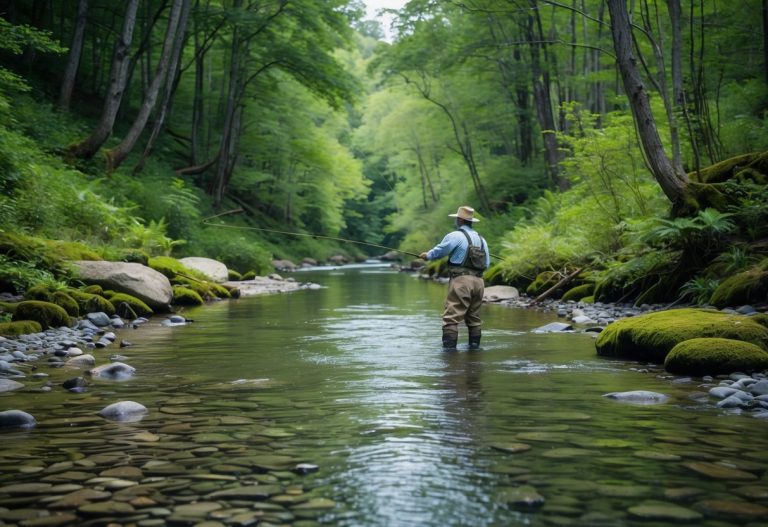
For a successful first trip, choose a nearby stream or lake with public access, use a simple spinning setup, and fish a small bait or lure near cover. For a beginner or a day out with kids, a light spinning rod and reel with a small spinner or locally permitted bait make cutthroat fishing straightforward.
Cutthroat trout live in cold, clear water across much of the West, and their feeding spots are often easy to recognize: current seams, shaded pools, and the edges of rocks or fallen wood. A few basic choices can help you get fishing even when your time is limited.
Where Do Cutthroat Trout Hold—and Where Can You Find Them?
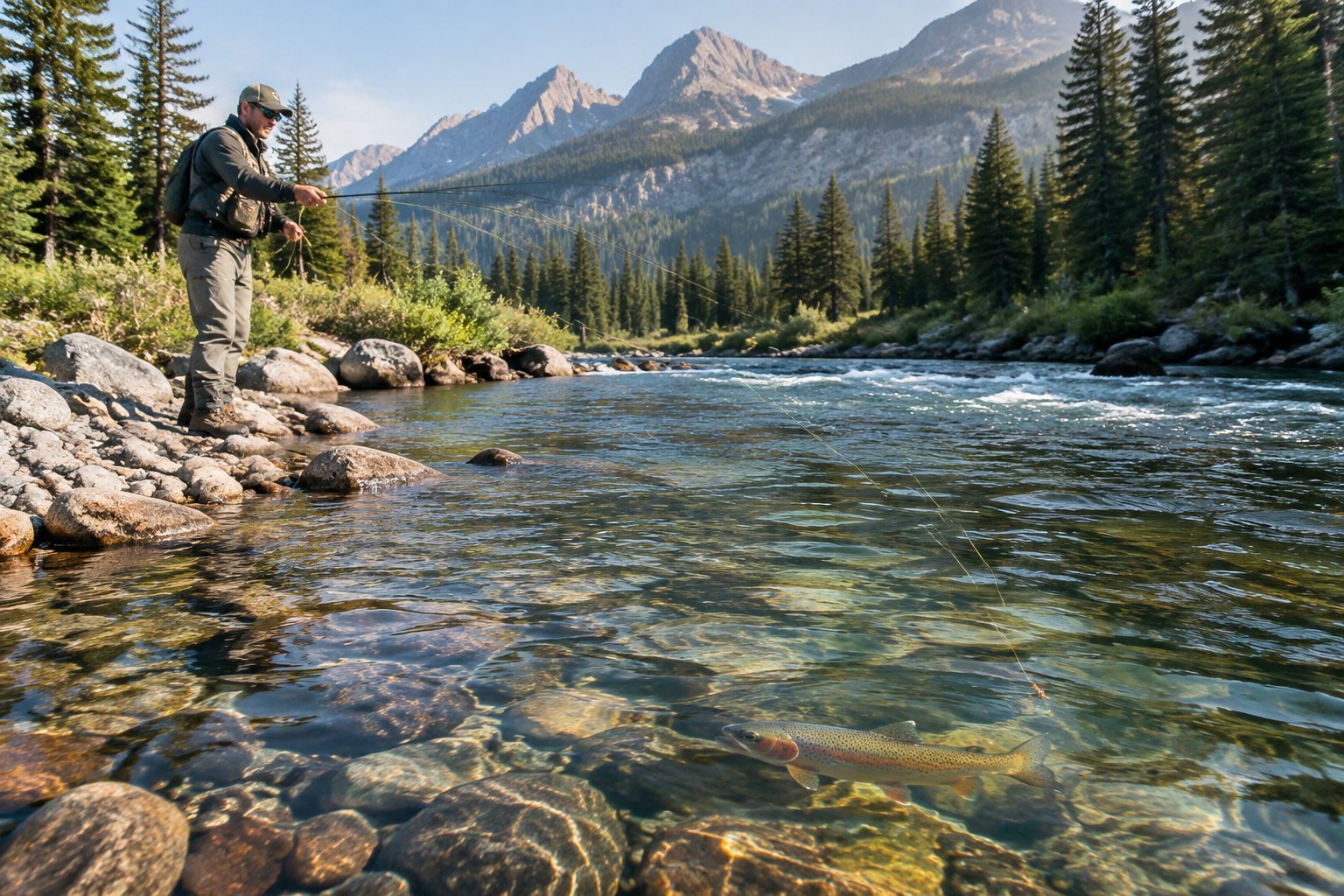
You’ll find cutthroat trout in cold, well-oxygenated streams, rivers, and lakes across the western United States. Look for places with cover and access to food, then check local maps and regulations to confirm the water holds the fish you want to catch.
What River, Stream, and Lake Features Should You Look For?
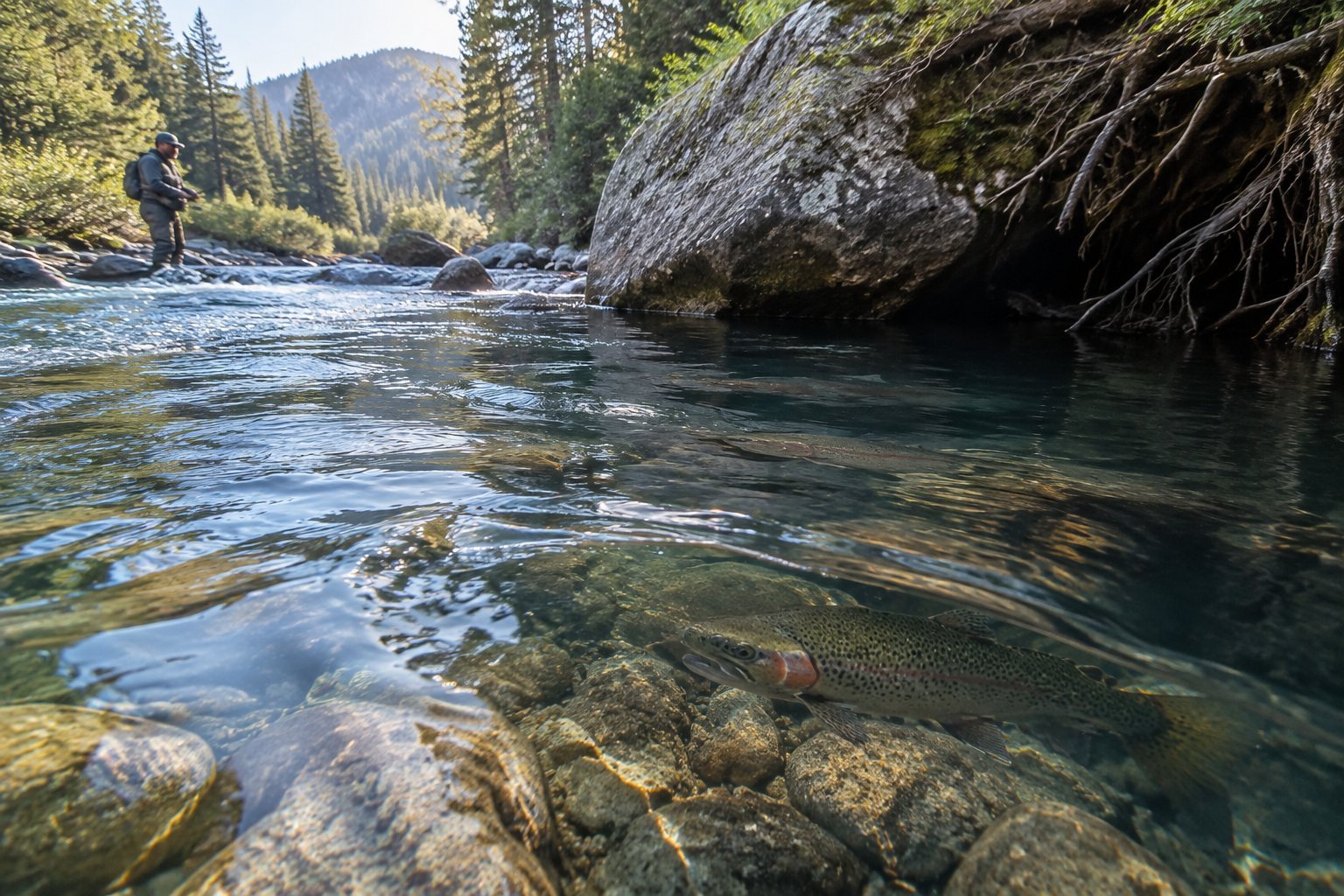
In a stream or river, start with the softer water beside a faster current. Cutthroat trout can hold behind boulders, along undercut banks, in shaded pools, and where riffles slow into deeper water. These spots give fish a place to rest while insects and other food drift past.
Approach quietly, then cast upstream or across the current so your bait, lure, or fly travels naturally through the holding water. If you’re fishing with a child, choose a stable bank with room to cast and a clear path to the water. A nearby fish may spook if you walk right to the edge or cast a shadow over a shallow pool.
At a lake, search shorelines with rocks, submerged trees, weed edges, or a drop into deeper water. Inlets and outlets are also worth a few casts because moving water brings food and can attract trout. For a simple bank trip, shore fishing lets you work these areas without needing a boat.
Which Regions and Subspecies Might You Encounter?
Cutthroat trout, or Oncorhynchus clarkii, are native to Pacific tributaries, the Rocky Mountains, and the Great Basin. Their range includes several cutthroat trout subspecies, each associated with particular watersheds. A local fishing report or state wildlife agency map can help you identify what lives near your planned destination.
Coastal cutthroat trout occur in coastal streams, while westslope cutthroat trout are associated with the northern Rocky Mountains. Yellowstone cutthroat trout live in the Yellowstone drainage, including waters around Yellowstone National Park, the Yellowstone River, and Yellowstone Lake. The Snake River drainage also holds cutthroat populations.
In the Great Basin, Bonneville cutthroat trout are tied to the former Lake Bonneville basin, while Lahontan cutthroat trout are native to parts of Nevada and nearby areas, including Pyramid Lake. Colorado River cutthroat trout are associated with the Colorado River basin. Check regulations for the specific water you plan to fish, since access, seasons, and handling rules differ by location.
What Gear Makes a Simple Setup?
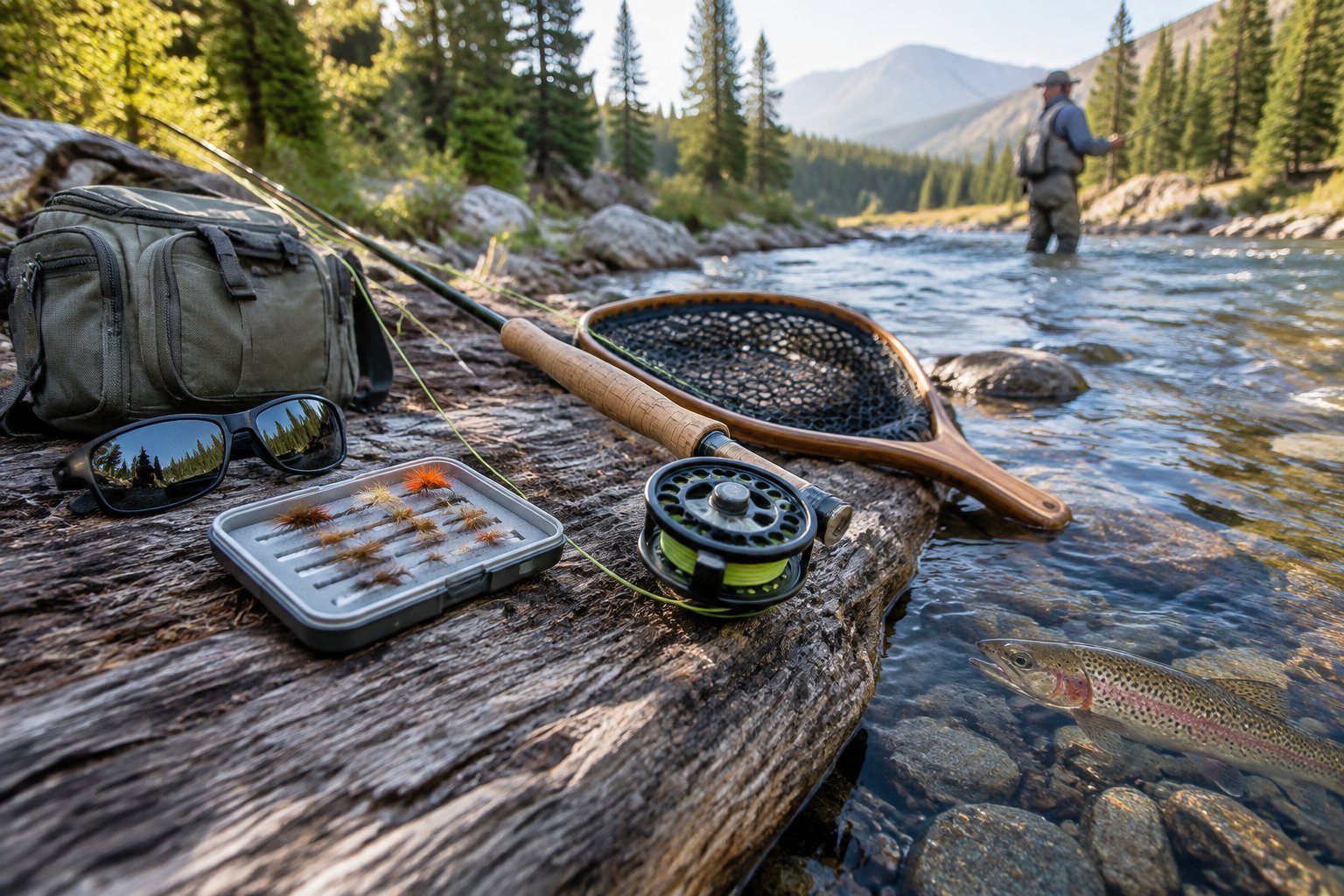
A basic spinning setup is the easiest starting point for cutthroat trout fishing, especially when you’re teaching a child or fitting in a short trip. A simple fly setup also works well if you already have the gear and want to fish with flies.
What Spinning Gear Works for a Beginner or Child?
Choose a light or ultralight spinning rod and reel that feels comfortable to cast. A shorter rod can be easier for a child to control near brush or on a narrow bank; a longer rod helps you reach water farther from shore. For a first trip, use the reel and line you already own if they are in good condition.
Tie on a small hook for bait or a compact spinner, spoon, or other light lure. Keep the rig simple, with only enough weight to cast and present your bait where trout are feeding. If you’re new to setup, follow a basic spinning reel setup guide and practice a few casts before heading out.
Carry spare hooks, a small pair of pliers, and extra line. Retie if the line feels rough or shows damage, especially after it rubs against rocks or brush. If a child is fishing, handle hook changes yourself and keep hooks covered when you’re walking.
When Is a Basic Fly-Fishing Setup a Good Fit?
A basic fly-fishing setup is a good fit when you already have a rod and reel or want to learn on a small stream where short casts are enough. Choose a manageable rod and a floating line, then keep a small selection of dry flies, nymphs, and streamers in a compact box.
You can start with a simple cast and let the fly drift with the current. A dry fly is easy to watch on the surface, while a nymph fishes below it. For a beginner, one fly you can see and cast comfortably is a better starting point than a large assortment.
Which Baits, Lures, and Flies Are Beginner-Friendly?
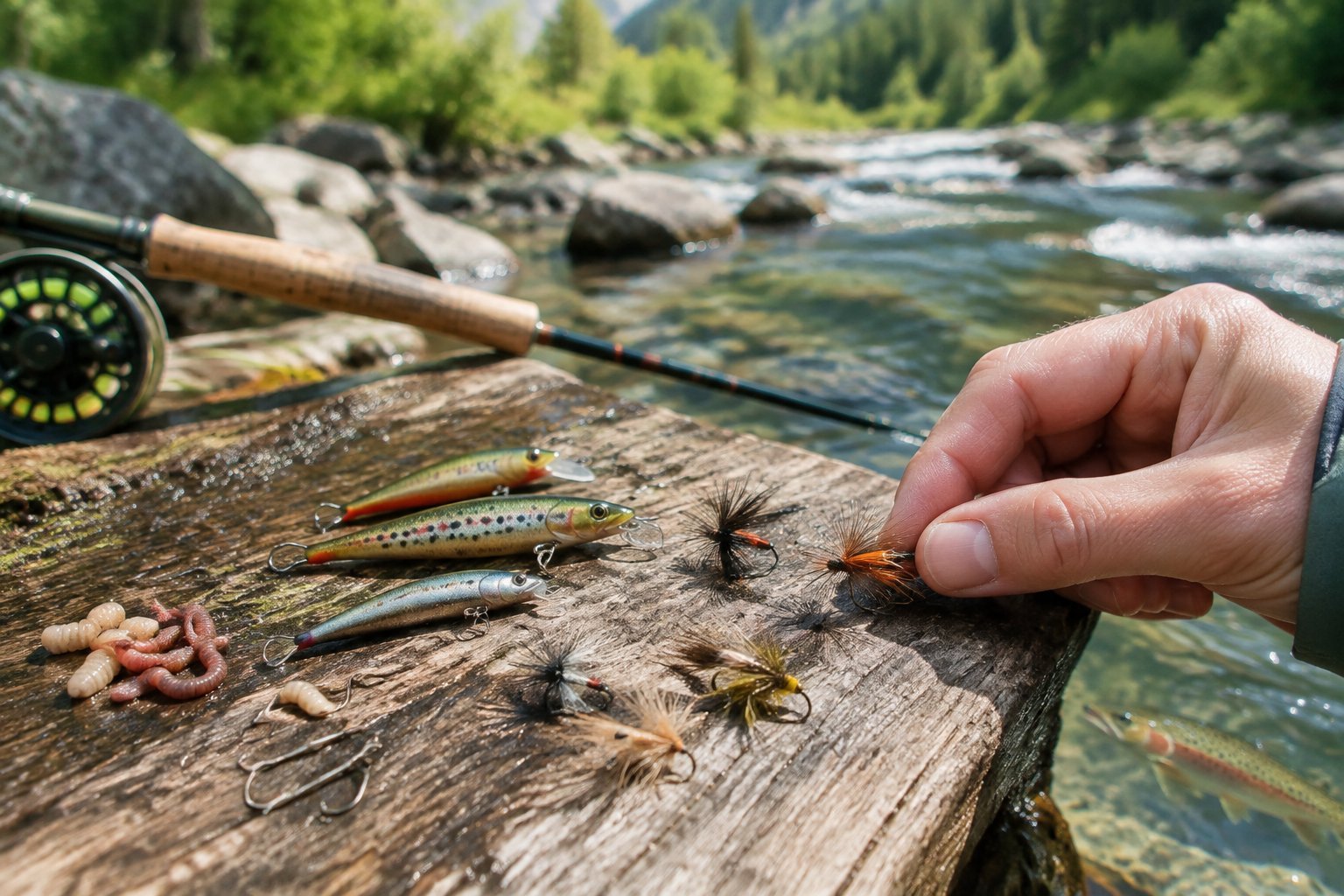
Small, easy-to-cast options are practical starting choices: use bait where allowed, or pick a compact lure or familiar fly pattern. Local rules determine which choices you can use on a particular stream or lake.
Can You Use Salmon Eggs or PowerBait?
Salmon eggs and PowerBait can be useful for stillwater fishing or slower current, provided local regulations allow them. Check whether the water permits bait, what hook rules apply, and whether the area is restricted to artificial lures or flies. Rules can differ between nearby waters, so verify the specific location before you rig up.
Use a small hook and only enough weight to keep the bait where trout can find it. Keep bait containers closed between casts, and pack out leftover bait and packaging. If you’re fishing with a child, pre-rig the line at home so you spend less time handling hooks at the water.
Which Simple Lures and Fly Patterns Should You Try?
A small spinner or spoon is an easy lure to cast and retrieve. Cast across or slightly upstream, then reel steadily so the lure moves through the current without dragging along the bottom. If the water is clear and shallow, begin with a small, subtle lure; in deeper or faster water, adjust the retrieve so it passes through the fish-holding zone.
For fly fishing for cutthroat trout, choose a visible dry fly such as a royal wulff or chubby chernobyl when trout are rising. A prince nymph offers a simple subsurface option, while a woolly bugger can imitate a small moving food item. Dry fly fishing is especially engaging for beginners because you can watch the fly drift and see a rise.
Carry just a few patterns and change one thing at a time, such as fly size or depth. If you’re unsure which flies suit the area, ask a local tackle shop what trout are feeding on and follow any fly-specific rules.
When and How Should You Fish?
Fish the water quietly and present your offering where trout hold, then adjust your depth or retrieve if you don’t get a response. A short session near dawn or evening can fit around work and family commitments, while cooler conditions make warm-weather outings more comfortable.
How Do You Present Bait, Lures, or Flies?
For bait, use a small hook and let the offering drift through a pool or settle near a lake shoreline feature. Keep the line just tight enough to notice a bite. Follow local rules about bait and hooks, and avoid leaving bait unattended.
For a spinner or spoon, cast across or upstream and retrieve at a steady pace. If the lure spins too quickly or snags repeatedly, slow down or move to a less snag-prone lane through the water. Make a few careful casts through one likely holding spot before moving along the bank.
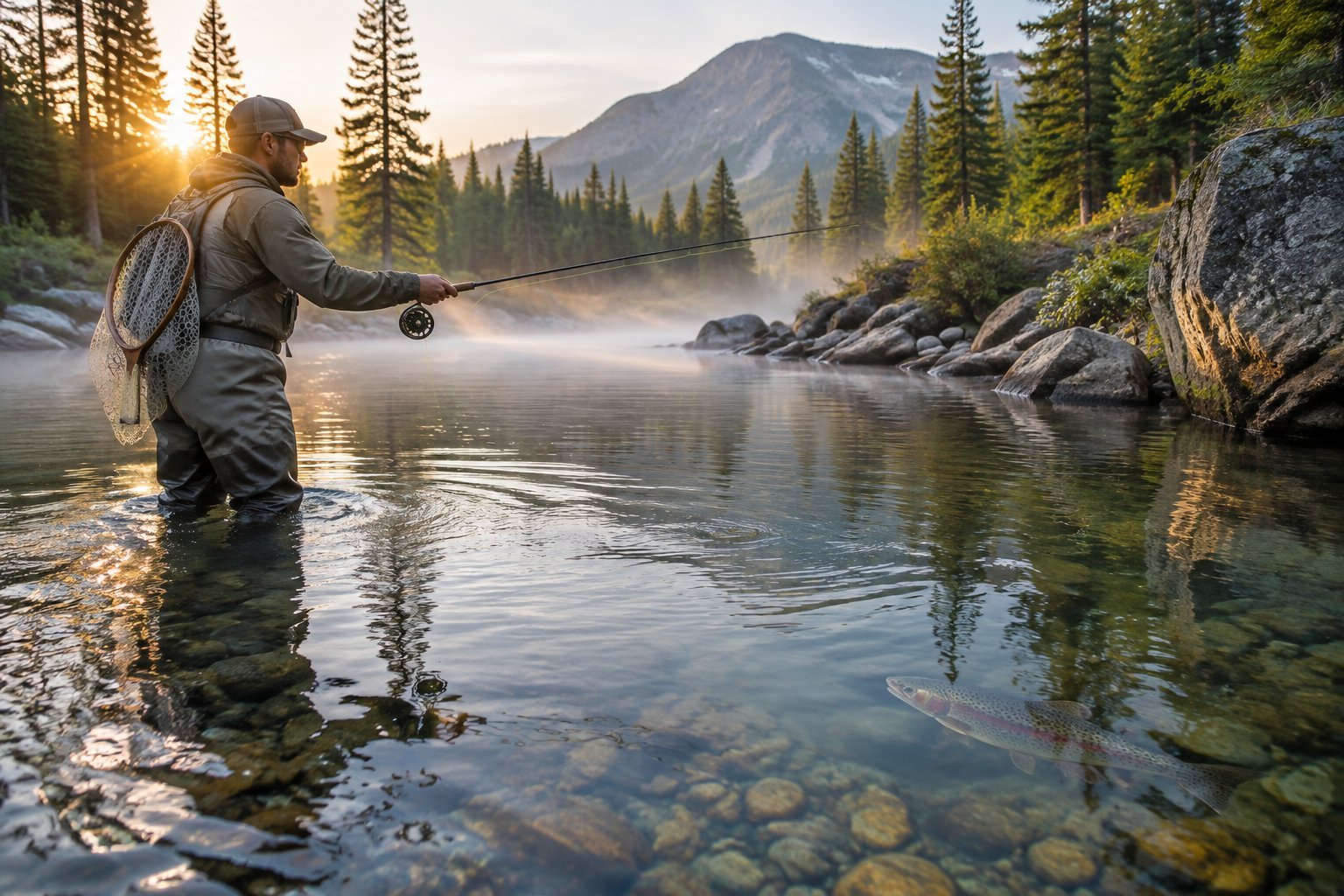
For fly fishing for cutthroat trout, cast upstream and let the fly drift with the current. Mend the line if it pulls the fly across the current unnaturally. Watch the fly closely, especially when fishing a dry pattern, and set the hook with a controlled lift when you see a rise.
What Timing Works for a Short Fishing Trip?
Early morning and late afternoon are useful windows, particularly on warm days when trout seek shade and cooler water. Cloud cover can also make trout more willing to feed near the surface. Conditions vary by water, so check a local report before you leave.
Choose a nearby location with easy access, decide on one setup, and set a time limit before you go. A 30-minute session with a few focused casts through a pool or along a lake edge can be easier to fit into a busy day than a long trip. For more timing ideas, see these morning versus evening fishing tips.
What Should You Check Before Your First Trip?
Check current local rules before choosing your bait, hooks, and fishing location, then pack only what you need for a safe, comfortable outing. A short checklist helps you spend more time fishing and less time searching through gear.
How Can You Check Local Rules and Bait Restrictions?
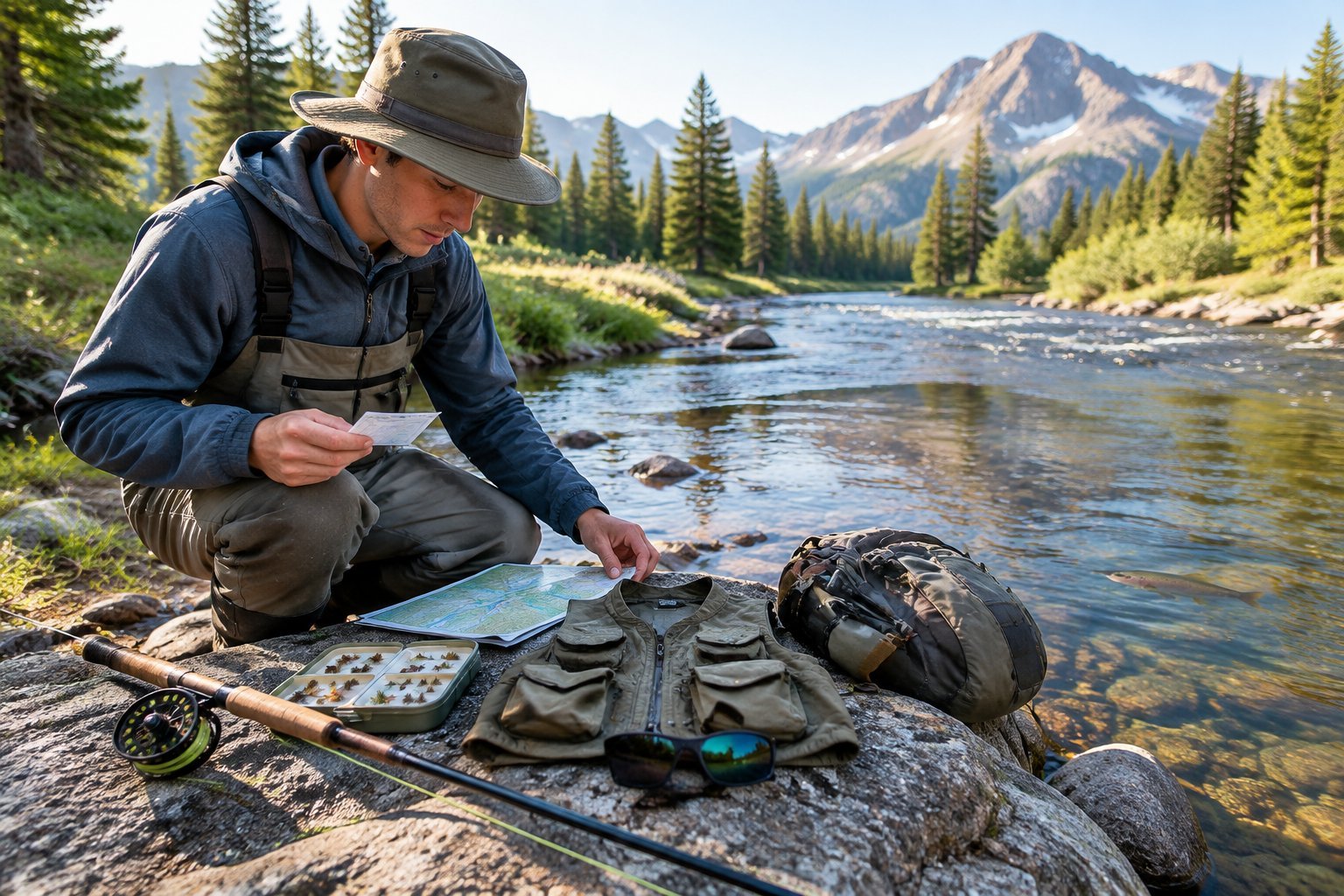
Look up the state wildlife agency’s regulations for the exact water you plan to fish. Confirm the season, license requirements, legal fishing hours, bag and size limits, hook rules, and whether bait or specific lures are allowed. Special rules can apply in national parks, tribal waters, and protected streams.
If you’re targeting native cutthroat trout, check whether the water has catch-and-release requirements or restrictions designed to protect a local population. Identify whether the fish may be a cutbow, a hybrid between cutthroat and rainbow trout, and follow the same handling and release rules that apply to the water. When in doubt, release the fish carefully and ask the local agency for clarification.
What Belongs on a First-Trip Checklist?
Pack a light setup and a small amount of tackle so you can find what you need quickly. Before leaving home, check the weather, access information, and any parking or permit requirements.
- Fishing license, if required
- Rod and reel with sound line
- A few small hooks, weights, or lures that follow local rules
- Pliers or forceps and spare line
- Water, sun protection, and weather-appropriate clothing
- A small bag for wrappers and other trash
- A phone for maps and emergency contact
For a family outing, include a snack and a backup activity for a child who needs a break. If you’re still learning the basics, trout fishing for beginners can help you prepare, and fishing with kids offers practical family tips.
How Should You Handle and Release a Cutthroat?
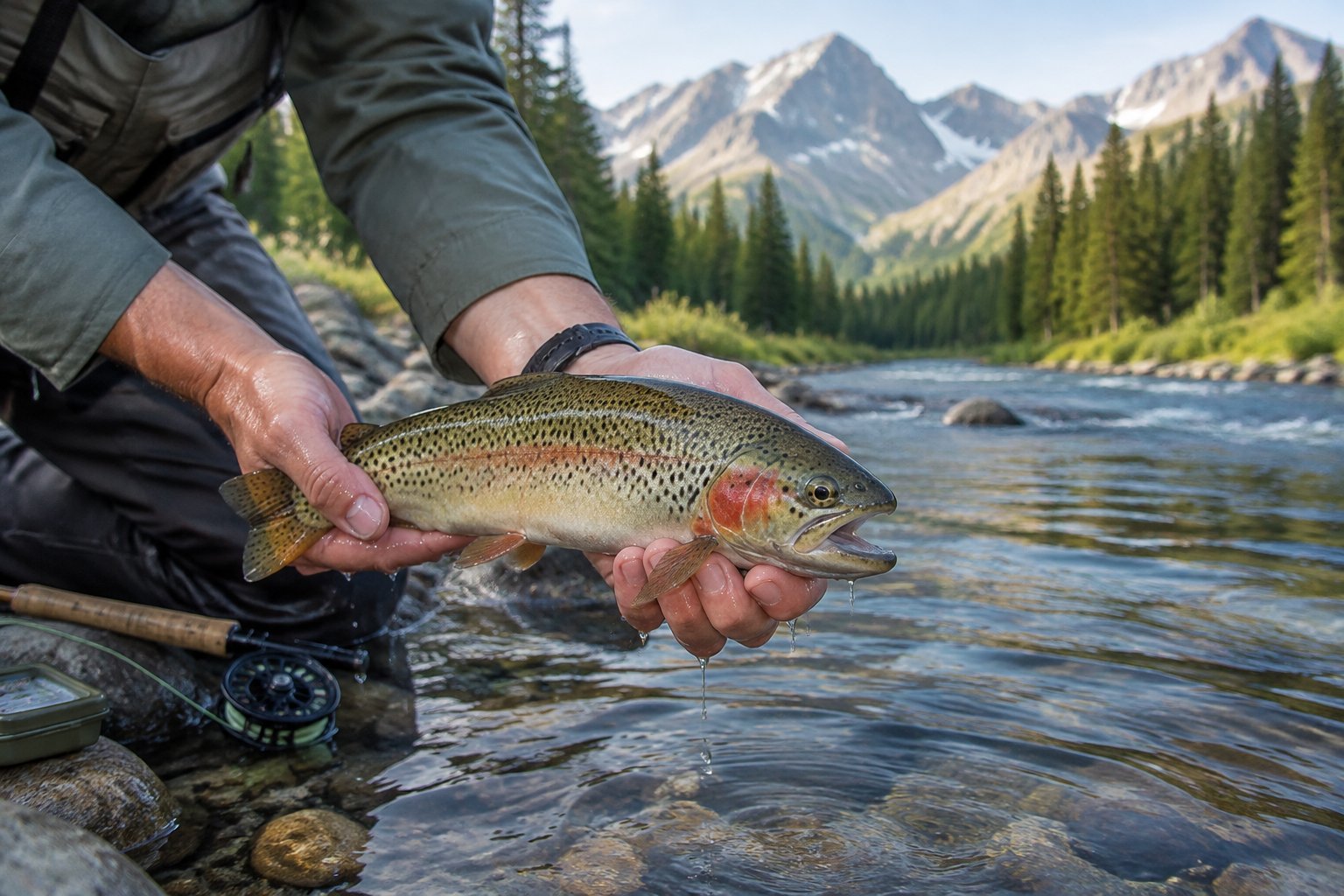
Wet your hands before touching a cutthroat trout, keep the fish in the water as much as possible, and use wet hands or a rubberized net to support it. Avoid squeezing the body or touching the gills. Remove the hook gently with pliers; if it is deeply embedded, follow local guidance on whether to cut the line.
For a photo, keep the fish low over the water and return it quickly. Hold it upright in the current until it swims away under its own power. Use barbless hooks where required or where you want quicker, gentler releases.
Frequently Asked Questions
You can make your first trip simpler by choosing accessible water, checking the local rules, and carrying one familiar setup. These quick answers address common questions about where to go and what to use.
Where is the best place to fish for cutthroat trout?
The best place is a legal, accessible stream or lake in the western United States that supports a local cutthroat population. Start with a state wildlife agency map or a local fishing report, then look for cold water with pools, current seams, or shoreline cover.
What is the best bait for catching cutthroat trout?
Use salmon eggs or PowerBait where local regulations permit them. A small spinner is a straightforward artificial option when bait is restricted or you prefer to cast and retrieve.
Are salmon eggs and PowerBait legal everywhere?
No, bait rules vary by water and can limit or prohibit salmon eggs and PowerBait. Check the current regulations for the specific stream, lake, park, or other fishing area before using either.
Can you eat cutthroat trout?
You can keep and eat cutthroat trout where local regulations allow harvest. Check current size and bag limits, water-specific advisories, and safe handling guidance before keeping a fish.
What is a sea-run cutthroat?
A sea-run cutthroat is a coastal cutthroat trout that moves between saltwater and freshwater. These fish feed in coastal waters and return to freshwater streams, with local regulations governing where and when you can target them.