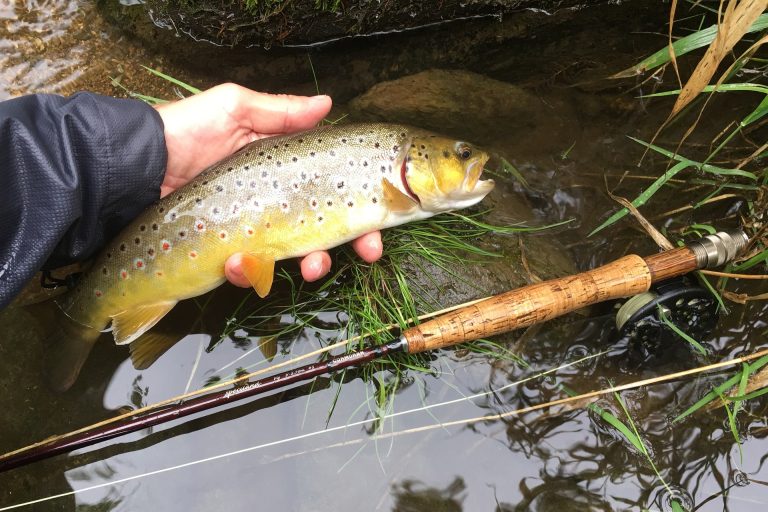
Rainbow trout respond to a wide range of food sources, so a small fly box can cover most lakes, streams, and seasons. A beginner can start with a Woolly Bugger, Pheasant Tail Nymph, and Parachute Adams, then add patterns that match local insects and water conditions.
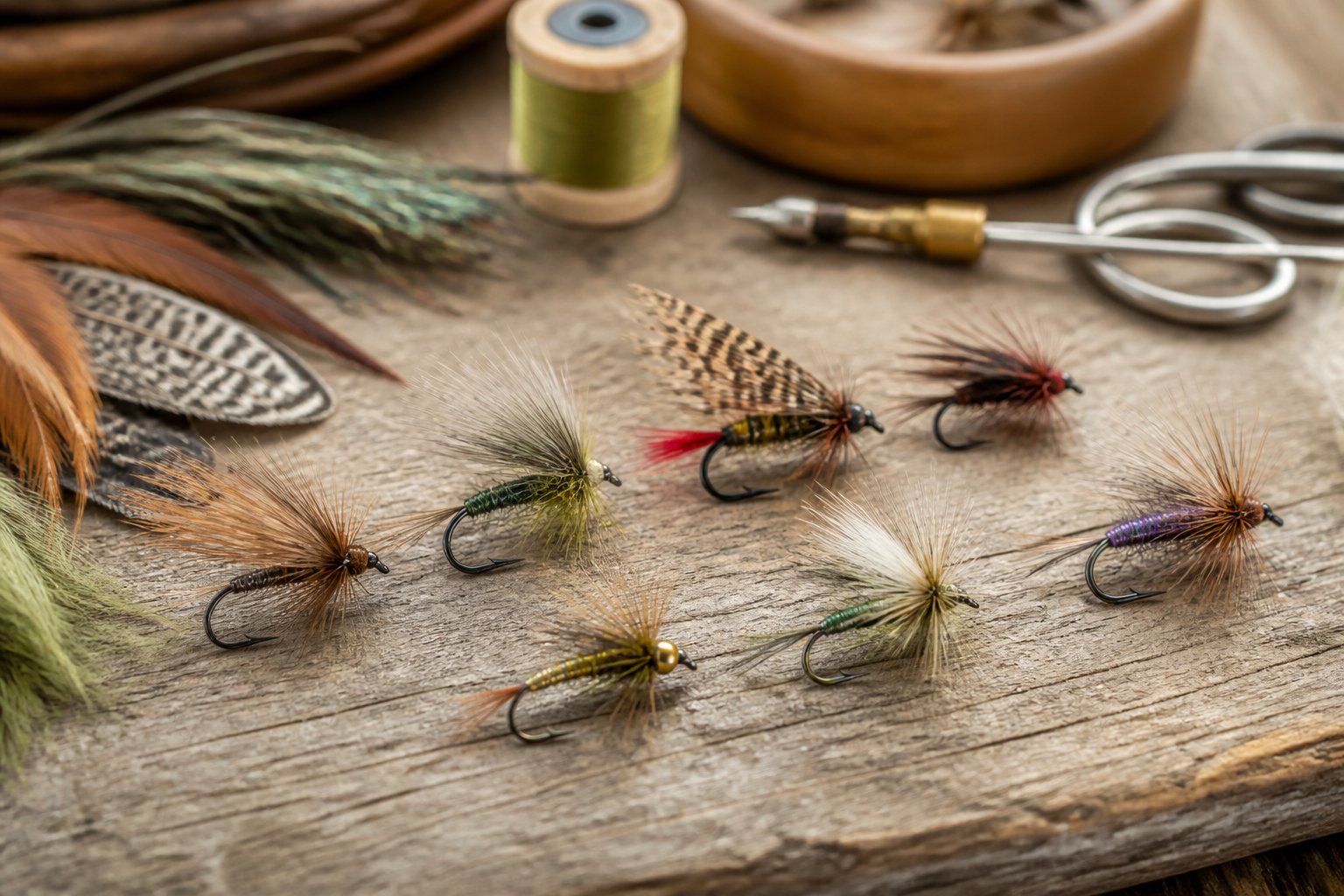
The fastest approach is to match fly depth first, then size and color: use a streamer or leech pattern for searching, a nymph for subsurface feeding, and a dry fly when trout are rising. Carry sizes 12 through 18 for common stream patterns, plus a few larger flies for lakes and runoff. A short after-work trip becomes easier when three proven patterns are already rigged or organized in separate boxes.
1. Woolly Bugger for Lakes, Ponds, and High Water
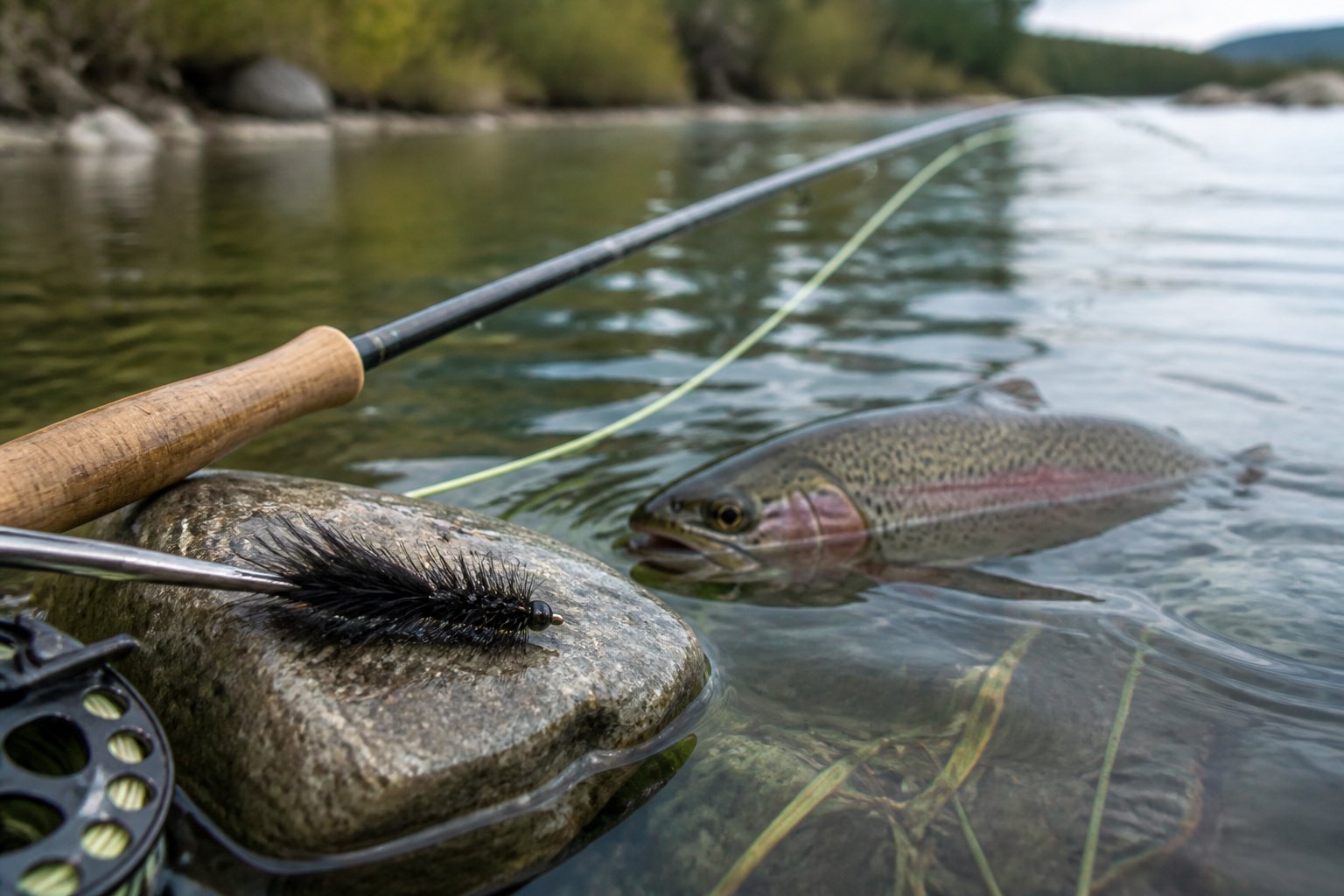
The Woolly Bugger is the best searching fly when rainbow trout are spread across a lake, pond, or swollen stream. Its marabou tail, chenille body, and hackle create movement that resembles a leech, baitfish, or large aquatic nymph.
Use black, olive, brown, and white versions in sizes 6 to 10. A floating line works near the surface, while an intermediate or sinking tip helps reach trout holding deeper in a reservoir.
Cast toward structure, drop-offs, weed edges, and windblown banks. Retrieve with short strips and pauses, then vary the speed until trout follow or strike. A slow hand-twist retrieve works well in cold water.
2. Pheasant Tail Nymph for Year-Round Stream Fishing
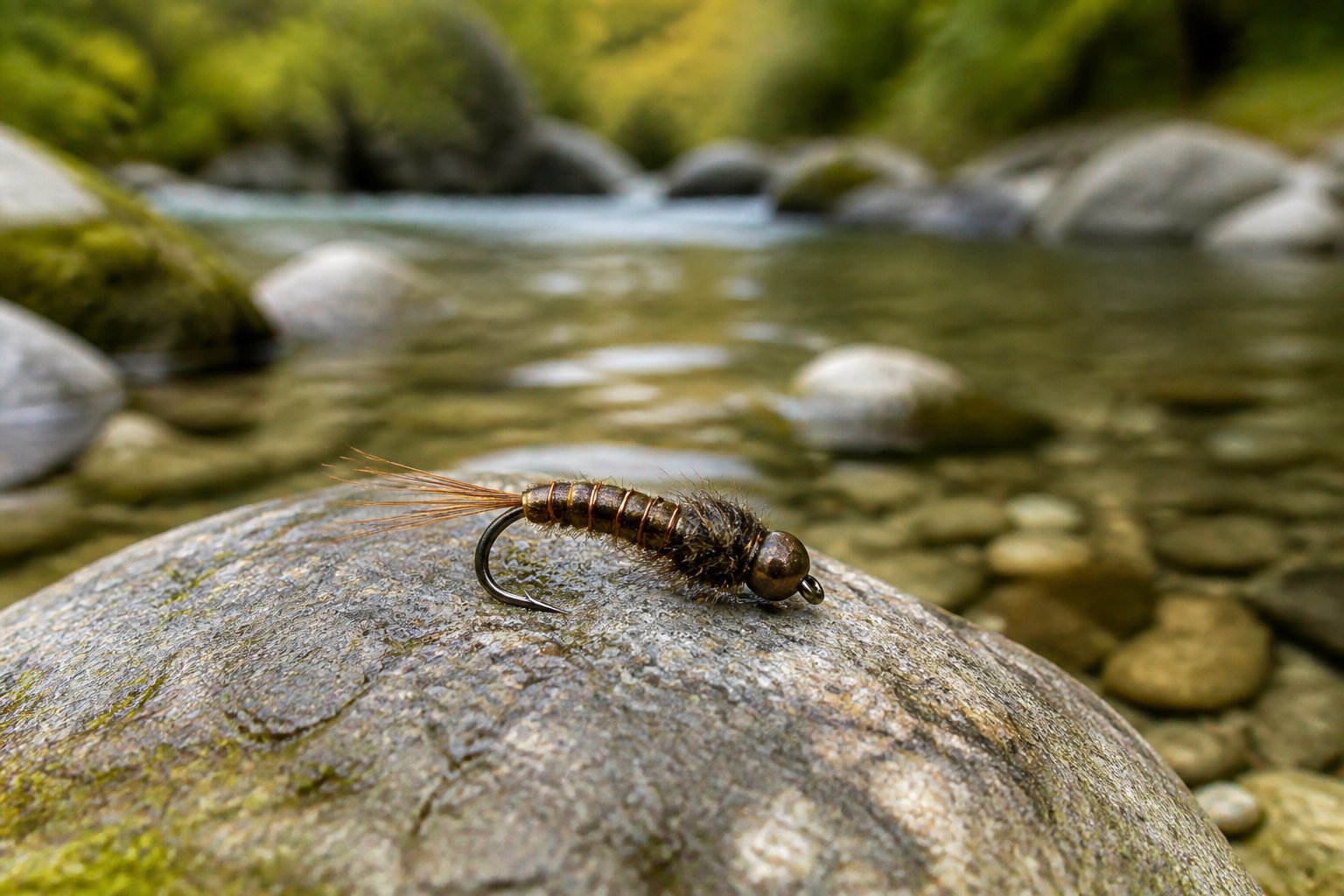
The Pheasant Tail Nymph is a dependable stream pattern for imitating mayfly nymphs in sizes 14 to 18. Its slim profile works in clear water, and the pattern fishes well below an indicator, under a dry fly, or on a tight-line setup.
A bead-head version reaches moderate depth quickly. In shallow riffles, a lightly weighted pattern drifts more naturally and avoids frequent snags.
Drift it through seams, riffle margins, and the softer water below a pocket. Long, drag-free drifts produce more takes than repeated casting, so mending the line upstream is worth the few extra seconds. Anglers seeking more rigging detail can review this guide to Pheasant Tail Nymph fly fishing.
3. Zebra Midge for Clear Water and Winter Trout
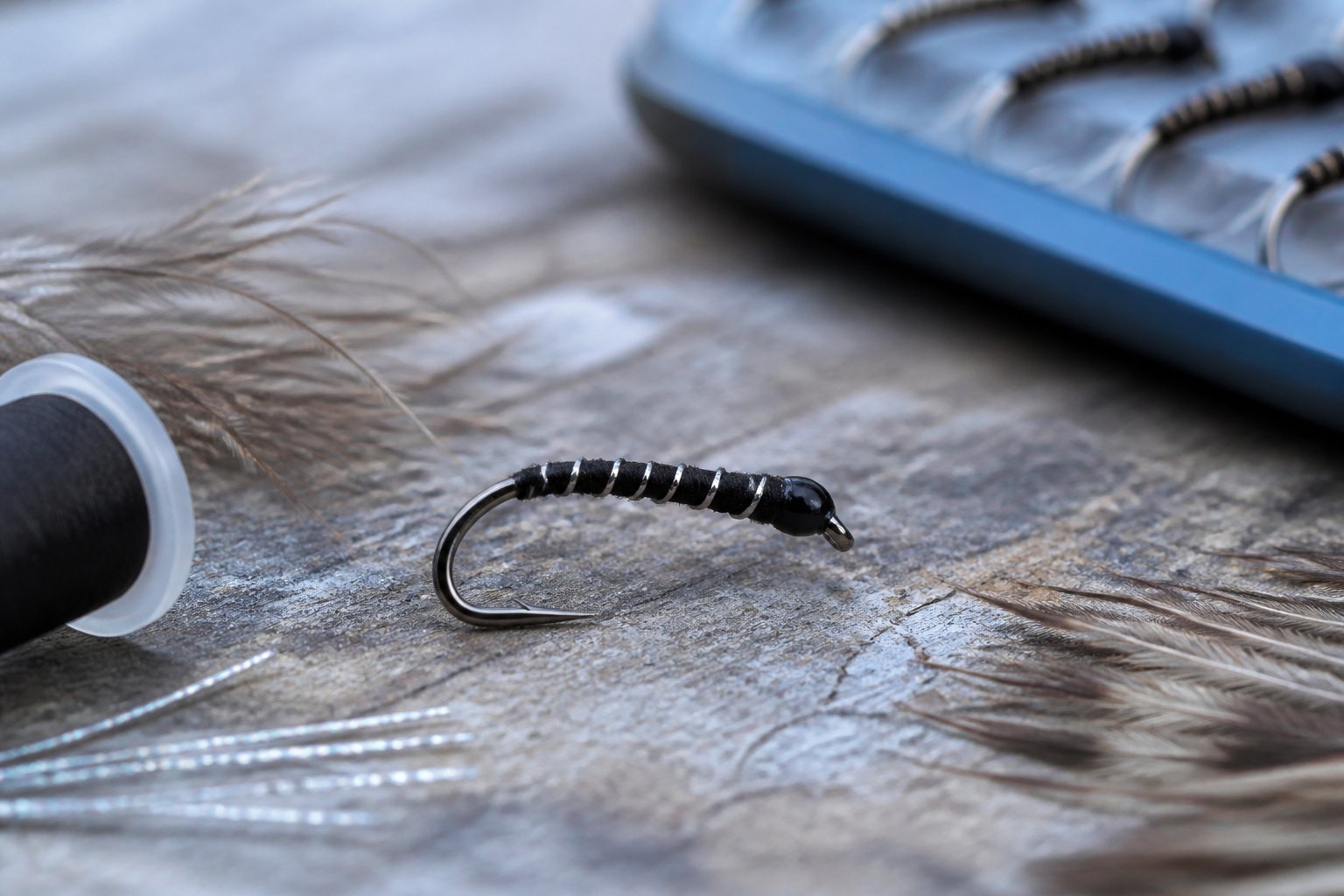
The Zebra Midge is a compact choice for clear water, tailwaters, and cold months when trout feed on midge larvae and pupae. Black, red, and olive bodies with silver wire cover the most useful color options.
Fish sizes 18 to 24 on light tippet, adjusting down when trout inspect the fly closely. A small bead adds enough weight for a subsurface drift, while an unweighted version works under a buoyant dry fly.
Place the fly below an indicator at the depth where trout are feeding. In slow pools, tiny takes show as a slight pause or sideways movement, so a sensitive indicator and light strike response help protect thin tippet. More pattern ideas appear in these midge fly patterns.
4. Parachute Adams for Spring and Summer Surface Feeding
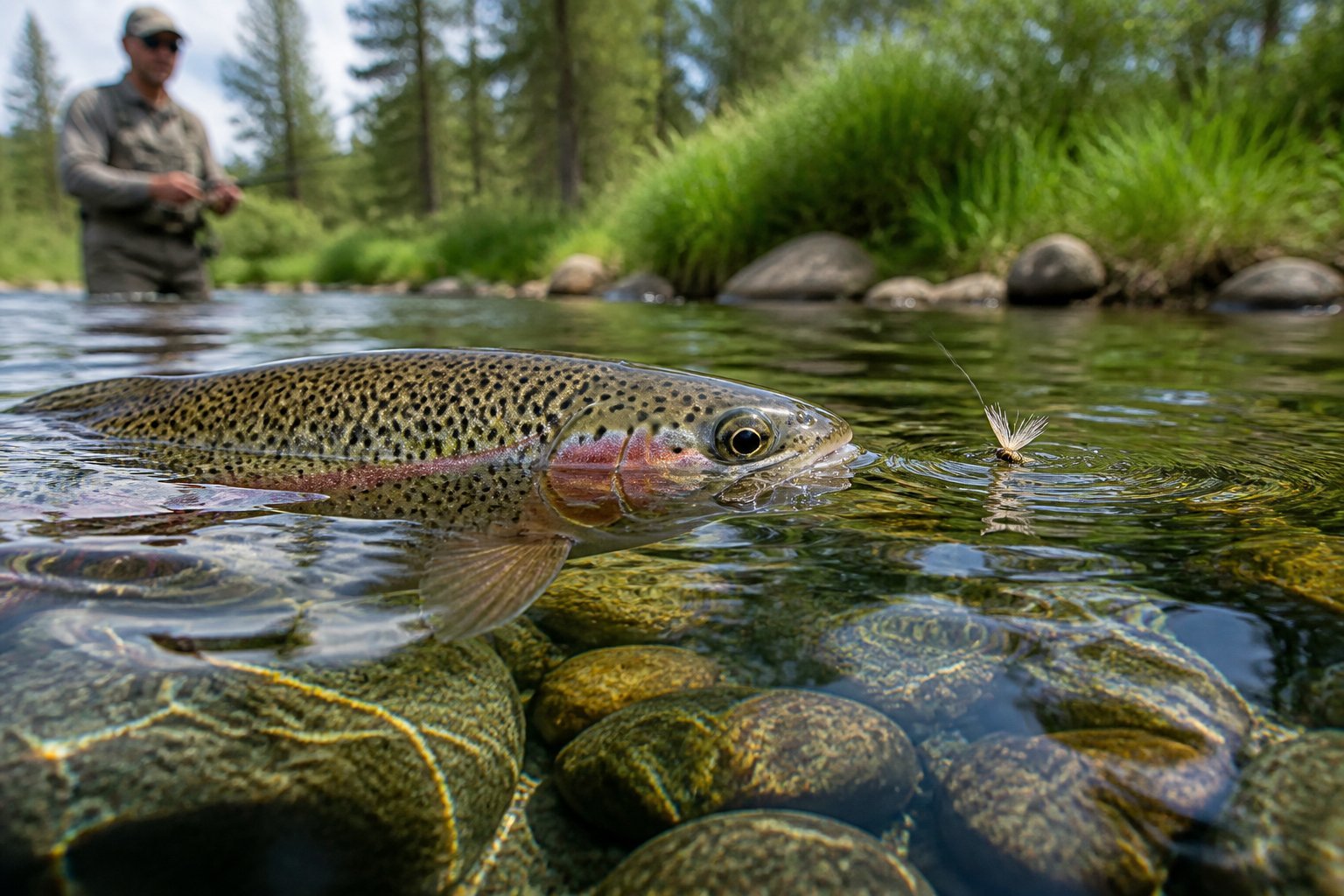
The Parachute Adams is a reliable dry fly when rainbow trout are rising to mayflies or taking small insects from the surface. Its gray body, mixed hackle, and white post offer a useful general imitation with good visibility.
Sizes 12 to 16 suit larger spring and early-summer mayflies, while sizes 18 to 22 match smaller summer insects. Apply a small amount of floatant to the hackle and body, keeping the post visible in glare or broken water.
Fish it along current seams, foam lines, and the heads of pools. A reach cast helps the fly land ahead of the leader’s drag, and a few feet of slack line supports a longer natural drift. For more surface-pattern options, see these dry fly fishing flies.
5. Hare’s Ear Nymph for Fast Water and Beginner Nymphing
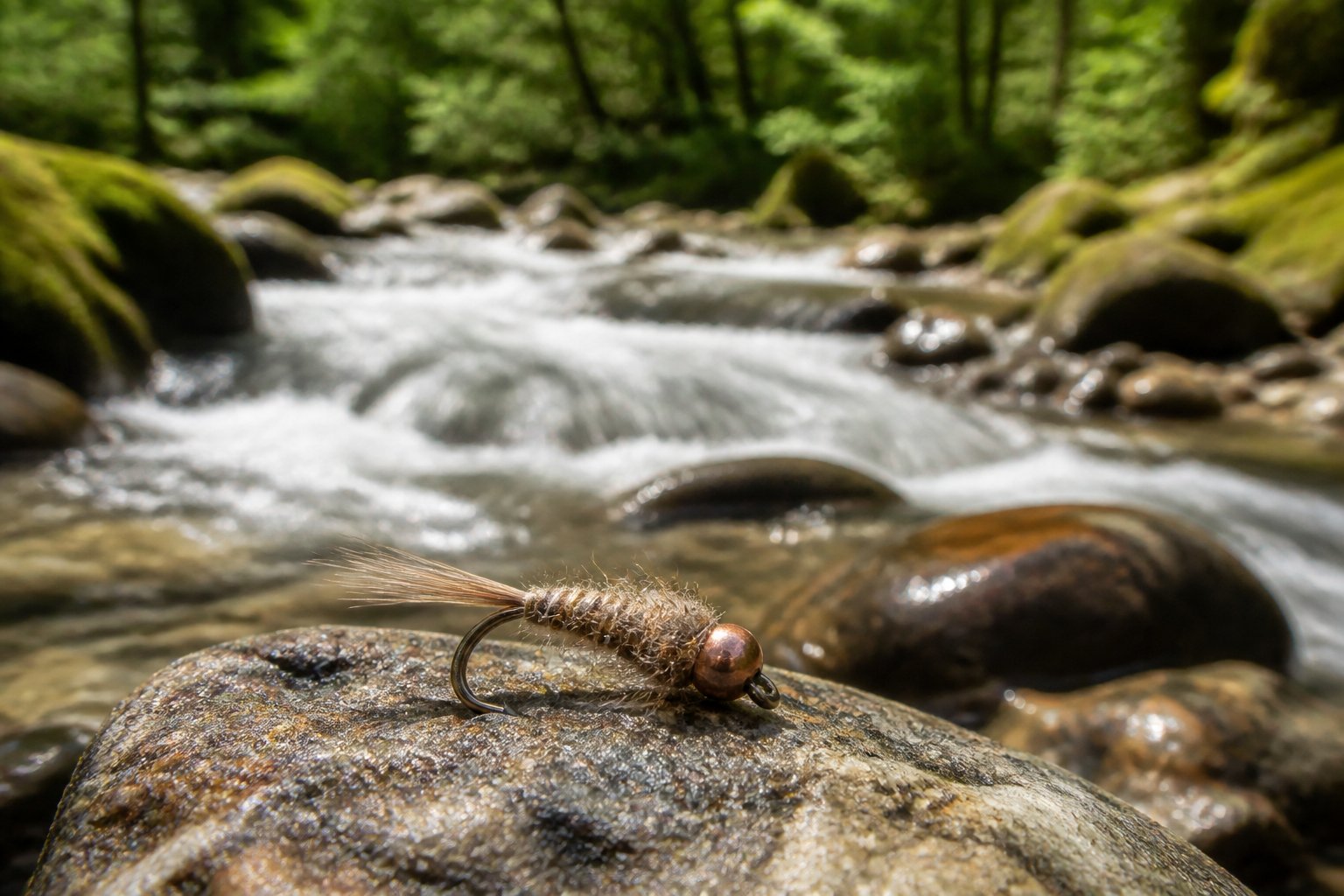
The Hare’s Ear Nymph gives beginners a versatile, easy-to-see subsurface pattern for riffles, runs, and pocket water. Its buggy body suggests several aquatic insects, including mayfly nymphs and caddis forms.
Choose sizes 12 to 16 for faster water and 16 to 18 for clearer, lower flows. A bead-head version sinks quickly, which helps when a short fishing window leaves little time for repeated adjustments.
Pair it with a small indicator and enough split shot to reach the bottom without dragging. Cast slightly upstream, mend immediately, and lift the rod when the indicator stops, dips, or moves against the current.
6. Pat’s Rubber Legs for Runoff and Heavy Current
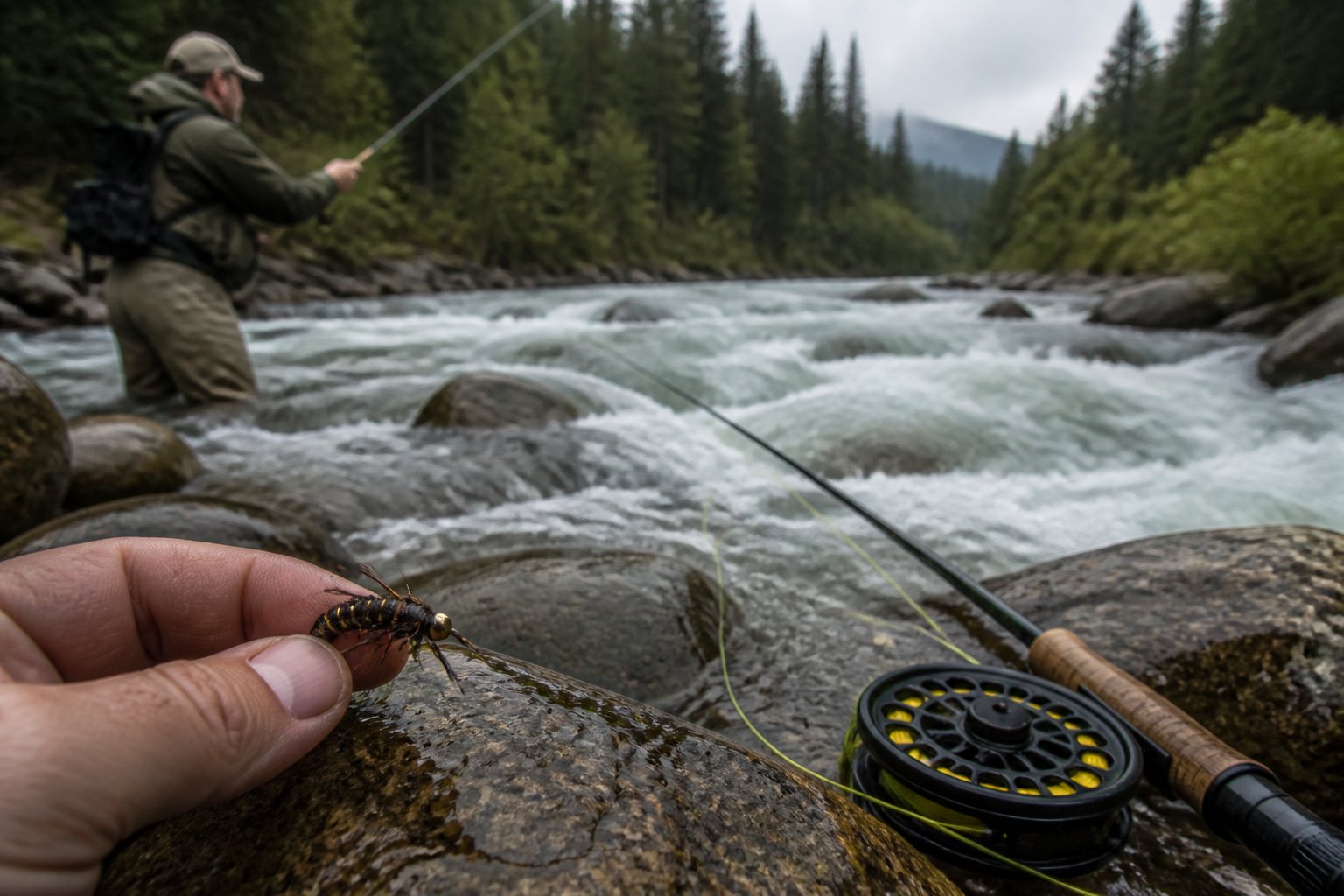
Pat’s Rubber Legs excels during runoff, high water, and periods when trout feed on stonefly nymphs. Its large silhouette and active rubber legs remain visible in turbulent water.
Use black, brown, or tan patterns in sizes 6 to 10. Add a smaller Pheasant Tail or Zebra Midge below it when trout want a second offering, with the larger fly serving as both attractor and strike indicator.
Work pocket water, undercut banks, and the slower edges beside strong current. Extra weight and a short leader help the fly reach the feeding lane quickly, while a high rod angle reduces snagging along the bottom.
7. Elk Hair Caddis for Summer Streams and Evening Hatches
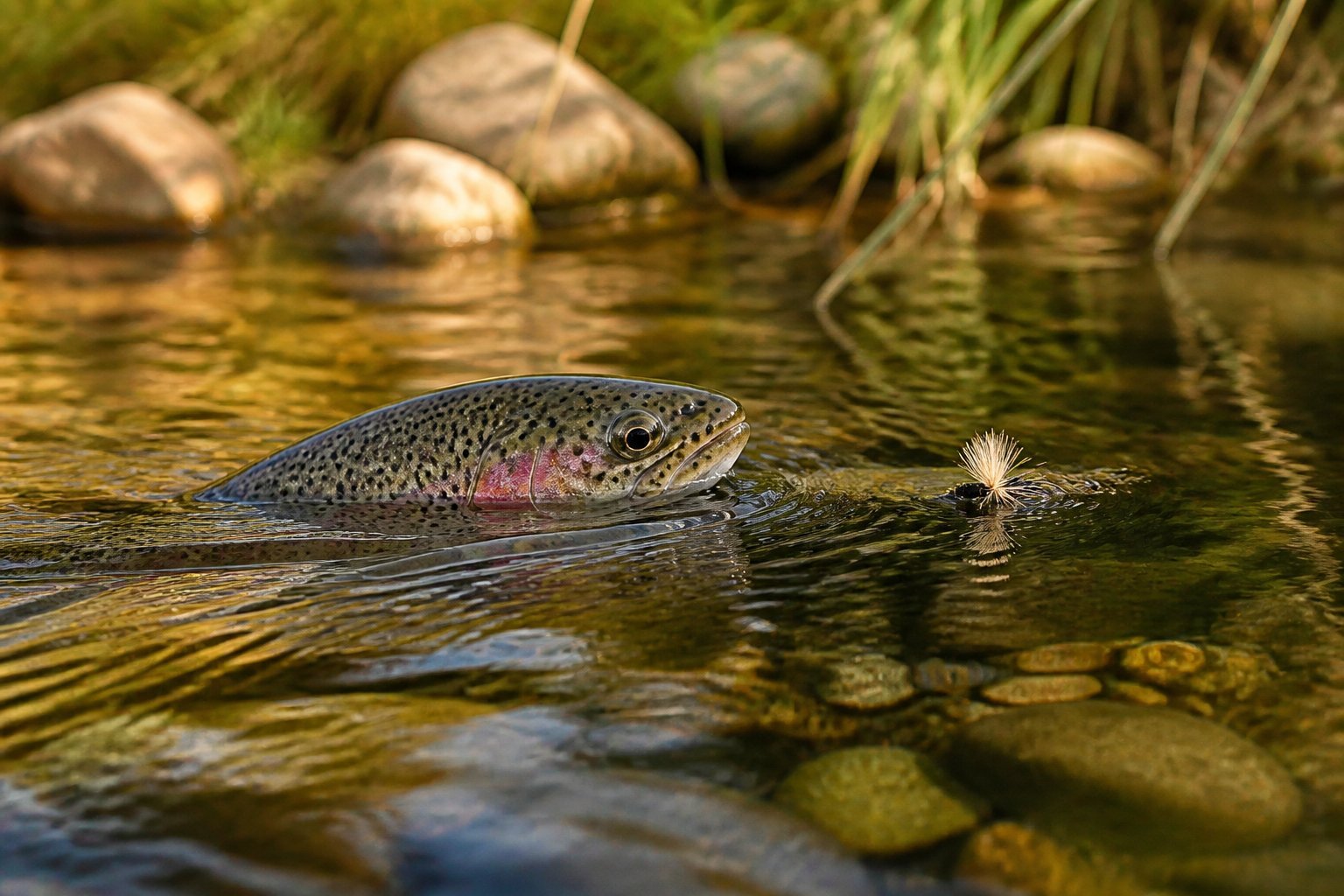
The Elk Hair Caddis is a durable surface fly for summer streams, evening caddis activity, and pocket water. Its buoyant elk-hair wing supports the fly through broken current and makes it easy to track.
Tan, brown, and olive versions in sizes 12 to 16 cover common caddis colors. Treat the hackle and hair with floatant, then dry the fly after several fish by pressing it in a cloth or desiccant.
Skate it lightly near banks and over riffle margins when caddis are fluttering above the water. A dead drift works first; a small twitch can trigger a response when trout follow without committing.
8. Chironomid Pupa for Stillwater Rainbow Trout
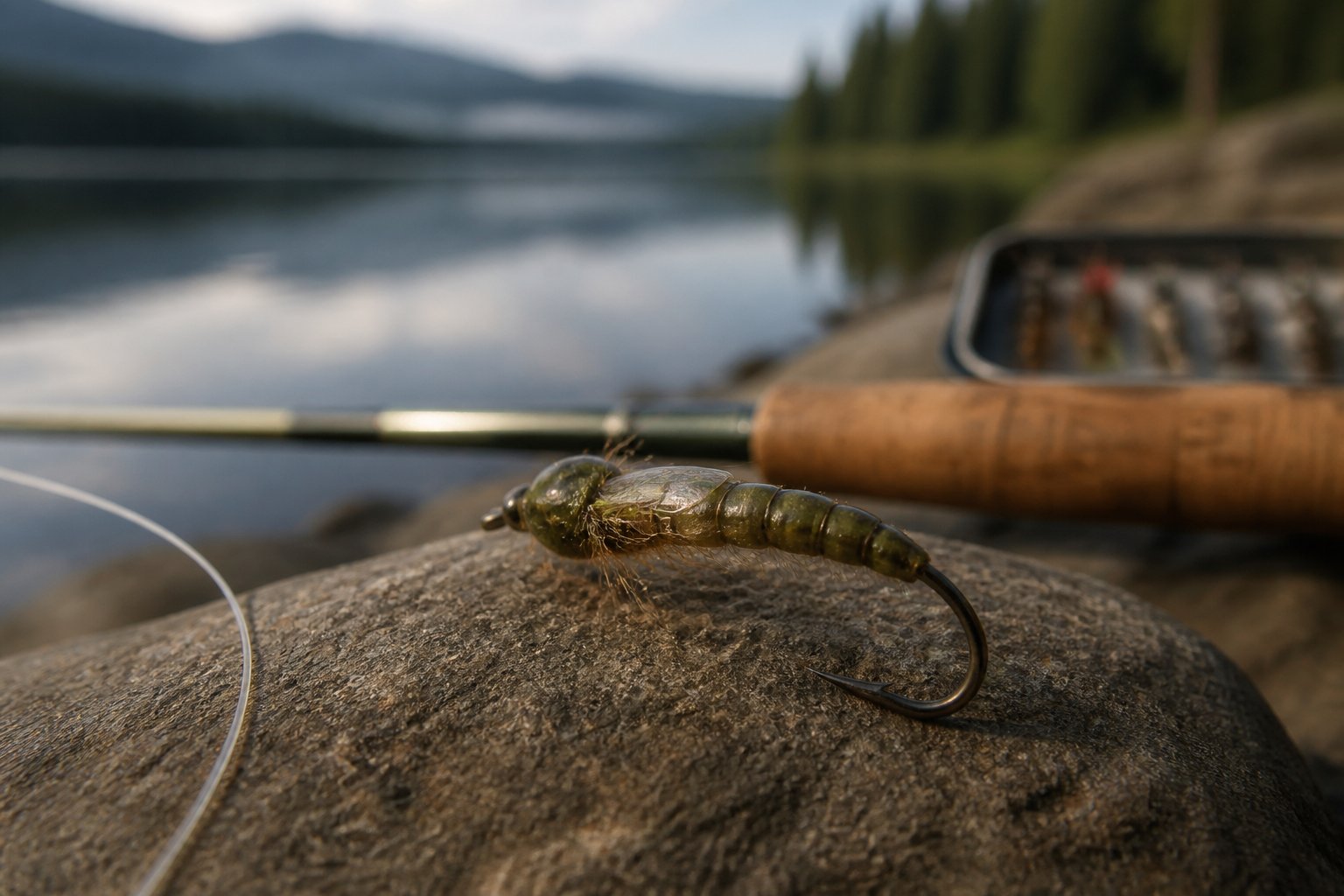
The Chironomid Pupa is a key stillwater pattern when rainbow trout feed on midge pupae suspended in the water column. It is especially useful in lakes and reservoirs with calm surfaces and limited visible insect activity.
Carry black, brown, olive, and red versions in sizes 14 to 20. Suspend the fly beneath an indicator, placing it near weed beds, drop-offs, or the depth where trout show on a fish finder.
Let wind create a slow drift, then retrieve the line in tiny increments. Strikes can feel soft, so keeping the line in light contact with the fly improves hook-setting speed.
9. Balanced Leech for Cold-Water Lakes and Reservoirs
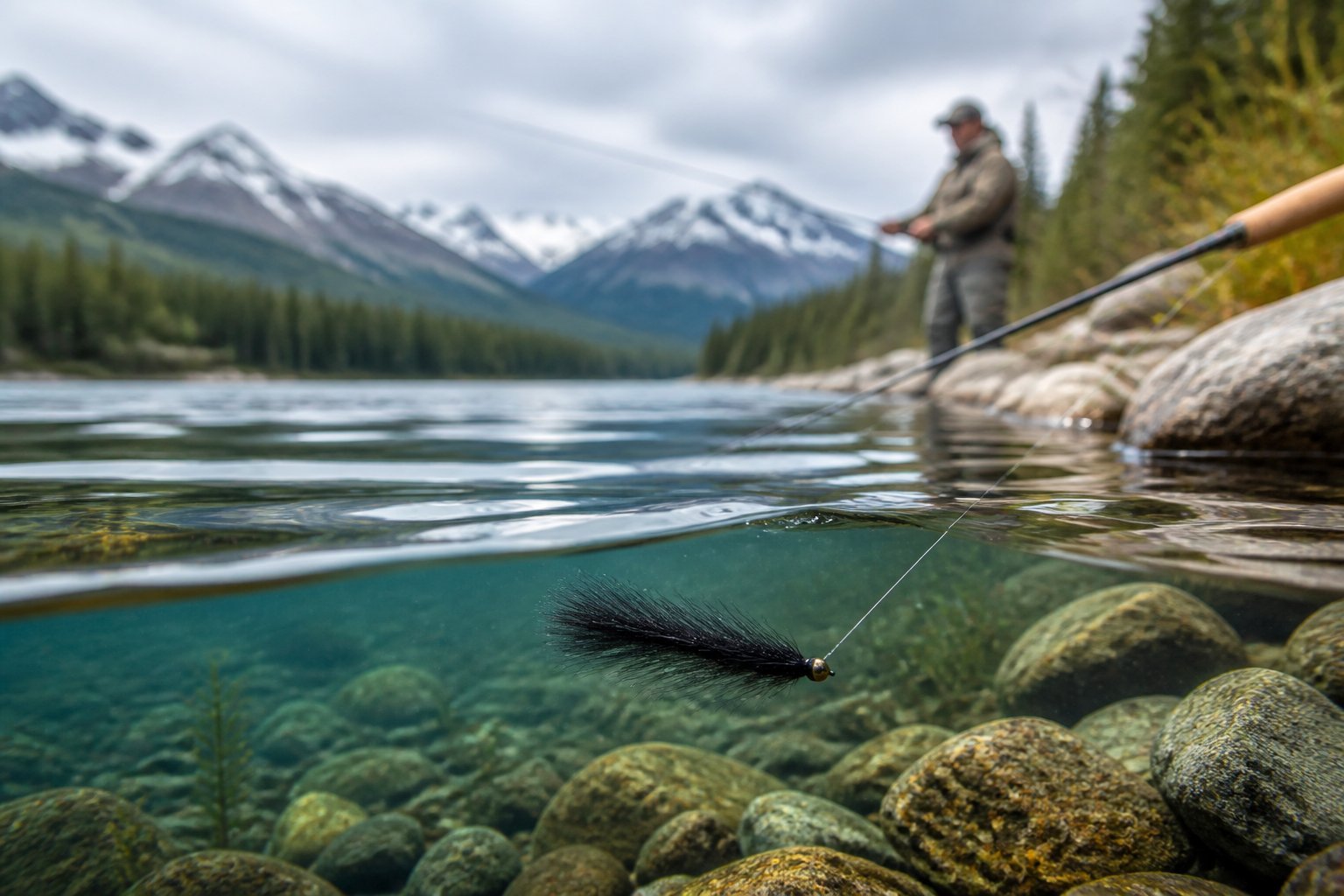
The Balanced Leech is an effective cold-water lake pattern because it suspends horizontally and moves with subtle lifts. Its profile imitates leeches and other swimming prey that rainbow trout pursue near structure.
Black, olive, and brown are practical starting colors in sizes 8 to 12. Fish it beneath an indicator with a long leader, allowing the fly to hang above weed tops, drop-offs, or submerged shelves.
Use slow hand-twist retrieves with pauses between movements. On calm days, watch the indicator for a gradual slide or hesitation, since trout frequently take a suspended leech without a sharp pull.
10. Glo Bug Egg Fly for Fall Spawning Runs
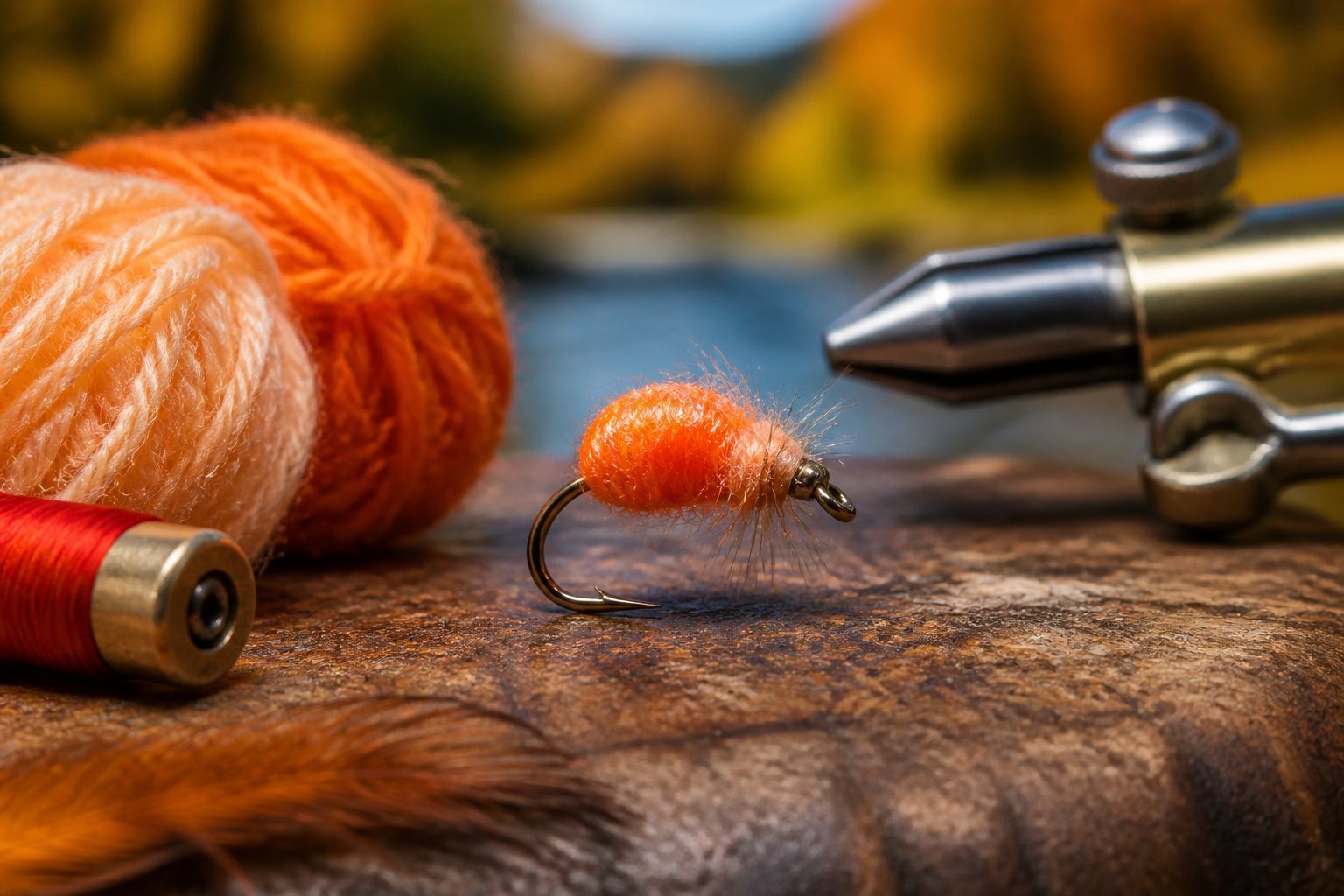
The Glo Bug Egg Fly imitates drifting eggs during fall spawning activity and attracts rainbow trout holding downstream of spawning fish. Orange, peach, pink, and cream patterns cover common water conditions and egg colors.
Fish sizes 10 to 14 with a light fluorocarbon tippet when water is clear. A small amount of weight places the fly near the bottom, where eggs tumble through the current.
Target the tail of spawning areas and the softer current below them while avoiding active redds. A short, controlled drift keeps the fly in the feeding lane and reduces the chance of foul-hooking fish.
Quick Fly Choice Guide for a Short Trip
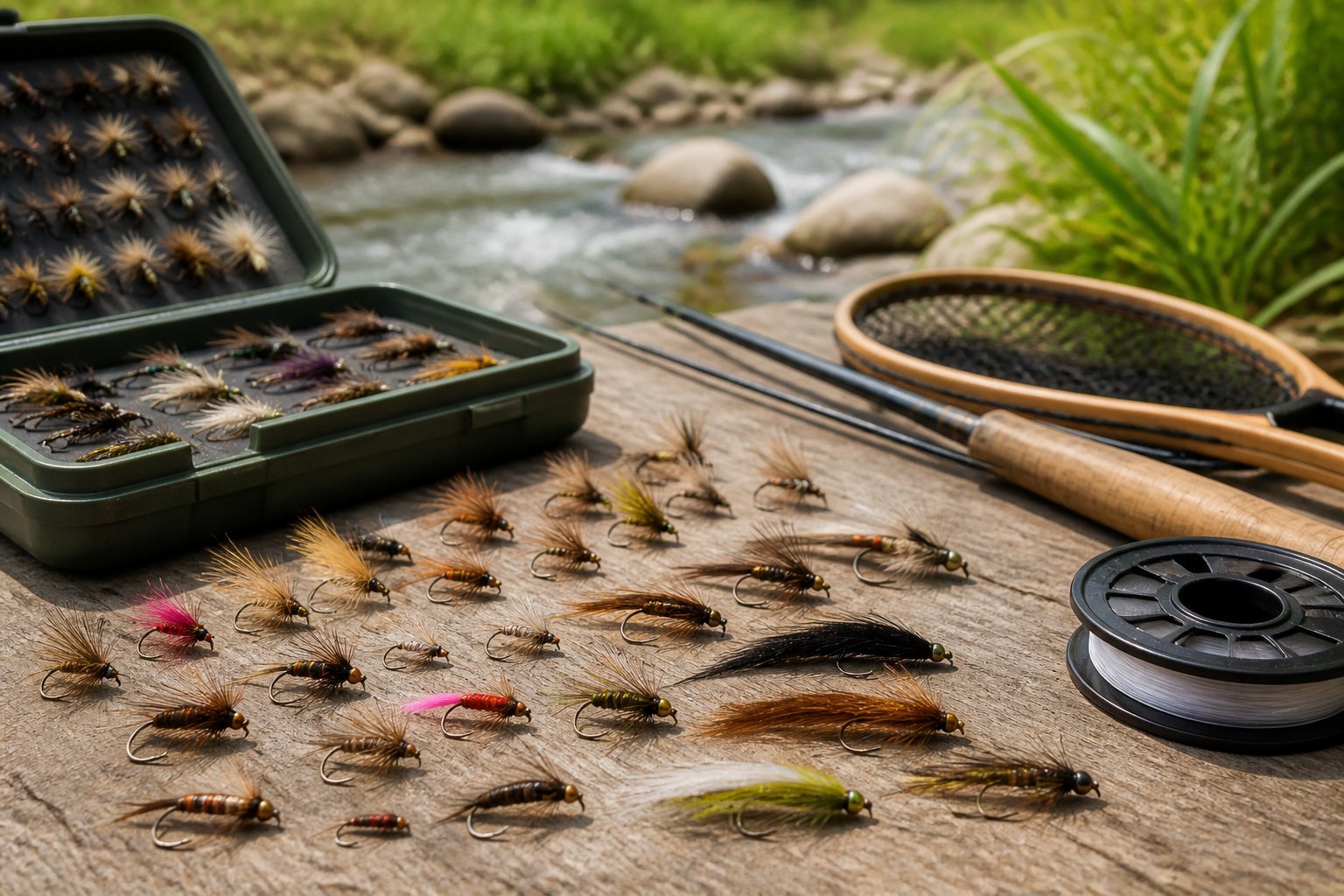
A short trip needs one searching fly, one nymph, and one dry fly that cover different depths and feeding situations. The choices below keep decision-making quick for an hour before work, a lunch-break outing, or a family fishing session.
Which three flies should a beginner carry?
A beginner should carry a black Woolly Bugger, a bead-head Pheasant Tail Nymph, and a Parachute Adams. Sizes 8, 16, and 14 provide a practical spread for lakes, streams, and surface activity.
Add a small Zebra Midge when fishing clear water in winter. For a child learning on a pond, the Woolly Bugger is easy to cast and productive during a slow retrieve.
What should you tie on for a lake, pond, or reservoir?
Start with a Woolly Bugger when trout location is uncertain, then switch to a Balanced Leech or Chironomid Pupa after identifying depth and insect activity. A sinking-tip line helps search deeper water, while an indicator rig keeps a chironomid suspended.
Windblown banks, weed edges, and drop-offs deserve the first casts. Lake-focused lure information can also help anglers compare fly presentations with other trout options, including lake trout lures.
What should you tie on for a small stream or river?
Use a Pheasant Tail Nymph or Hare’s Ear Nymph for subsurface feeding, then change to an Elk Hair Caddis or Parachute Adams when trout rise. Pat’s Rubber Legs fits cold, high, or discolored water.
Match fly size to the available insects and water clarity. A smaller pattern works in low, clear flows, while a larger profile is easier to track in broken current.
How should you choose flies by season and water conditions?
| Condition | First choice | Follow-up choice |
|---|---|---|
| Cold, clear water | Zebra Midge | Small Pheasant Tail |
| Spring runoff | Pat’s Rubber Legs | Hare’s Ear Nymph |
| Summer surface feeding | Elk Hair Caddis | Parachute Adams |
| Warm stillwater | Chironomid Pupa | Balanced Leech |
| Fall spawning runs | Glo Bug Egg Fly | Pheasant Tail Nymph |
Check water color, flow speed, surface activity, and depth before changing flies. A fly box with dark and light patterns in several sizes solves more problems than carrying many nearly identical designs.
Simple Setups That Save Time on the Water
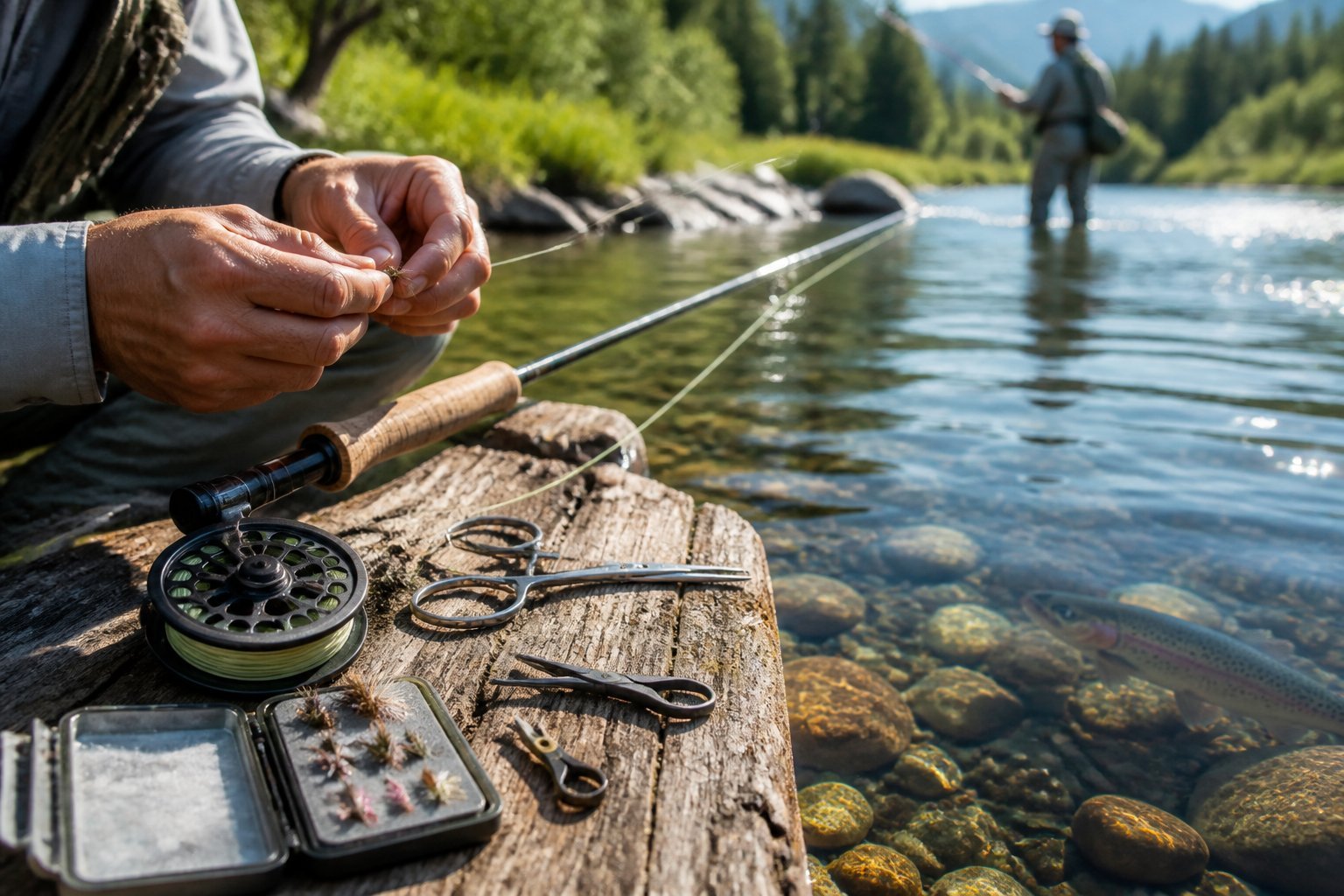
A dry-dropper rig, indicator nymph rig, or basic floating-line setup covers most rainbow trout trips without complicated gear. Choosing one rig that matches the water saves time during a short outing.
When should you use a dry-dropper setup?
Use a dry-dropper when trout might feed on the surface and below it at the same time. Tie a Pheasant Tail or Hare’s Ear 18 to 30 inches below a buoyant Parachute Adams or Elk Hair Caddis.
The dry fly acts as an indicator and gives trout a surface target. Adjust the dropper depth for deeper runs, keeping the rig shorter in shallow pocket water to reduce snags.
When is a basic indicator nymph rig the better choice?
Choose an indicator nymph rig when trout hold deep, surface activity is absent, or the current pushes flies below the feeding lane. Suspend a weighted nymph beneath an indicator and add split shot when the fly fails to reach depth.
Set the indicator so the fly drifts near the bottom while remaining clear of constant snags. A sensitive yarn or small foam indicator helps detect subtle winter takes.
How can kids and beginners fish a fly without complicated gear?
Kids and beginners can fish a Woolly Bugger beneath a floating line with a slow retrieve and a simple clinch knot. A short leader, larger fly, and open casting space reduce tangles and make strikes easier to detect.
Barbless hooks, polarized sunglasses, and adult supervision around deep or moving water support safer practice. For foundational equipment and technique, this resource on trout fishing for beginners provides useful preparation.
Frequently Asked Questions
What are the best flies for rainbow trout fishing?
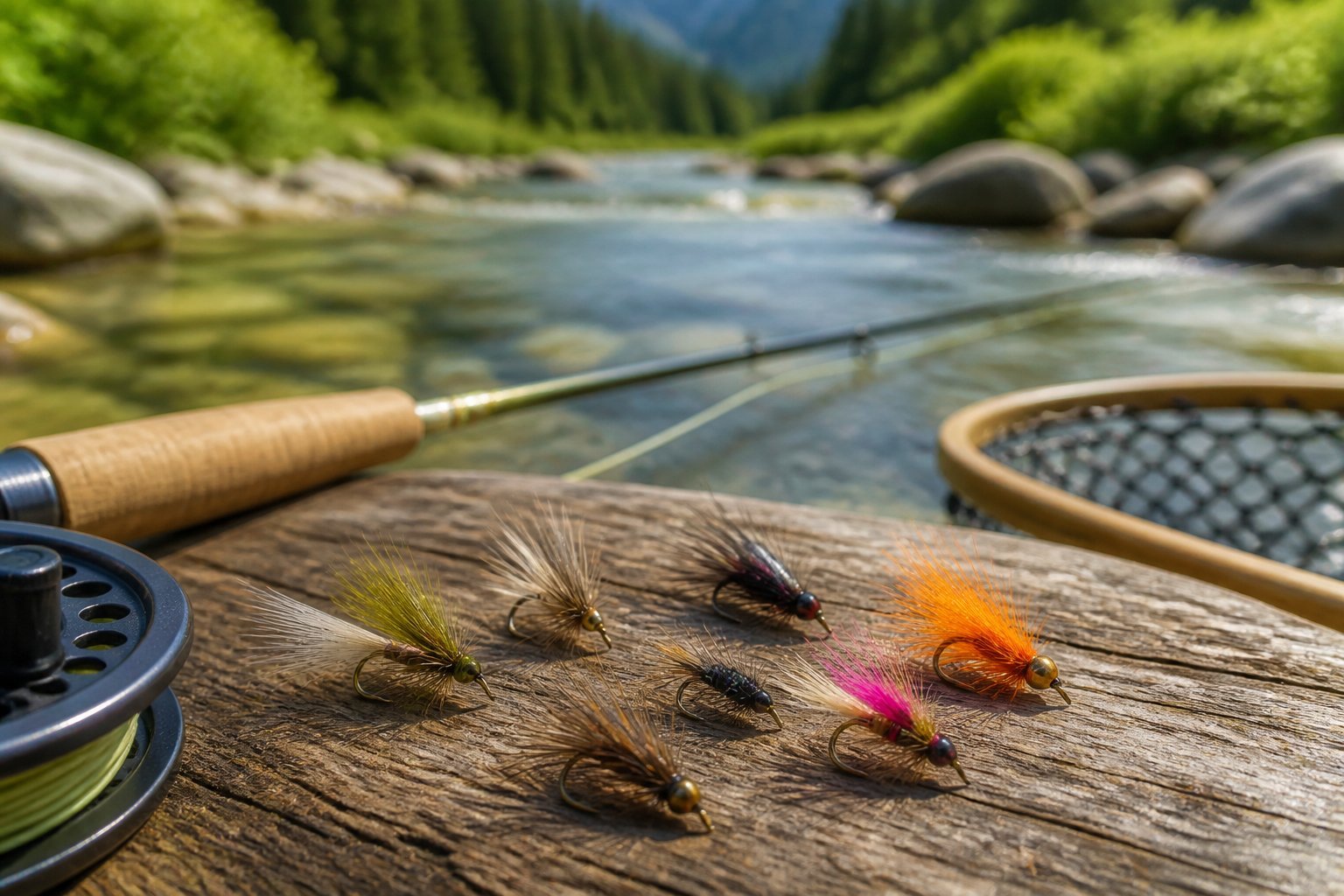
The best all-purpose choices are the Woolly Bugger, Pheasant Tail Nymph, Hare’s Ear Nymph, and Parachute Adams. They cover stream nymphing, lake searching, and surface feeding across much of the season.
What flies work best for rainbow trout in lakes?
Woolly Buggers, Balanced Leeches, and Chironomid Pupae are strong lake choices. Use streamers to search broad water, leeches near structure, and chironomids when trout suspend below indicators.
What are the best flies for trout in winter?
Small Zebra Midges, Pheasant Tail Nymphs, and tiny Hare’s Ear Nymphs work well in cold water. Fish slowly at the depth where trout conserve energy, with light tippet and careful strike detection.
Which trout flies should a beginner buy first?
A beginner should buy a black Woolly Bugger, a bead-head Pheasant Tail Nymph, and a Parachute Adams. Sizes 8, 16, and 14 provide a compact starting kit for many rivers and ponds.
What flies are rainbow trout eating right now?
Rainbow trout eat the insects and prey available in their current water, including midges, mayfly nymphs, caddis, stoneflies, leeches, and drifting eggs. Check the surface, nearby rocks, shoreline vegetation, and water level before selecting a pattern.
What is the 60/20/20 rule in fly fishing?
The 60/20/20 rule is a practical allocation guideline: spend about 60 percent of fishing time on the most likely presentation, 20 percent testing a second option, and 20 percent exploring or changing location. It keeps a short trip focused while leaving room to respond when trout show different behavior.