Bank fishing often means managing several rods while handling bait, children, conversation, or changing weather. A bite alarm adds a useful second layer of attention by pairing line movement with a sound and, usually, a visible LED signal. For night fishing or relaxed “bait-and-wait” sessions, that extra notice can matter.
The best fishing bite alarm should attach securely, produce a clear alert from a useful distance, and offer enough sensitivity control to avoid constant false alarms from wind or moving water. Battery type, weather resistance, rod compatibility, and whether the package includes multiple alarms or banksticks also affect its practical value. These five options cover simple clip-on alarms, adjustable models, and a more complete bank-fishing kit.
Best for adjustable settings and compact tackle-box storage: Lixada Fishing Bite Alarm
Best for a four-rod setup with spare batteries: Cooltto Electronic Fishing Bite Alarm
Best for adjustable volume across several rods: Cooltto Upgraded Fishing Bite Alarm
Best for straightforward clip-on night fishing: Linkstyle 4PCS Electronic Fishing Bite Alarm
Best for a complete alarm-and-bankstick kit: LSOSVSEU Fishing Bite Alarm & Bankstick Set
Lixada Fishing Bite Alarm

Buy this compact alarm for its useful tone, volume, and sensitivity controls, especially when a bank angler needs to balance loud alerts with fewer false triggers.
Pros
- Adjustable tone, volume, and sensitivity
- Audible and LED alerts for day or night
- Compact design with a 2.5 mm accessory jack
Cons
- Requires a 9-volt battery
- Line movement may register less reliably in one direction
- Attachment technique affects performance
The Lixada is the strongest all-around choice for anglers who want more control than a basic clip-on alarm provides. Its controls make it possible to increase sensitivity for cautious bites or reduce it when wind and current are causing nuisance alerts. The LED is useful after dark, while the sound can help a distracted parent notice a bite without watching the rod continuously.
A small bobbin or swinger can improve line contact and help the alarm respond more consistently. The housing is compact enough for a tackle box, and user feedback describes good performance in wet conditions, though “waterproof” should not be treated as permission to submerge the unit. It uses a commonly available 9-volt battery, which is convenient but larger than button-cell-powered alternatives.
Cooltto Electronic Fishing Bite Alarm, 4-Pack
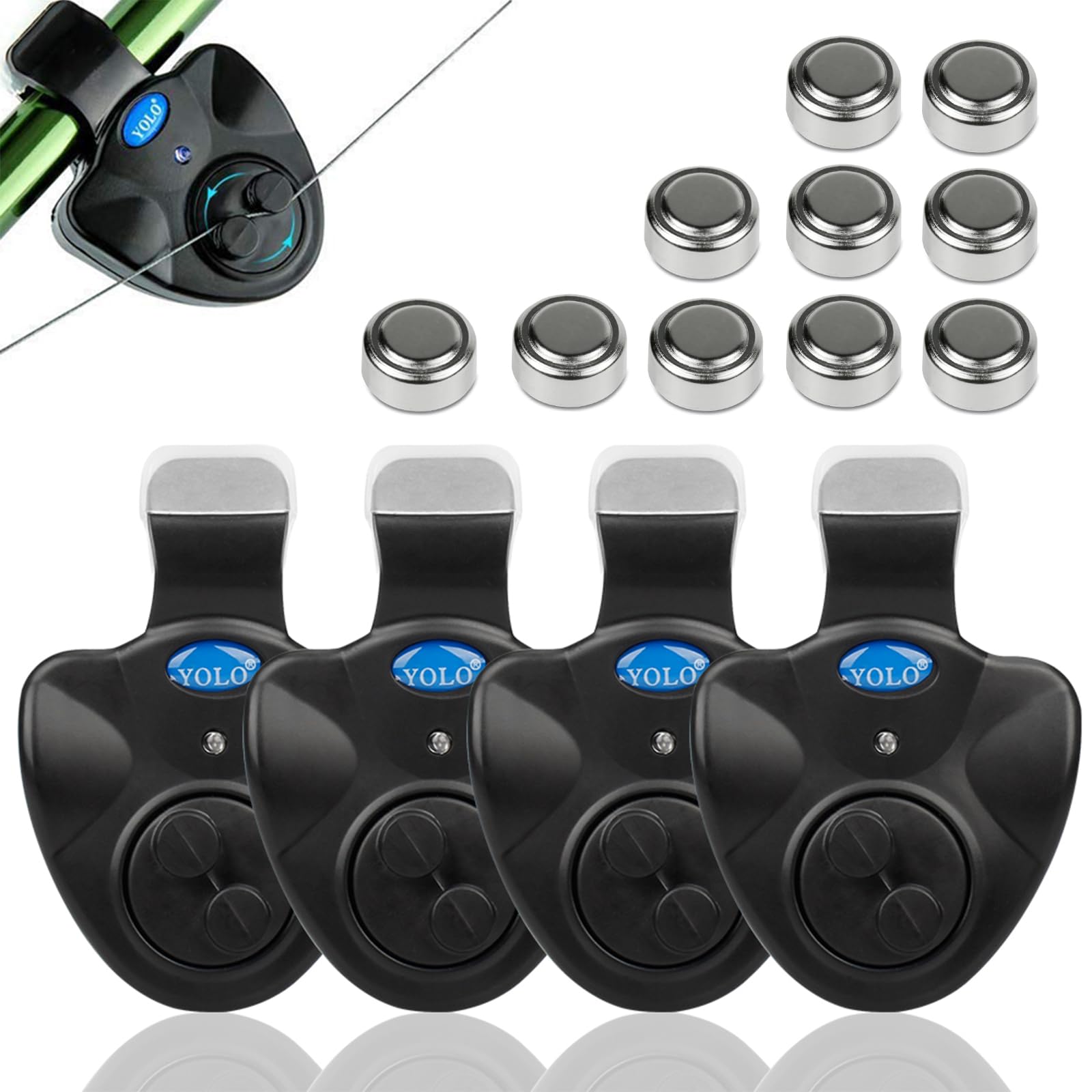
This four-pack suits bank anglers running several rods who want very loud alerts, bright LEDs, and backup batteries included in the box.
Pros
- Four alarms for multi-rod fishing
- Bright LED and powerful audible alert
- Includes spare button batteries
Cons
- Volume is not adjustable
- Smaller fish may not trigger it consistently
- The clip can loosen or fly off during hook-setting
The main appeal is coverage. Four alarms let an angler monitor a spread of rods without buying additional units, and the included spare cells reduce preparation before a long session. The sound is intentionally forceful, which is helpful beside traffic, around children, or when the angler is some distance from the rods.
That volume can also be excessive at a quiet pond, and there is no volume control for dialing it back. The sensor may require a firm pull, so it is better suited to larger, decisive bites than delicate pickups. The non-slip pad helps with attachment, but the alarm should be removed before setting the hook if the clip does not feel firmly seated.
Cooltto Upgraded Fishing Bite Alarm, 4-Pack
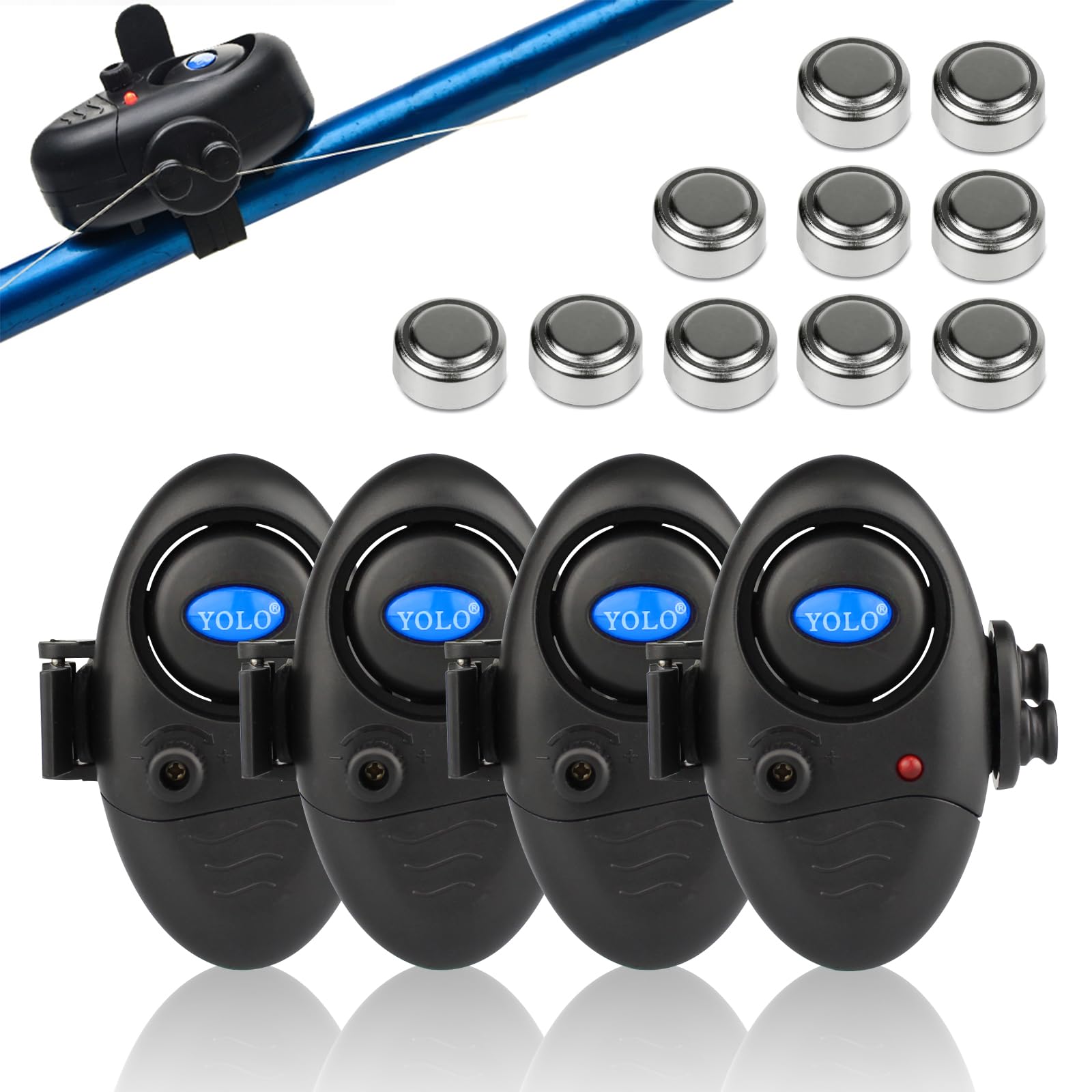
This upgraded four-pack is a practical choice when adjustable volume matters more than extensive sensitivity controls.
Pros
- Volume adjusts from mute to loud
- Four alarms cover multiple rods
- Bright LED and compact battery-powered design
Cons
- Sensitivity is not fully adjustable
- Straps may not hold every rod securely
- Drop bites can be difficult to detect
The volume knob gives this version a meaningful advantage over fixed-volume alarms. An angler can keep alerts quiet while sitting close to the rods, then increase them when supervising children, fishing near road noise, or moving around camp. The LEDs add a clear visual cue for night sessions.
The design is best used with a rod positioned relatively parallel to the water and a line arrangement that keeps steady contact with the sensor. It can respond well to strong, direct pulls, though subtle or slack-line bites are less dependable. The straps deserve a careful check before casting, since a loose alarm can shift or detach when the rod is lifted.
Linkstyle 4PCS Electronic Fishing Bite Alarm
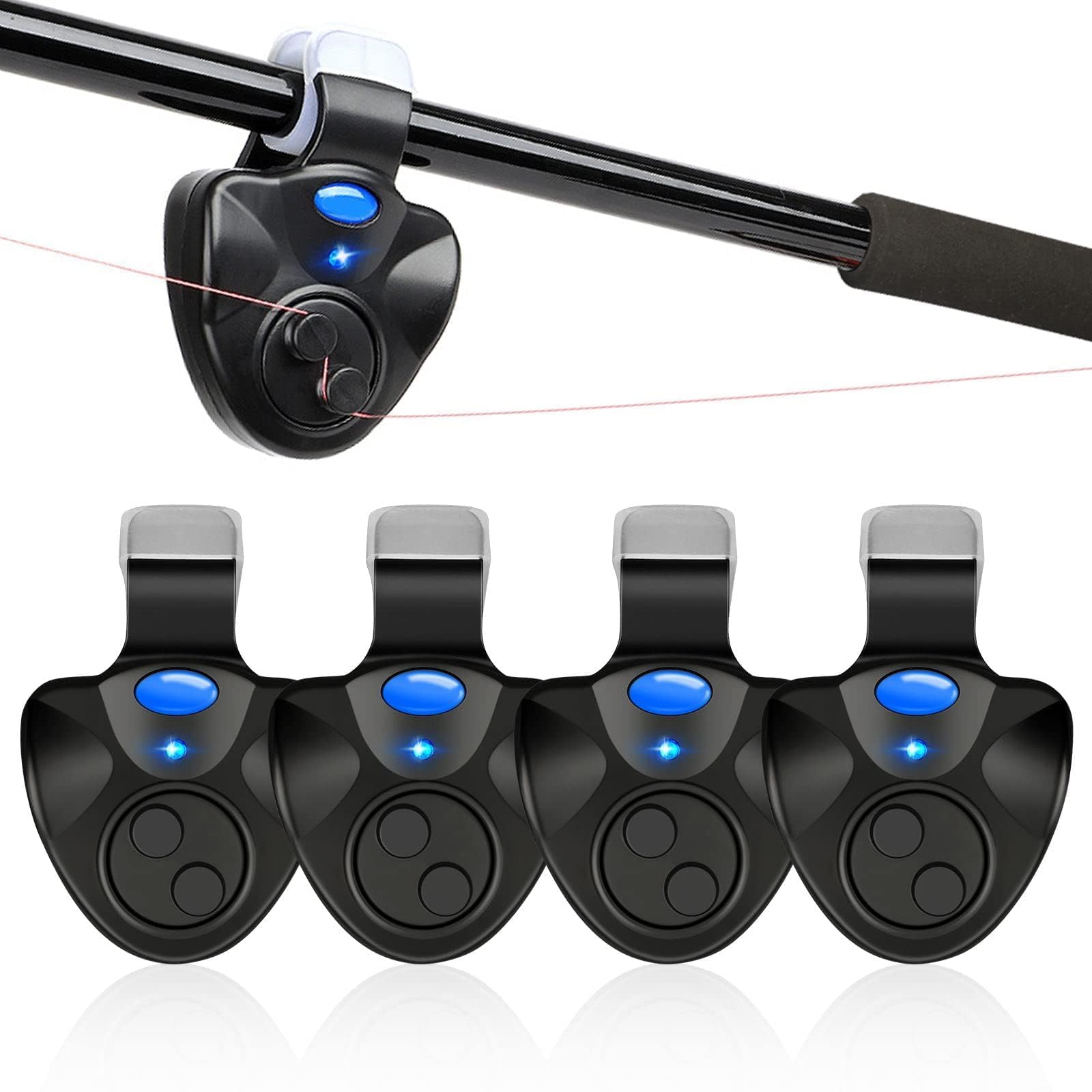
The Linkstyle set is a straightforward option for bank anglers who want four clip-on alarms with both sound and flashing light.
Pros
- Simple clip-on installation
- Four alarms with included batteries
- Audible and flashing LED alerts
Cons
- The alarm can be very loud
- The clamp may not suit small ice-fishing rods
- Not ideal for drift fishing
Setup is simple: the alarm clips to the rod, the line passes through the trigger, and the unit switches on. A silicone sleeve helps protect the rod and improve grip, making it suitable for typical bank-fishing rods. The four-unit format works well for anglers who prefer to spread baits across several positions.
The fixed, strong alert is useful when an angler is cooking, talking, or keeping an eye on children, though it may disturb nearby anglers. The clamp is not universal, and its size should be checked against unusually thin rods. This model is most useful when the rod remains stationary rather than drifting with current or being actively worked.
LSOSVSEU Fishing Bite Alarm and Bankstick Set

This kit is the best choice for an angler starting a three-rod bank setup and needing alarms, swingers, banksticks, and storage together.
Pros
- Includes three alarms, swingers, and banksticks
- Adjustable tone, volume, and sensitivity
- Telescoping aluminum banksticks and carry bag
Cons
- 9-volt batteries are not included
- Wind can trigger sensitive settings
- Bulkier to transport than clip-only alarms
The package provides more than an alarm alone. Each telescoping aluminum bankstick adjusts from about 11.8 to 19.7 inches and has a tapered end for ground placement, while the swingers help maintain line contact for forward and return movement. That setup is more stable and predictable than clipping an alarm directly to an improvised rod holder.
The controls are useful for tailoring the system to calm ponds or breezier banks, though high sensitivity can create false alerts in moving air. The included waterproof bag keeps the multi-piece kit organized. Since the alarms use 9-volt batteries and the package does not include them, spare batteries should be added before heading to the water.
Buying Guide
Choose the right alarm format
A clip-on alarm is the fastest option for casual bank fishing. It attaches directly to the rod and takes little space, though fit and grip vary by rod diameter. A bankstick system takes longer to set up but offers a steadier platform and better compatibility with swingers.
| Format | Best for | Main consideration |
|---|---|---|
| Clip-on alarm | Quick sessions and compact storage | Confirm the clamp fits the rod |
| Multi-alarm pack | Anglers using several rods | Check battery requirements |
| Alarm and bankstick kit | A dedicated stationary setup | Allow room for the extra hardware |
Prioritize useful sensitivity control
Sensitivity determines how much line movement is needed to trigger the alarm. Higher sensitivity can help with cautious bites, while a lower setting is more practical in wind, current, or rough water. Full control over sensitivity is more useful than a simply advertised “sensitive” sensor.
Swingers or bobbins can improve contact between the line and alarm, particularly when a fish moves toward the bank and creates slack. The rod angle and line path also matter, so the alarm should be tested with the exact rig before fishing.
Match volume to the setting
A loud alarm is valuable when the rods are distant or the angler is supervising children. Adjustable volume is preferable near other anglers, in quiet neighborhoods, or during night fishing. A bright LED provides a quieter visual alternative and makes it easier to identify which rod has activated.
Check attachment and hook-setting clearance
The alarm should sit firmly without crushing the rod blank. Non-slip pads, silicone sleeves, and secure straps can help, but the angler should still tug the line gently after installation to confirm that the unit stays in place. If the alarm is prone to launching from the rod during a hook-set, it should be removed before lifting the rod.
Plan for weather and batteries
Water resistance helps with rain and splashes, but battery compartments and switches should be kept closed and dry. Button-cell alarms are compact, while 9-volt models are easier to replace from many general retailers. Spare batteries belong in the tackle bag, especially for overnight or multi-rod trips.
Consider what the package includes
A single alarm is suitable for testing the method or carrying as a backup. Multi-packs reduce the cost per rod, while a kit with banksticks and swingers can be more economical for a new stationary setup. The best fishing bite alarm is the one whose attachment system, alert strength, sensitivity range, and battery format match the angler’s actual bank-fishing routine.