A kids fishing backpack gives a young angler a manageable way to carry tackle, snacks, water, and small tools without dragging a full-size box to the shoreline. The best designs stay light, keep essentials visible, and include practical storage for a few tackle trays and a child-sized fishing setup.
A good kids fishing backpack should fit the child, not just the gear: lightweight padding, secure zippers, rod storage, and room for a water bottle matter more than maximum capacity. The Piscifun model is the strongest fit for short trips, while the KastKing offers more room for families who want a bag that can grow with the angler.
Best for short bank-fishing trips: Piscifun Fishing Backpack
Best for extra tackle and multi-purpose storage: KastKing Karryall Fishing Sling Bag
Piscifun Fishing Backpack
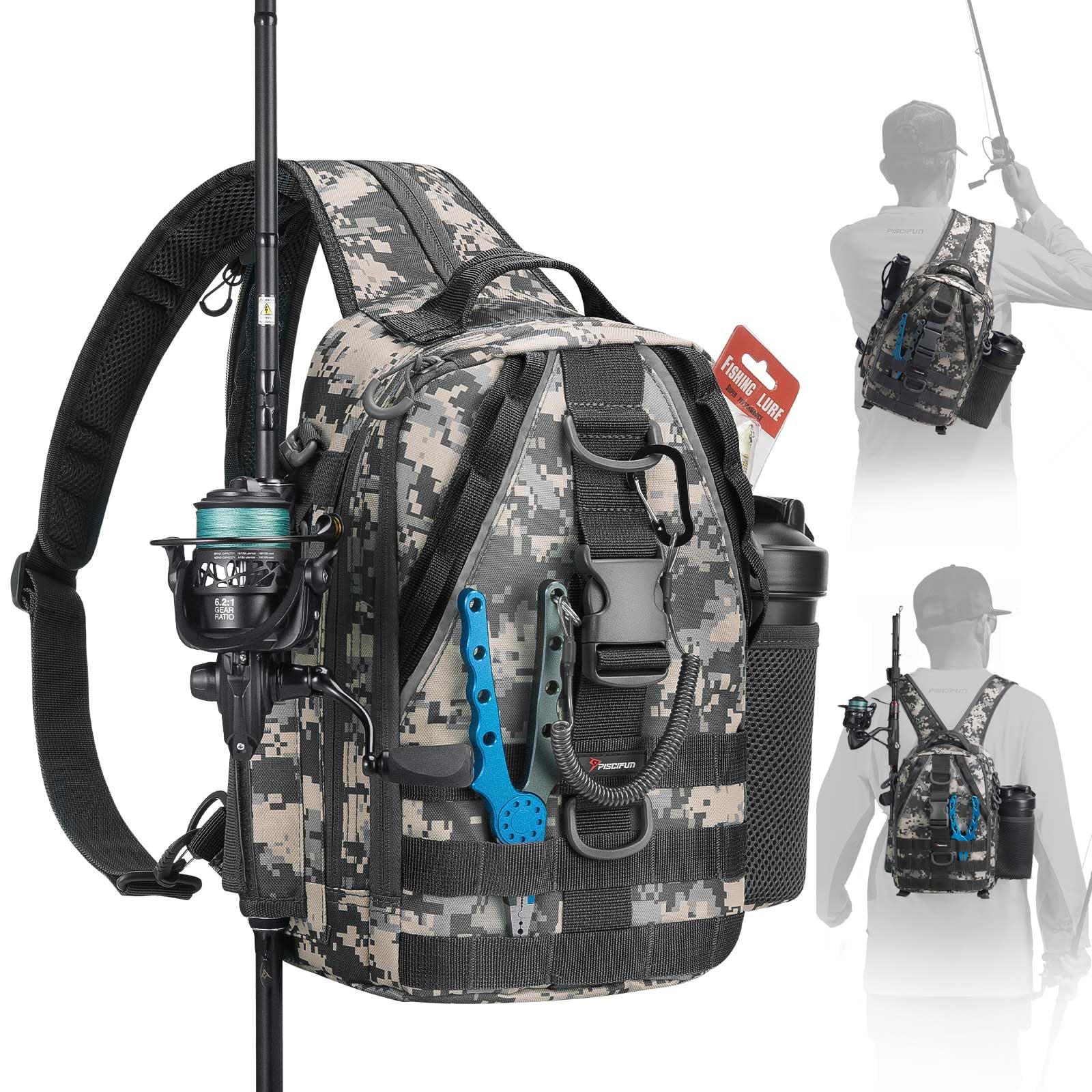
Kids should buy this backpack for casual shoreline trips because its light, compact design gives them useful storage without making the load cumbersome.
Pros
- Holds up to two 3600-size tackle boxes
- Four carry styles and two rod holders
- Bottle pocket, MOLLE loops, and multiple accessory compartments
Cons
- Standard size may feel tight for bulky gear
- Water-resistant fabric is not intended for heavy rain
- Straps may require adult adjustment for smaller children
The Piscifun is a practical choice for a child carrying a modest tackle selection, snacks, and water. Its main compartment fits up to two 3600 boxes, while nine compartments help separate lures, line, pliers, sunscreen, and other small items. The side rod holders are especially useful during walks between fishing spots.
The breathable padding and convertible straps let the bag work as a backpack, sling, chest bag, or handbag. In practice, a child will likely use the backpack or sling configuration most often. The 1000D nylon feels sturdy for repeated outdoor use, though the zippers and seams should not be treated as fully waterproof in sustained rain.
KastKing Karryall Fishing Sling Bag
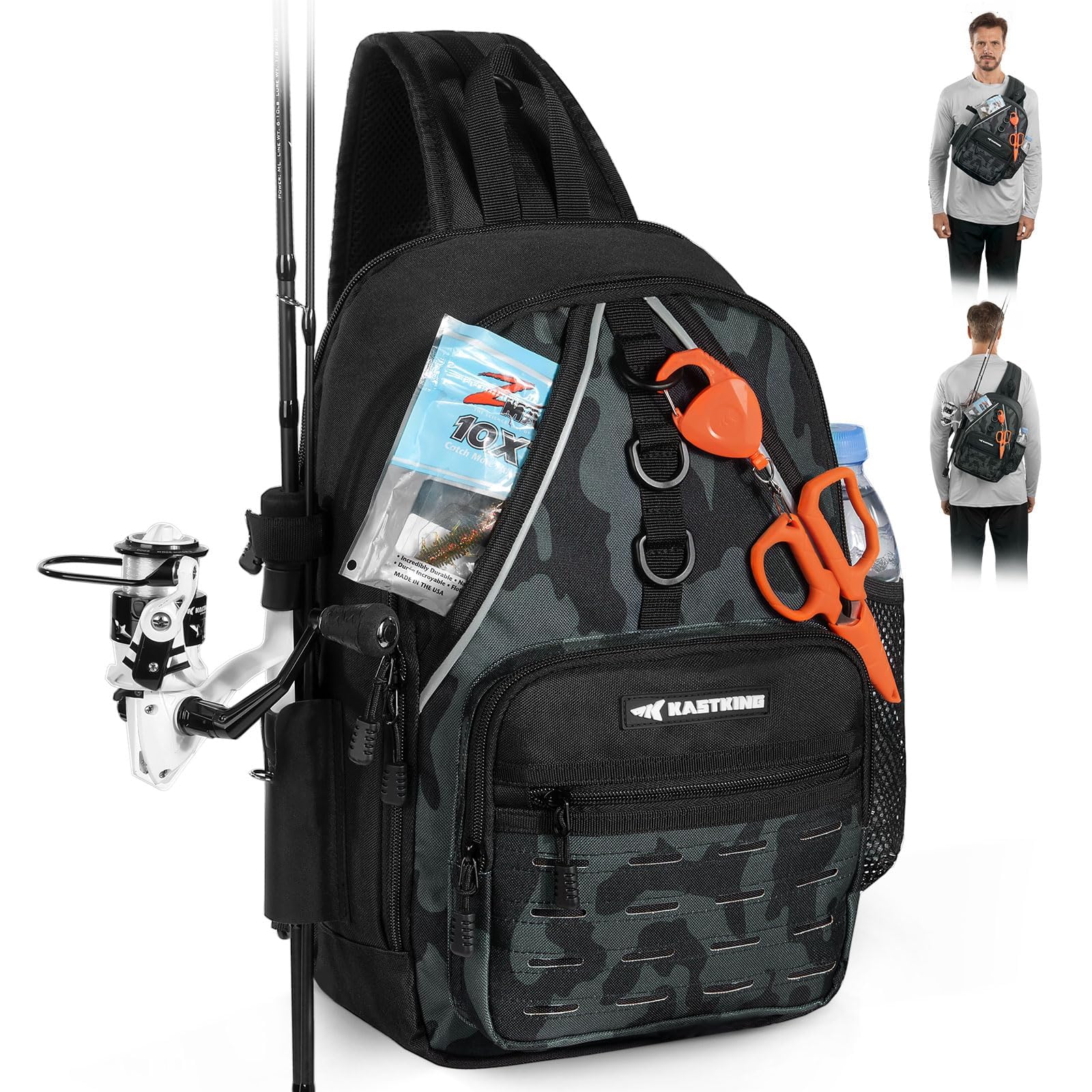
This bag suits older children or young teens who need more room for tackle, rain gear, snacks, and personal items while still wanting a compact sling-style pack.
Pros
- Main compartment fits up to three 3600-size tackle trays
- Dedicated pliers sheath, rod pocket, and bottle holder
- Padded back panel and several accessory pockets
Cons
- Larger capacity can become heavy when fully loaded
- Only one rod pocket is identified in the product details
- Tackle trays are sold separately
The KastKing provides more capacity than a typical starter fishing bag. Its rear compartment can hold a light jacket or rain gear, and the separate pockets make it easier for a child to keep tools away from soft plastics and lures. A 14-inch tablet or laptop compartment also gives it useful travel flexibility beyond fishing.
The adjustable shoulder strap supports sling, cross-body, chest, and handbag carry. The 600D Oxford fabric with a water-resistant coating should handle splashes and routine outdoor wear, while the padded structure adds support. Parents should set a sensible load, since three full tackle boxes, drinks, and snacks can quickly become too much for a smaller child.
Buying Guide
Choose a child-appropriate size
A kids fishing backpack should carry enough gear for the planned trip without encouraging overpacking. For pond fishing, one or two small tackle trays, a drink, snacks, and pliers are usually sufficient. Larger bags make sense for older children, longer walks, or shared family equipment.
| Trip type | Useful capacity |
|---|---|
| Short pond visit | One small tray, water, snacks, and pliers |
| Bank-fishing day | Two trays, extra line, food, and rain layer |
| Longer walk or changing weather | Multiple trays, jacket, first-aid items, and larger water bottle |
Prioritize lightweight comfort
Padded shoulder straps and a breathable back panel reduce pressure during walks. A sling can keep a casting arm clear, while a backpack distributes weight more evenly. Adjustable straps are important because children grow quickly and may need the fit changed between seasons.
Parents should load the bag before a trip and check whether the child can lift it, walk comfortably, and reach the main zipper without assistance.
Look for practical organization
Separate compartments help children learn where each item belongs. Useful features include:
- A main compartment for tackle trays
- Exterior pockets for snacks and sunscreen
- A bottle holder that keeps drinks upright
- Rod holders that protect the rod while walking
- A pliers sheath or attachment loop for supervised tool storage
Check weather resistance carefully
Water-resistant fabric can protect against splashes and damp ground, though it does not make a backpack waterproof. Zippers are common entry points for rain, so a child should keep electronics, matches, and other moisture-sensitive items in a sealed pouch during wet weather.
Keep the load safe
A child’s backpack should contain only the tackle needed for that outing. Parents should supervise hooks, fishing tools, and loose lures, and they should place heavier trays low and close to the child’s back. A filled water bottle, snack, sunscreen, and small first-aid kit are often more useful than extra tackle.