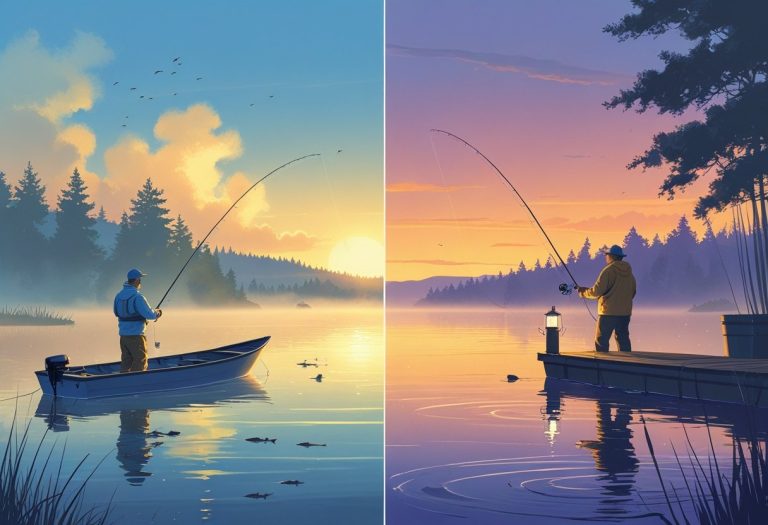
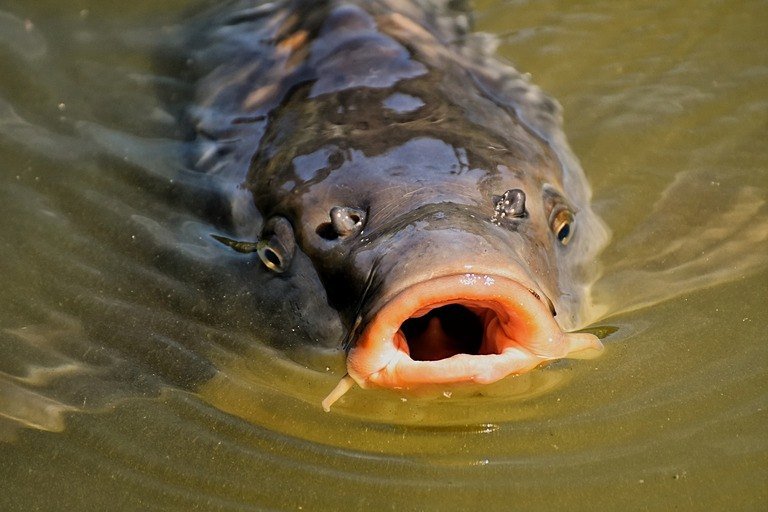
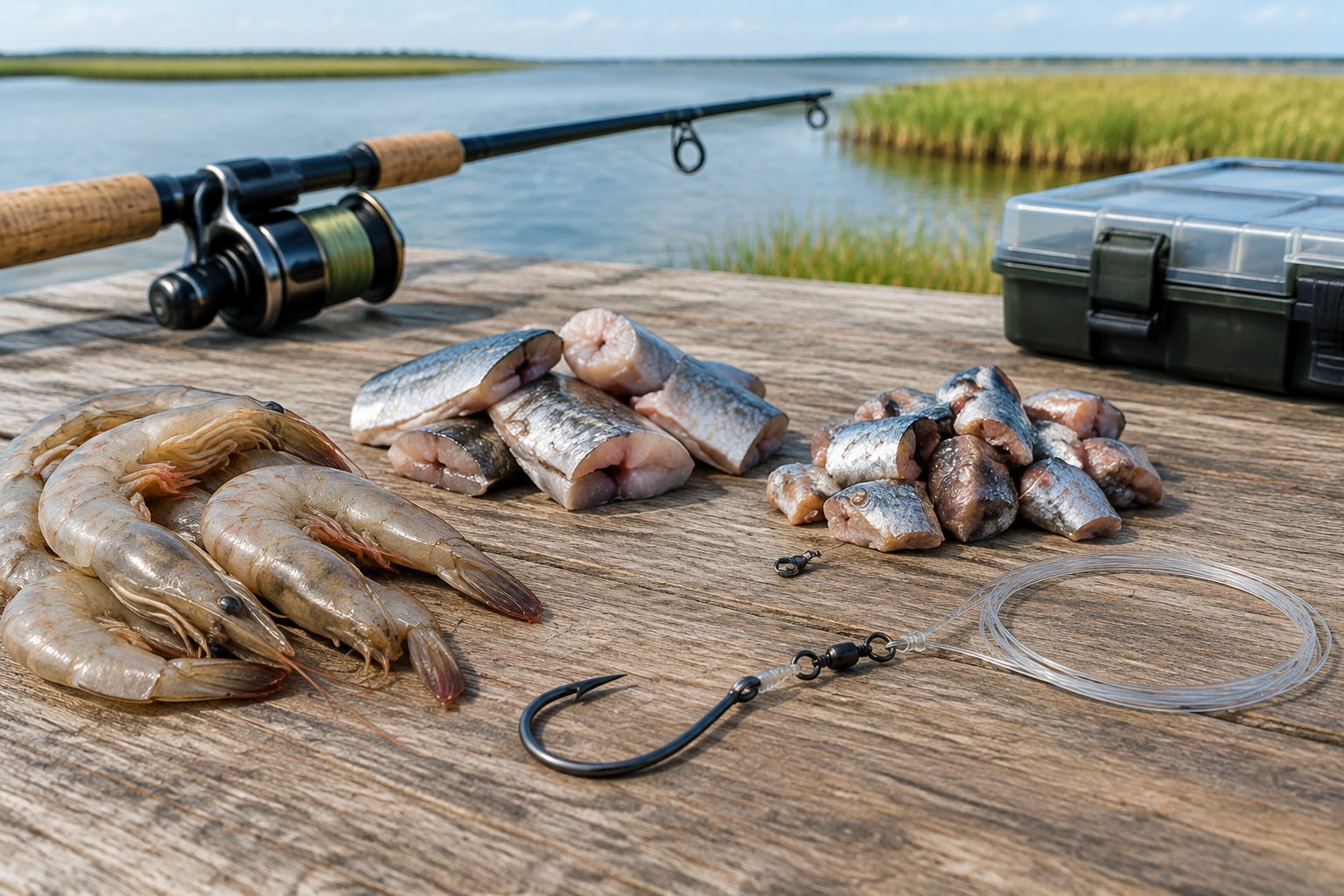
Live shrimp is the best all-around red drum fishing bait for beginners, families, and quick saltwater fishing trips because it combines natural movement, scent, and wide appeal in one easy-to-find option. You can fish it under a popping cork in shallow water or on the bottom with a simple Carolina rig.
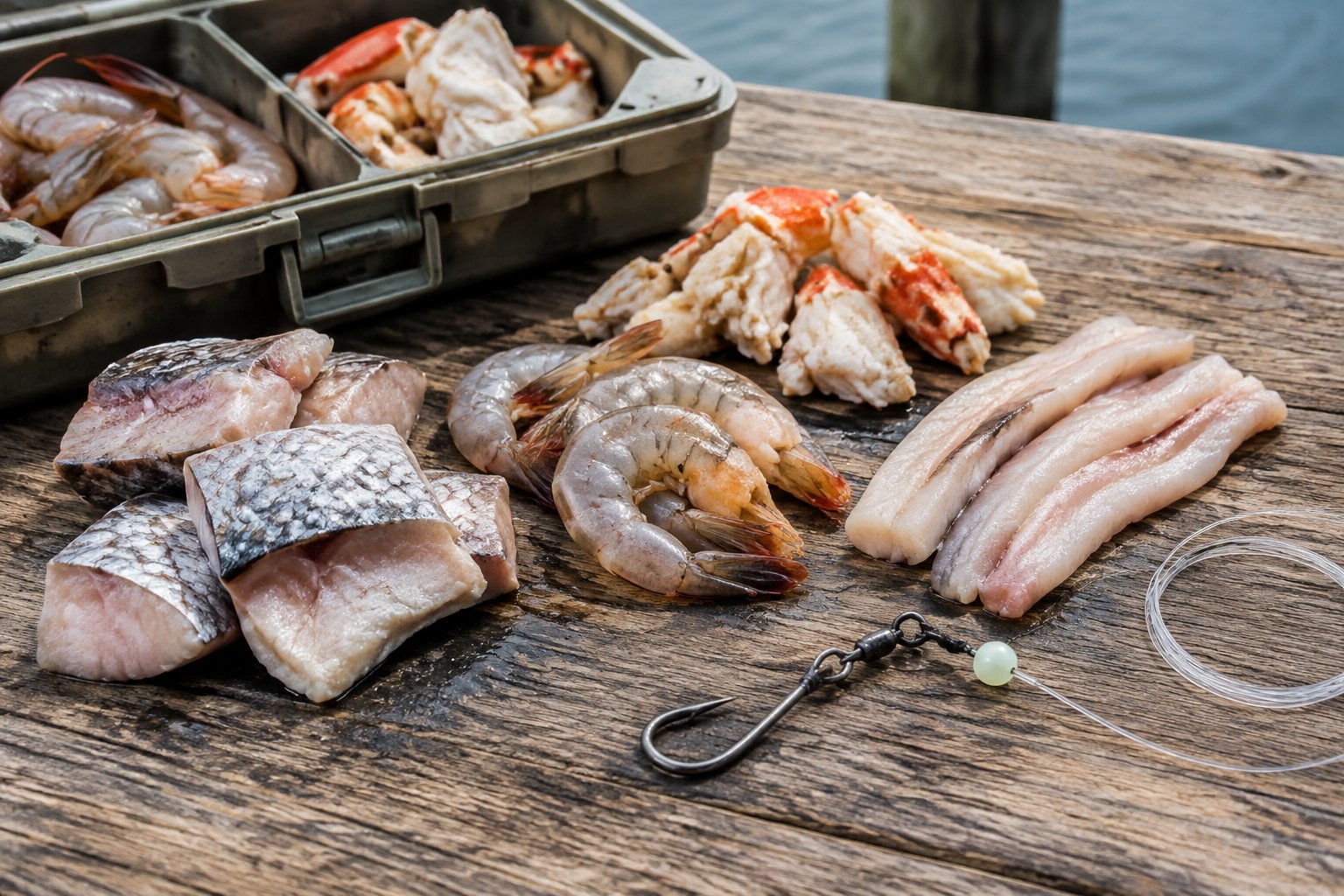
Red drum, also called redfish, feed on shrimp, crabs, and baitfish across coastal waters. Fresh bait that matches what you see around the marsh, flat, dock, or inlet gives you a practical starting point for saltwater fishing.
If you are short on time, carry live shrimp for versatility, fresh mullet or menhaden for scent, and a few artificial lures for covering water. Keep the rig uncomplicated so you can spend more of your trip fishing and less time rebuilding tackle.
Which Bait Should You Choose for Today’s Trip?
Choose live shrimp when you want the easiest all-purpose redfish bait, fresh mullet or cut bait for stronger scent, and crab or larger baitfish when targeting bull redfish. Your choice should match the forage, depth, current, and size of fish in front of you.
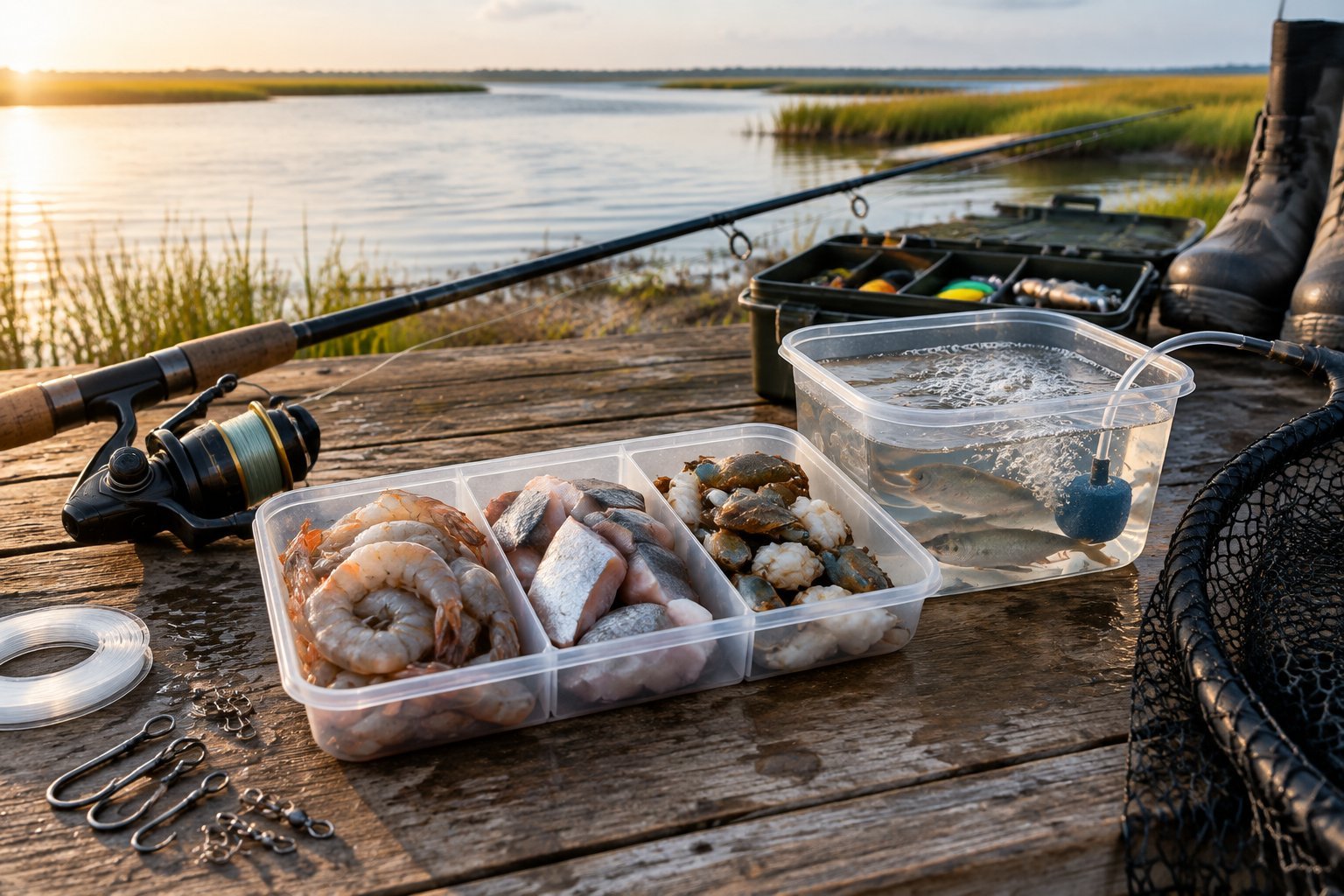
Quick Choice Guide for Beginners
Use this quick guide before you leave the bait shop:
- Live shrimp: Best starting point for shallow marshes, estuaries, docks, and grass flats.
- Finger mullet: A strong choice when redfish are chasing baitfish in warmer water.
- Fresh mullet or cut mullet: Useful on the bottom, in current, surf, and deeper channels.
- Blue crab or fiddler crabs: Productive around oyster beds, grass, and flooded marsh edges.
- Menhaden, croaker, or spot: Good baitfish choices when local redfish are feeding on finfish.
- Mullet head: A durable option for larger bull reds and bull red drum.
Check local size, season, harvest, and hook regulations before collecting or using natural bait. Keep live bait cool, aerated, and protected from direct sun so it stays active.
The Best All-Around Option: Live Shrimp
Live shrimp suits beginners because redfish recognize its movement and scent in many coastal environments. Hook it lightly through the head or near the tail, leaving enough body movement for the shrimp to kick naturally.
Use a popping cork over grass, mud, or a shallow creek edge. In deeper water or current, move the shrimp closer to the bottom with an egg sinker or Carolina rig.
Small fish can remove shrimp quickly. If you see constant pecking without a solid pickup, switch to a tougher piece of cut bait or a larger baitfish.
When to Choose Mullet, Crab, or Cut Bait
Choose finger mullet when you see nervous baitfish, surface disturbances, or redfish pushing wakes across a flat. A live mullet hooked through the nose or back keeps swimming and creates vibration that draws attention.
Use fresh mullet, cut mullet, or a mullet head when you need a scent trail. Cut a firm section that stays on the hook, and use a larger head when your target is bull redfish in current or deeper water.
Use blue crab, fiddler crab, or other small crabs around shell, grass, and flooded marsh edges. Remove sharp claws, use a suitably sized hook, and keep the crab close to the bottom with a slow presentation.
Simple Rigs That Keep Bait in the Strike Zone
A popping cork keeps shrimp visible in shallow water, while a Carolina rig places cut bait and crab close to the bottom. Use a light spinning rig for smaller inshore fish and strengthen the leader, hook, and sinker when current or bull redfish demand it.
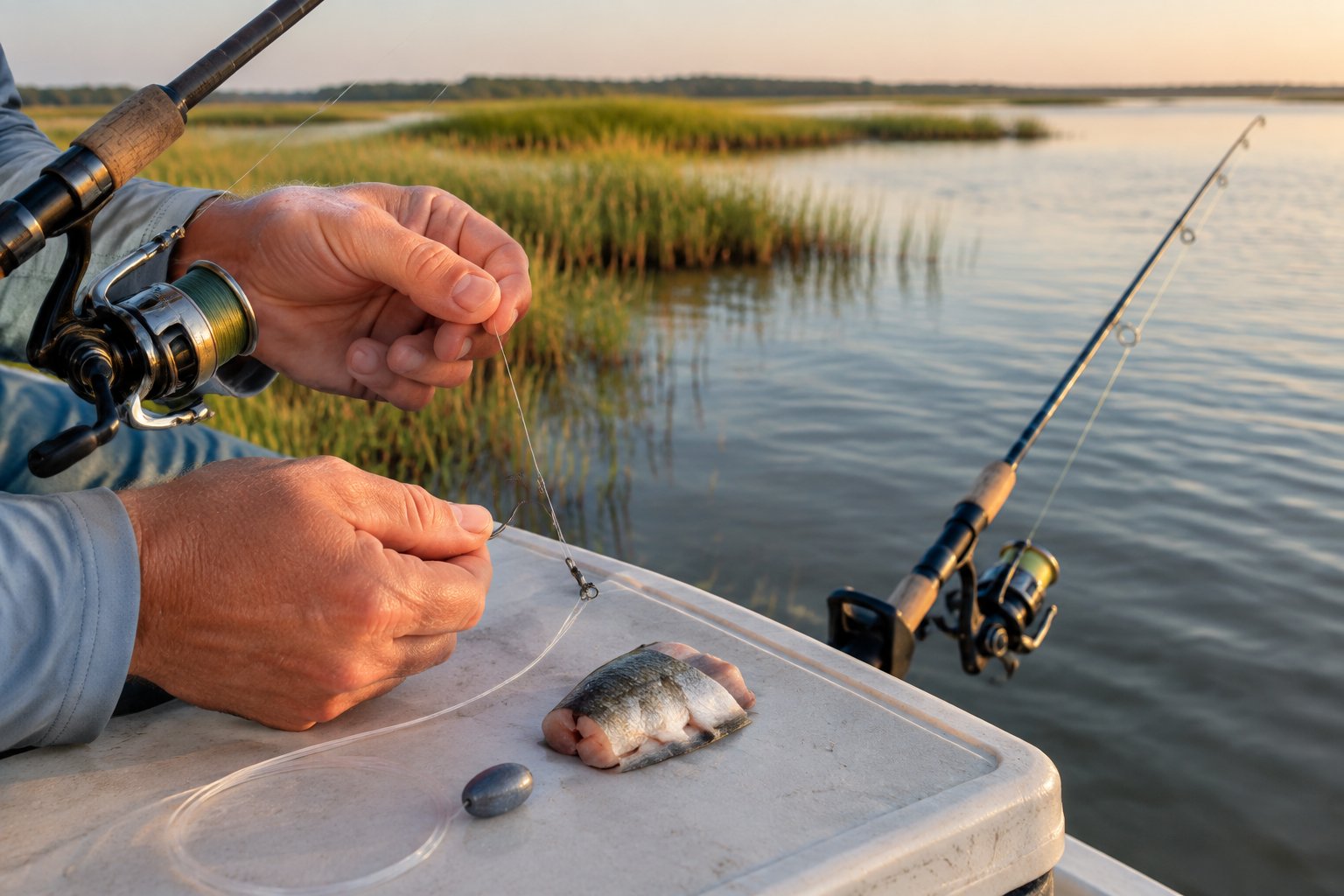
Keep hooks sharp and match their size to the bait. Circle hooks suit many bait presentations, especially when you plan to release fish, because a steady lift allows the hook to set as the fish moves away.
How to Fish Shrimp Under a Popping Cork
Set the popping cork so the shrimp rides above the grass or bottom, with the depth adjusted to the water in front of you. Start with gentle pops separated by pauses, then watch for the cork to tilt, slide, or disappear.
Thread the hook through the shrimp’s horn or lightly through the tail, taking care to preserve natural movement. Cast beyond a creek mouth, grass edge, oyster point, or visible redfish path and let the current carry the bait.
A popping cork creates sound and surface disturbance while the shrimp supplies scent and motion. Keep the rig moving with the tide, and recast when it drifts into weeds or dead water.
When to Use a Carolina Rig on the Bottom
Use a Carolina rig when redfish are feeding near mud, shell, sand, or a deeper channel. Slide an egg sinker onto the main line, add a swivel, then attach a leader long enough to let the bait move naturally above the bottom.
Thread shrimp, cut mullet, menhaden, or crab onto a circle hook. Let the sinker contact bottom while you hold the rod steady, drift the rig with the current, or make slow lifts that keep the bait moving without dragging it through every snag.
A Carolina rig works well from shore, a pier, or a boat. Choose only enough weight to maintain contact, since excessive weight can bury the bait and reduce natural movement.
How to Rig Cut Mullet and Crab for Larger Fish
For cut mullet, use a firm strip or section that exposes enough flesh to release a scent trail while leaving the hook point clear. A mullet head stays durable in current and gives larger fish a substantial target.
For crab, remove the claws and pierce the shell through a solid area so the bait stays secure. A circle hook should remain exposed, and you should allow a heavy fish time to move off before applying steady pressure.
Use a leader that suits the structure and current. Keep the bait near the bottom, check it after contact with shell, and replace it when the flesh becomes loose or washed out.
When Artificial Lures Are the Better Choice
Artificial lures are the better choice when you want to cover water, avoid carrying live bait, or make repeated casts across a flat. Gold spoons, soft plastics, jigs, and topwater lures let you adjust depth and speed quickly during a short trip.
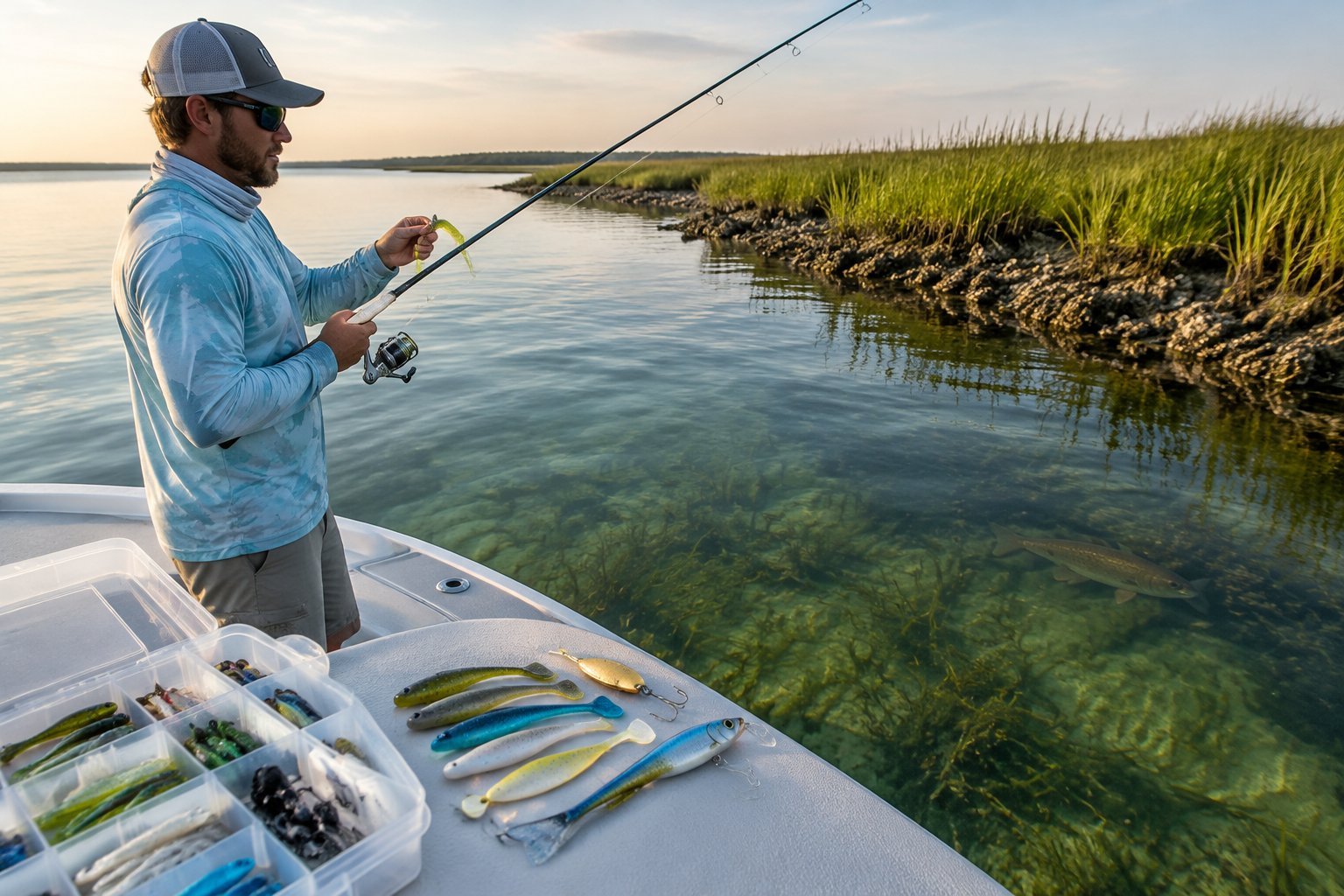
Artificial bait works best when you observe the forage and copy its size, profile, and movement. Keep a weedless option for grass, a jig for depth, and a noisy lure for stained water or active fish.
Gold Spoons for Grass and Shallow Flats
A gold spoon produces flash and a wobbling action that resembles an injured baitfish. A weedless spoon, including a Johnson Silver Minnow, moves through shallow grass and patchy vegetation with fewer snags.
Cast across the flat, allow the spoon to sink briefly, and retrieve it at a steady pace. In clear water, slow down when you see fish; in wind or stain, add enough speed to keep the spoon visible and moving above the grass.
Gold spoons also work around oyster edges when you maintain a safe casting angle and avoid allowing the lure to grind continuously across shell.
Soft Plastic Shrimp and Jigs for Everyday Inshore Water
Soft plastic lures give you a flexible option for creeks, flats, docks, and current seams. Rig a soft plastic shrimp, plastic shrimp, or paddletail on a jig head when you need a controlled sink, or use a swimbait hook when grass makes an exposed hook difficult.
Berkley Gulp! options such as New Penny, White Diamond, and Limeade add scent to a shrimp-shaped presentation. DOA Shrimp and LiveTarget Rigged Shrimp imitate shrimp profiles, while a jig and soft plastic mullet imitates baitfish.
Work the lure with short hops near bottom, a slow swim above grass, or a pause beside structure. Specific options anglers use include the Egret Wedgetail Mullet, Yum Money Minnow, and Bass Assassin Red Daddy.
Topwater and Rattling Plugs for Active Fish
Topwater lures excel when redfish are pushing baitfish across calm shallow water. Walk the lure with short rod twitches, pause when a fish follows, and wait for the fish to fully load the rod before setting the hooks.
Rattling plugs help fish locate your presentation in murky water. The Cotton Cordell Jointed Red Fin offers a shallow-running baitfish profile with sound and jointed movement, while spinnerbaits add vibration around grass and stained-water edges.
Keep topwater lures ready at dawn, during low light, or whenever you see baitfish fleeing across the surface. Switch to a subsurface lure when fish follow without striking.
Where to Present Your Bait and Lures
Present bait along edges where shallow water, structure, current, and forage meet. Redfish use marsh drains, grass lines, oyster bars, docks, jetties, and channel edges as feeding routes.
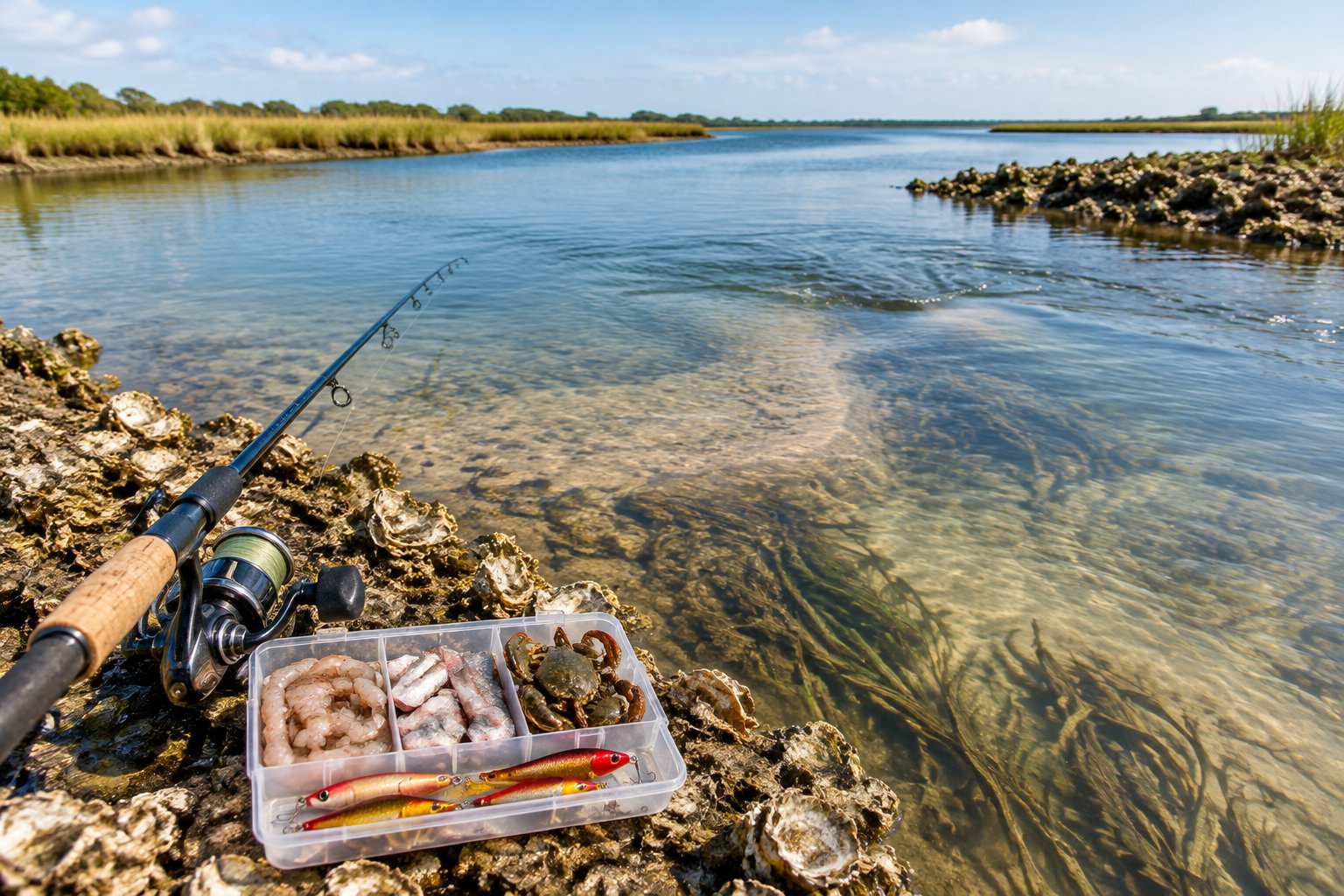
Look for baitfish, minnows, shrimp activity, mud puffs, wakes, and current seams. You can save time by fishing the first productive-looking edge you reach, then moving when the tide stops carrying food through it.
How to Find Redfish in Marshes, Flats, and Estuaries
In shallow marshes and estuaries, focus on creek mouths, drains, potholes, and grass points. An incoming tide floods feeding areas and moves shrimp and small crabs across the edges.
Use live shrimp under a popping cork when you want a stationary presentation. Cast a weedless spoon or soft plastic across the current when you need to search several lanes quickly.
On clear shallow flats, look for wakes, tails, dark shapes, and sudden baitfish movement. Lead visible fish with a quiet cast, allow the bait to enter their path, and avoid landing directly on top of them.
What to Throw Around Oyster Bars, Docks, and Jetties
Oyster bars and oyster beds hold shrimp, crabs, and baitfish, which makes their edges productive for redfish. Keep bait close to the shell without dragging it across every rough spot, and use a weedless spoon or soft plastic when snags become frequent.
Docks provide shade, vertical cover, and ambush points. Cast live shrimp, a soft plastic, or a small jig along the shadow line, then let the presentation move with the current.
Jetties and inlets require enough weight to hold position and enough leader strength for rocks. A Carolina rig with cut mullet, menhaden, or crab covers bottom-feeding fish, while a spoon or swimbait searches the current edges.
Surf and Channel Tactics for Bigger Red Drum
For surf fishing, look for troughs, cuts, sandbars, and areas where waves break unevenly. Fresh cut mullet, menhaden, or a mullet head stays in place and creates a scent trail when fished on bottom.
In deep channels and passes, place bait along the current edge where redfish can intercept food without fighting the strongest flow. An egg sinker should hold the bait while still allowing you to detect movement.
The Gulf of Mexico, Atlantic shoreline, and connected coastal waters each have local regulations and seasonal patterns. Check current rules before targeting large bull redfish, especially when fishing near inlets or spawning routes.
How Water Conditions Change the Best Presentation
Clear water favors quiet, natural presentations, while murky water rewards vibration, scent, and a larger profile. Adjust your bait, retrieve, hook placement, and casting distance after checking visibility and current.
Sight Fishing in Clear, Shallow Water
Sight fishing works best when sunlight and calm water let you identify redfish before you cast. Wear polarized sunglasses, keep your movements controlled, and land the bait several feet ahead of a moving fish.
Use a lightly weighted live shrimp, small crab, weedless spoon, or soft plastic. A quiet entry and a short pause give the fish time to find the presentation without spooking it.
Fly fishing also fits clear flats when you can place a crab, shrimp, or baitfish pattern on the fish’s feeding path. Keep the retrieve slow and close to the bottom when redfish are grubbing.
How to Get Noticed in Murky Water
Murky water calls for stronger signals. Use cut bait for a scent trail, a rattling plug for sound, a spinnerbait for vibration, or a bright soft plastic that creates a visible silhouette.
Keep the retrieve deliberate so redfish can track the lure. With bait, position the hook near the bottom and check it frequently, since small fish and current can remove the offering before a red drum finds it.
Black drum may also respond to shrimp, crab, and bottom presentations in stained water. Identify your target carefully and follow local rules for each species.
Match Local Forage, Tide, and Season
Match your bait to what redfish are eating in the immediate area. Shrimp and crustaceans suit marsh edges and flats, while mullet, menhaden, croaker, and spot fit baitfish activity around channels, passes, and surf.
Tide controls where food moves. Fish drains, points, and current seams when water carries forage past ambush positions, then shift deeper when heat or falling water pushes fish away from the shallow edge.
Season also changes feeding behavior. Warm months bring active baitfish and surface opportunities, while cooler periods can concentrate red drum over mud, deeper channels, or sun-warmed shallow water.
Frequently Asked Questions
What is the best bait for catching red drum?
Live shrimp is the best all-around bait for catching red drum because it offers natural movement and scent in many inshore settings. Use it under a popping cork in shallow water or on a Carolina rig when fish are holding near bottom.
What is the best bait for red drum surf fishing?
Fresh cut mullet is a strong surf-fishing bait because it stays on the hook and releases scent through moving water. Use a firm chunk, mullet head, or menhaden section with enough sinker weight to hold the bait in a trough or channel.
Are live shrimp or cut mullet better for redfish?
Live shrimp is better for versatility, while cut mullet is better when you need durability and a stronger scent trail. Choose shrimp for shallow flats and marshes, then switch to cut mullet for surf, current, or larger fish.
What artificial bait works best for redfish in grass?
A weedless gold spoon works well for redfish in grass because it flashes and moves through vegetation with reduced snagging. A weedless soft plastic on a swimbait hook gives you a slower, more subtle option when fish are cautious.
What is the best way to rig bait for red drum?
Use a popping cork for shrimp in shallow water and a Carolina rig with a circle hook for bait near the bottom. Keep the hook point exposed, use only enough weight to reach the feeding zone, and match the leader to the structure.
What do red drum like to eat?
Red drum eat shrimp, crabs, mullet, menhaden, croaker, spot, and other available baitfish and crustaceans. Local forage, tide, depth, and season determine which natural bait looks most convincing on a given trip.
Get your gear ready and explore the related beginner-friendly guides before your next trip.