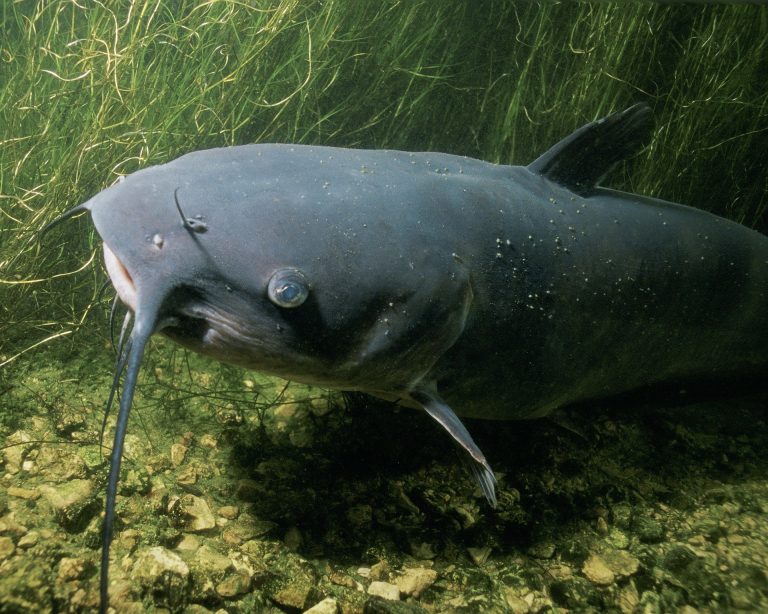
Crossbows have become increasingly popular in recent years, while most of that popularity is with hunting big game due to its higher arrow flight speeds, higher accuracy and ease of use compared to a standard bow, crossbows have also gotten considerably more popular in the bowfishing world.
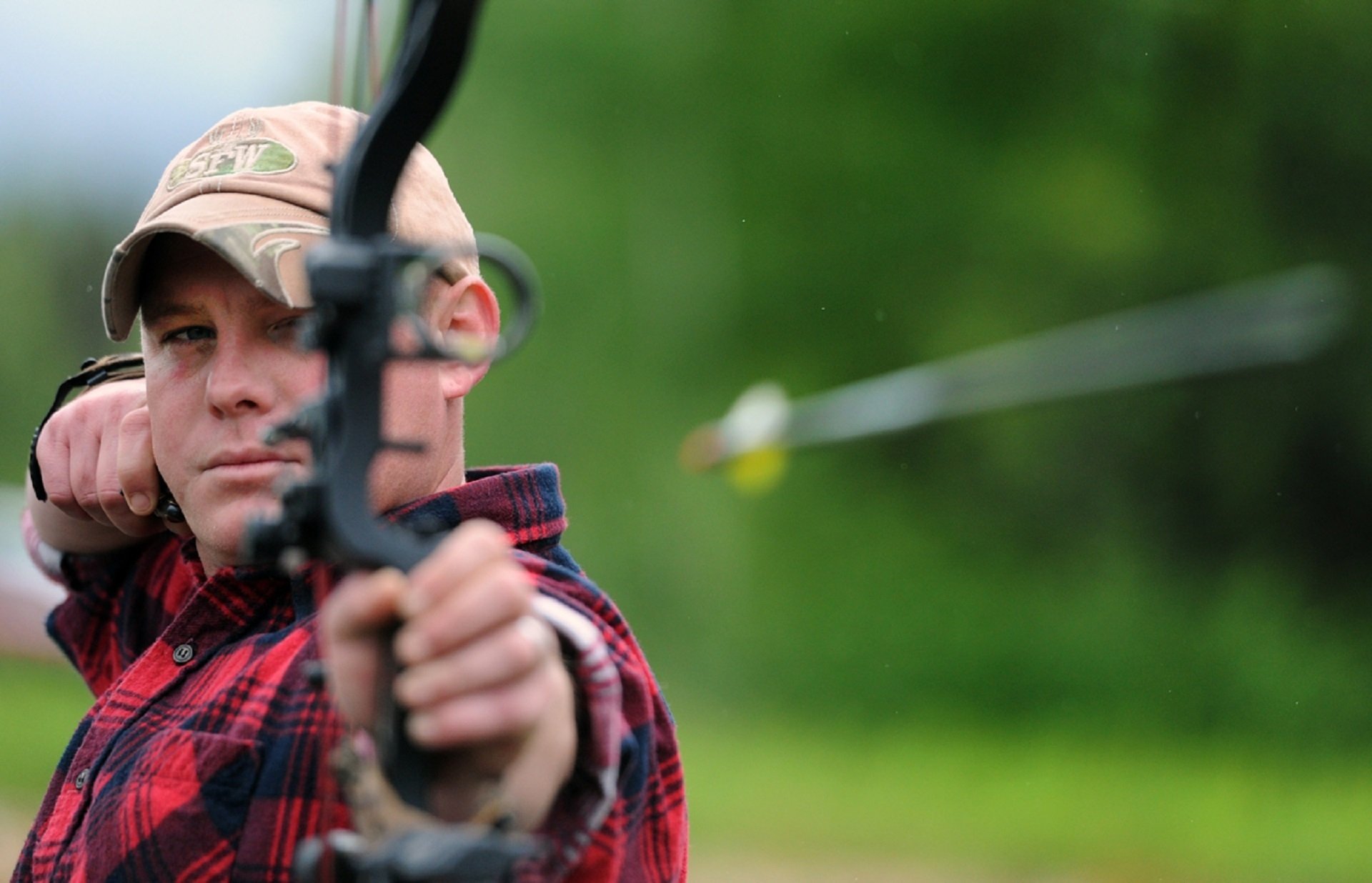
Let’s dive into the world of crossbow fishing, where it’s applicable, popular crossbow setups and other information on this topic and see if its maybe something that you might be interested in.
Choosing A Crossbow For Fishing
Pretty much any crossbow will work for fishing, and usually require only a few minimal modifications at best. With that being said, you don’t have to go out and buy a brand new crossbow that may cost hundred if not one thousand dollars or more.
you can easily go to your local archery shop, pawn shop, or yard sale and find an old cheap crossbow, and for the what we want to use it for “shooting fish” it should work just fine.
One thing to keep in mind is the overall integrity of your crossbow, does it need a new string? What condition are the limbs in?
Do you see any cracks or damage that would cause a catastrophic failure? What does the string look like? Does it need to be changed?
These are all things to consider if you are buying used. There are also crossbows on the market designed and built specifically with crossbow fishing in mind, some of the popular brands and models that are custom built for crossbow fishing is the Parker Stingray, or the Viking Kingfish.
Viking Kingfish
Go try out a Viking Kingfish!


One last note on using crossbows for fishing is to consider the areas you plan on fishing, normally bowfishing is done in shallow water of 5 feet or less.
Crossbows are very powerful compared to standard bows, and if you are fishing around rocks, or shallow water.
Your arrows could shatter on the rocks, or penetrated deep down into mud, or even penetrating and snagging things like tree roots making it hard or even impossible to retrieve your arrows.
Reels For Crossbow Fishing
Reels for Crossbow fishing are rather limited. The most popular reel on the market specifically designed and built for crossbow fisherman is the AMS Crossbow Retriever Kit.
The kit comes with the reel itself, all mounting hardware, 200 pound test dacron line, and 3 fiberglass arrows complete with tips, and the mount itself that you mount to your crossbow, normally using the quiver mount locations.
AMS Crossbow Retriever Kit
Go try out a AMS Crossbow Retriever Kit!


There are other reels on the market such as the Zebco Bowfishing Reel, but these are not specifically made for bowfishing.
If you were so inclined to use a different method and perhaps build your own mount system for a different style reel or the old style wrap around spool.
Be sure to take safety into consideration, tangles, line catch on the bow or you, can be very dangerous not only to you but to others around you.
Zebco Bowfishing Reel
Go try out a Zebco Bowfishing Reel!


Bolts For Crossbow Fishing
All arrows for bowfishing whether the conventional bowfishing or when using a crossbow are designed specifically for bowfishing and are drastically different from your standard hunting or target shooting arrows.
They are made from fiberglass and are thicker and heavier than conventional arrows.
This heavier weight helps transfer more energy and momentum which helps punch through the water to penetrate the target.
The fiberglass gives the arrow flex which is important when dealing with hitting the bottom or other structure, the flex also allows the arrow to straighten itself.
Where an arrow made of aluminum or carbon would either bend, making it useless or shatter on impact.
AMS Bowfishing Crossbow Bolt With Chaos Point
Go try out a AMS Bowfishing Crossbow Bolt!


The tips on bowfishing arrows are also threaded and replaceable so that when you do contact hard bottom or rocks and the tip gets blunt you can simply unscrew or replace them.
The tips also have built in barb wires that are angled backwards, so when you do penetrate a fish the arrow doesn’t easily pull back out, and loosening the tip will allow you to reverse the barbs and easily pull out of the fish.
AMS Everglide Safety Slide
Go try out a AMS Everglide Safety Slide!


One very important feature on the arrow is the safety slide, the safety slide is where you attach your string, and when its on the bow should be at the tip.
when shot the safety slide will slide to the rear stop on the arrow, this reduces the chance of the line tangling on your bow and either snapping back at the operator risking severe injury, or snapping the line, and watching your arrow sail off into the water.
Crossbow Vs Bow For Fishing
There are both pros and cons to using a crossbow for bowfishing instead of a normal compound or recurve setup. One that can go both ways is the power of one over the other.
Crossbows shoot much faster than a compound or recurve, allowing you to shoot deeper or farther, while on the flipside this can be detrimental in shallow water where you could shatter your fiberglass arrows on rocks, or penetrate deep into mud or timber.
For Conventional Bows this is less of a problem considering you don’t need more than 50 pounds of draw to effectively bowfish in shallow water, but you lack the power to shoot deeper that 4 or 5 feet.
Straight JIG Arrow & Crossbow Bolt Fletching Kit
Go try out a Straight JIG Arrow & Crossbow Bolt Fletching Kit!


Another con to Crossbows is reload time. It takes considerable longer to reel in your arrow and recock and reset your arrow and reel compared to a conventional bow where all you need to do is reel your arrow back and simply nock your arrow.
this time lost can cost fish, especially if the fish are coming through in area in schools and if your quick you can have chances at multiple fish in rapid succession.
One place where crossbows really seem to shine is for bigger game like alligators or alligator gar where power is needed to penetrate tough and thick scales or armored bodies.
Light Refraction
Objects or “in this case fish” in the water are not actually in the location they appear to be. There’s a very easy way to explain this, and most of us have learned about it as kids.
If you don’t remember, let’s have a refresher. when light penetrates the water it gets bent and distorted and as we view an object through the surface it changes our perception of that target.
Take a glass of water stick a pencil in it and then look at it from the side. What do you see? The pencil looks like it is separated, like the water is slicing it clean and the pencil that’s underwater appears to be offset.
This applies to fish as well, the general rule of thumb is to aim under your target, but by how much?
Oakley Flak 2.0 – Black Camo
Go try out a Oakley Flak 2.0!


Well, that all depends on a couple factors, primarily the depth of the fish, and the fish’s horizontal distance from you.
The deeper the fish the lower you should aim, likewise the more horizontal distance between you and the fish the lower you aim.
The tricky part about the horizontal distance is if it’s too great, your arrow will be trying to torpedo through an awful lot of water, this can cause your arrow to slow down and stop before you even hit the fish, or be going so slow you won’t even penetrate.
I have made long distance shots on carp only to have my arrow literally bounce off of it, with nothing but a scale on the end of my arrow for my efforts.
Fish Species For Bowfishing
There are many different species that you can legally bowfish but this depends on the state, so make sure to always read the laws and regulations for bowfishing in the state you are in.
Laws such as open seasons, species, specific bodies of water, can you bowfish at night and others are crucial things that you need to know before you start walking a river bank or hop in a boat.
For example where one of my writers lives in Northeastern Wisconsin, in particular on the Wolf River, they cannot bowfish during the sturgeon spawning season.
They are a protected species and this regulation eliminates bowfisherman from accidentally shooting these protected species as they travel up the river to spawn.
Let’s take a look at the most common freshwater and saltwater species that are a favorite for bowfisherman.
Common Carp
Common carp are probably the single most popular species to bowfish, and for good reason they are in abundance throughout most of the United States.
Not only are they extremely abundant and found in most waters, they are also an invasive species, they do considerable harm to the habitats they invade, muddying waters, eating native fish eggs, among other things.

In some states it is actually illegal to throw one back in the water when caught by conventional means. This makes the Common Carp a great target species for bowfisherman.
Carp like to hang out in a variety of areas, timber and stump areas in rivers or lakes, shallow vegetated areas or bays, sand or mud flats.
On hot summer days they probably won’t be in the direct sunlight, and if your on a body of water with thick patches of lily pads mid day, check there, silence is key.
I shut my trolling motor off and coast in slowly and silently, check the edge of the pad, and once you come to a stop from drifting study every little individual gap in the pads, im many cases you will see golden scales, let the arrow fly!
Stingray
Bowfishing Stingray has grown in popularity over the years. Stalking through shallow flats and bays stingray can be seen stirring up sediment on the bottom on a clear day with good water clarity and low wind.
in less favorable conditions you might only catch a glimpse and have a very short time to pull off a shot.

Coupled with the fact that stingray is also very good in terms of eating, and you can see why the challenge and fun combined with dinner has made the stingray a popular fish to go after.
Stingray bowfishing is very popular around Florida and you can be bowfishing from the gulf of Mexico all the way up to the southern portions of New England.
Silver Carp
The silver carp is a filter feeder and they were imported to the United States to help control algae in fish farm operations and municipal waste treatment facilities.
They escaped shortly after arrival in the 1970’s and have become a highly threatening invasive species.
These fish have become very popular in particular in the Illinois river area for bowfishing. The reason they are so popular is because when the fish become startled, from things like boat engine noises, they jump high into the air.
This tendency of silver carp going airborne is an excellent aerial target for bowfisherman and you can hone your skills hitting smaller targets on the move.

Oddly enough the silver carp of North America are unique to going aerial when startled, as this is not observed as in places like Vietnam where the fish are native and abundant.
The reason for this peculiar trait in the North American population is not understood.
Alligator Gar
Alligator Gar can grow to absolute behemoth sizes where they are found, mostly in the southern states like Texas and Louisiana, Mississippi and Arkansas. These fish are pursued using big game rigs.
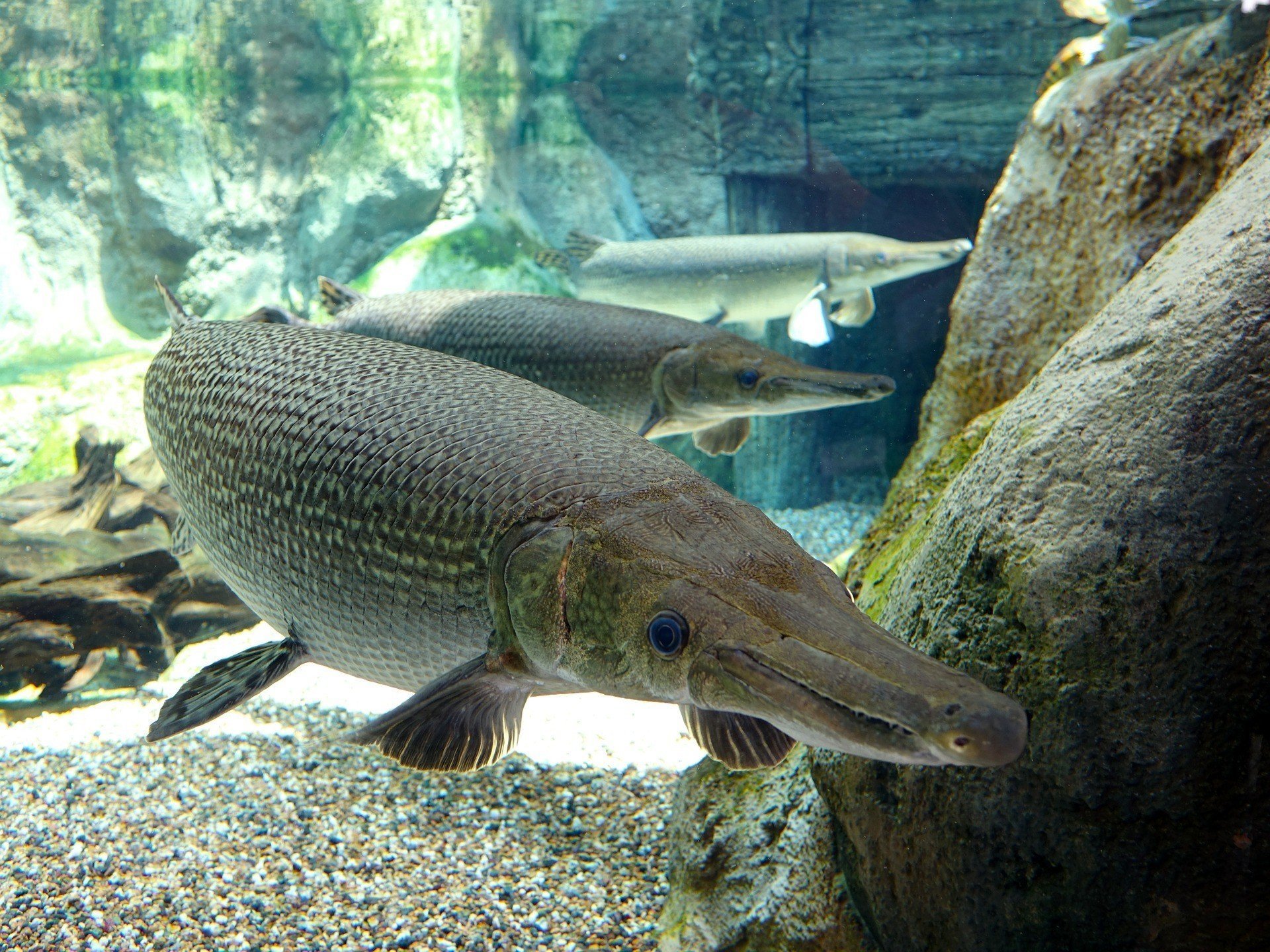
Once shot the fish spools off the line that’s attached to a big float and followed. When the angler pulls the line to the surface another bowfisherman usually shoots another arrow and this repeats until the fish is harvested.
These fish can grow very large, up to 10 feet in length or more, making it a considerable challenge for the anglers who pursue them.
Horn Stars Outdoors – Big Gar On The Mississippi
Go watch the episode for Big Gar On The MIssissippi!


Conclusion
Bowfishing with a crossbow is a very specific niche not only in bowfishing itself but for fishing in general. It’s definitely more applicable when fishing for fish like Stingray or Alligator gar, but you can fish any legal fish with them if you want to.
Visit My YouTube Channel
Make sure you subscribe to my YouTube channel. You can hit the subscribe button and be updated when I make videos which I’ll be trying to do almost daily on great fishing topics.
In this article I wanted to try to show you what using a crossbow over a conventional bow was all about. Its pros and cons and other aspects to try to help you decide what route you should take if you have never bowfished before, or if your considering switch from a conventional bow to a crossbow.
Take your local water and species into consideration, and always be sure to know the regulations for the areas and water that you wish to fish.
[tcb_post_list query=”{‘paged’:1,’filter’:’custom’,’related’:|{||}|,’post_type’:’post’,’orderby’:’date’,’order’:’DESC’,’posts_per_page’:’6′,’offset’:’1′,’no_posts_text’:’There are no posts to display.’,’exclude_current_post’:|{|’1’|}|,’queried_object’:{‘ID’:4719,’post_author’:’1′,’post_type’:’post’},’sticky’:|{||}|,’rules’:|{|{‘taxonomy’:’category’,’terms’:|{|’7′,’158’|}|,’operator’:’IN’}|}|}” type=”grid” columns-d=”2″ columns-t=”2″ columns-m=”1″ vertical-space-d=”70″ horizontal-space-d=”40″ ct=”post_list-44467″ ct-name=”Image & Text 18″ tcb-elem-type=”post_list” pagination-type=”none” pages_near_current=”2″ element-name=”Post List” css=”tve-u-1736fa9ac97″ total_post_count=”73″ total_sticky_count=”0″ posts_per_page=”6″ featured-content=”0″ disabled-links=”0″ article-tcb_hover_state_parent=”” vertical-space-m=”20″ vertical-space-t=”50″ no_posts_text=”” class=” article-tcb_hover_state_parent=” article-permalink=’|{|tcb-article-permalink|}|’ ][tcb_post_list_dynamic_style]@media (min-width: 300px){[].tcb-post-list #post-[tcb_the_id] []{background-image: linear-gradient(rgba(0, 0, 0, 0) 0%, rgba(0, 0, 0, 0.5) 100%), url(“[tcb_featured_image_url size=large]”) !important;}}[/tcb_post_list_dynamic_style]
Dwight Norris
[tcb_post_title link=’0′ target=’0′ rel=’0′ inline=’1′]
[tcb_post_content size=’words’ read_more=’|{|…|}|’ words=’12’ css=’tve-u-1736fa9acad’][/tcb_post_list]