Brown trout reward a short trip when you focus on likely holding water, a simple fly selection, and a quiet presentation. For fly fishing brown trout, start with a versatile 9-foot 5-weight fly rod, floating line, tapered leader, and a small box built around nymphs, dry flies, and one streamer. That setup suits a beginner fishing rivers, streams, or smaller lakes and gives you enough control for common brown trout flies.
You do not need a full day or advanced casting skills to make progress. A 60-minute after-work session can produce a fish when you read the water from the bank, approach carefully, and keep your fly drifting naturally.
Start With Likely Brown Trout Water
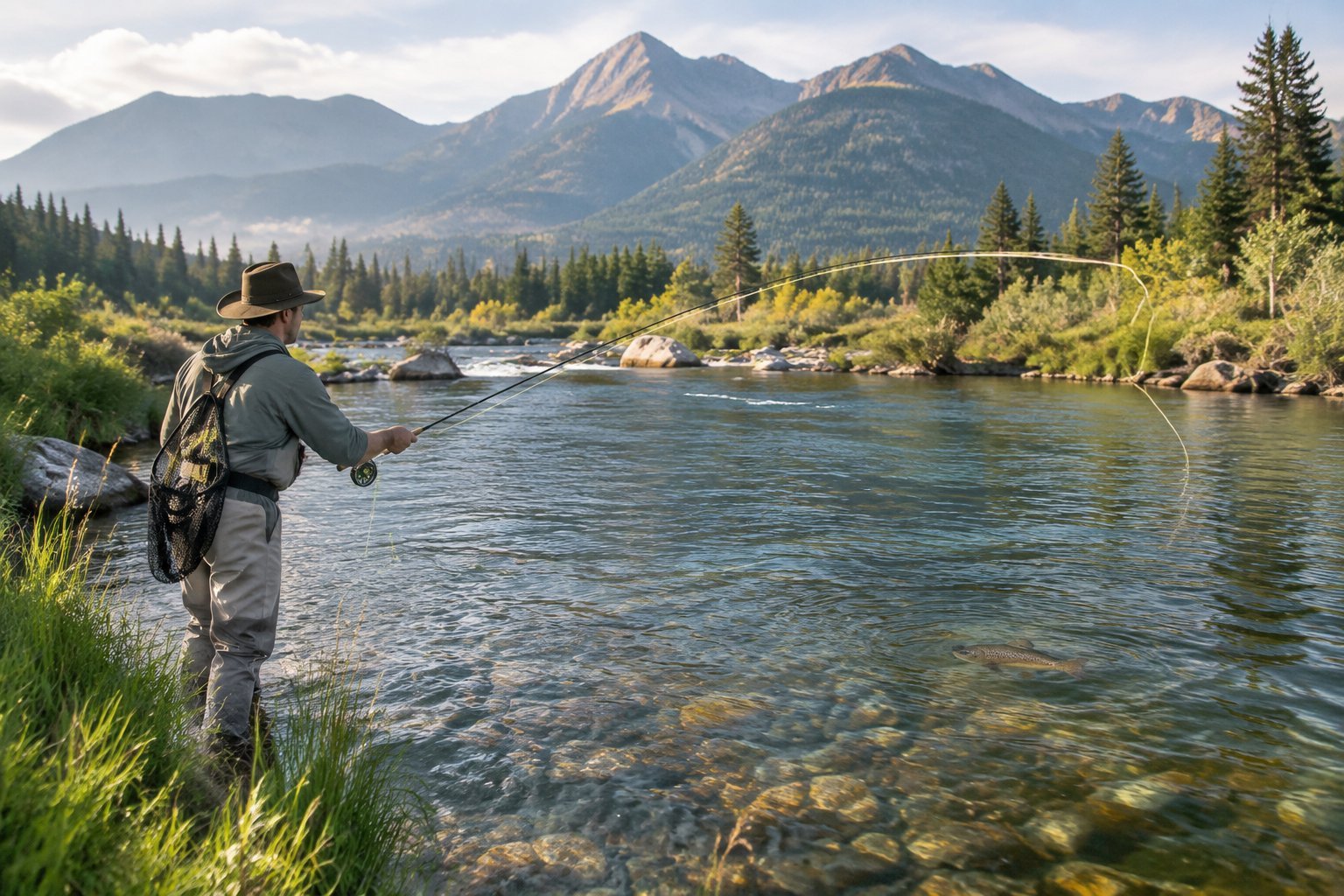
Brown trout hold where current delivers food while nearby cover lets them conserve energy. Focus on runs, pools, riffles, pocket water, cut banks, undercut banks, and boulders before you spend time changing flies.
Where Do Brown Trout Hold in Rivers and Streams?
In rivers and streams, brown trout face into the current and wait for food to pass. Search the slower edge beside a fast run, the head and tail of a pool, and the cushion of softer water behind a boulder.
A deep cut bank or undercut bank can shelter a larger fish. Small pockets between rocks also hold river trout, especially when the surrounding current is quick. Approach each piece of holding water as if a fish is close, because a brown trout may be within a rod length of the bank.
Wild brown trout often blend into shaded structure and broken water. Larger fish need more food and security, so a deep pool, log, or undercut bank gives you a better chance at a higher brown trout size.
How to Spot Productive Water From the Bank
Start by watching the surface for rises, floating insects, and foam lines. Then study current seams, where fast and slow water meet, because food collects along those boundaries.
Look for:
- Darker water that indicates depth
- Boulders that create current breaks
- A deep edge beneath an overhanging bank
- Riffles flowing into a pool
- Slack water beside a strong current
- Insects drifting along the surface
Make your first casts to water you can reach without wading. Your shadow, footsteps, and line can alert fish before your fly arrives.
What Changes When You Fish Lakes
Lake trout habitat differs from river habitat because fish move through depth and open water while searching for food. Fish near creek mouths, drop-offs, weed edges, submerged structure, and windblown shorelines.
A floating line works for shallow feeding fish. Use a sinking line or retrieve a streamer deeper when brown trout are cruising below the surface. Lake brown trout can grow larger than many stream fish, so keep enough backing and leader strength for a long run.
Use a Simple, Versatile Setup
A 9-foot 5-weight fly rod with floating line and a tapered leader gives beginners a practical starting point for most brown trout fishing. Add polarized sunglasses, forceps, a small fly box, and safe wading equipment before adding specialized fly fishing gear.
A Beginner Fly Rod, Line, and Leader Setup
Choose a medium-fast 5-weight fly rod around 9 feet long for medium rivers, larger streams, and many small lakes. A 4-weight suits smaller water and delicate dry flies, while a 6-weight helps you cast larger streamers and manage wind.
Match the reel and fly line to the rod weight. A floating line handles dry flies and standard nymphing, and it remains the easiest line for learning basic casting.
Use a 7.5- to 9-foot tapered leader. Start with a 4X or 5X leader for average river browns, then add a tippet section when you need extra length or a finer connection. Keep forceps for hook removal, polarized sunglasses for glare reduction, and waders and wading boots only when the water and access require them.
How to Choose Tippet Without Overthinking It
Start with 4X tippet for average brown trout and moderate flies. Move to 5X or 6X when fish inspect a small dry fly in clear water, and move to 3X when you cast a larger streamer or fish around heavy cover.
Attach the tippet to the tapered leader with a suitable knot and check the connection after every snag or fish. Replace the final section when it becomes rough, curled, or weakened.
What to Keep in a Small Fly Box
A compact fly box keeps your quick trip organized. Carry a few sizes and colors of proven patterns instead of filling every compartment.
Pack:
- Pheasant tail nymphs
- Zebra midges
- Copper Johns
- Prince nymphs
- San Juan worms
- Parachute Adams
- Elk hair caddis
- Griffith’s gnats
- One or two olive or black Woolly Buggers
- A small terrestrial pattern
Add nippers, forceps, floatant, extra tippet, and a landing net. Keep the box small enough to access without digging through a full pack.
Choose Flies That Match What Browns Eat
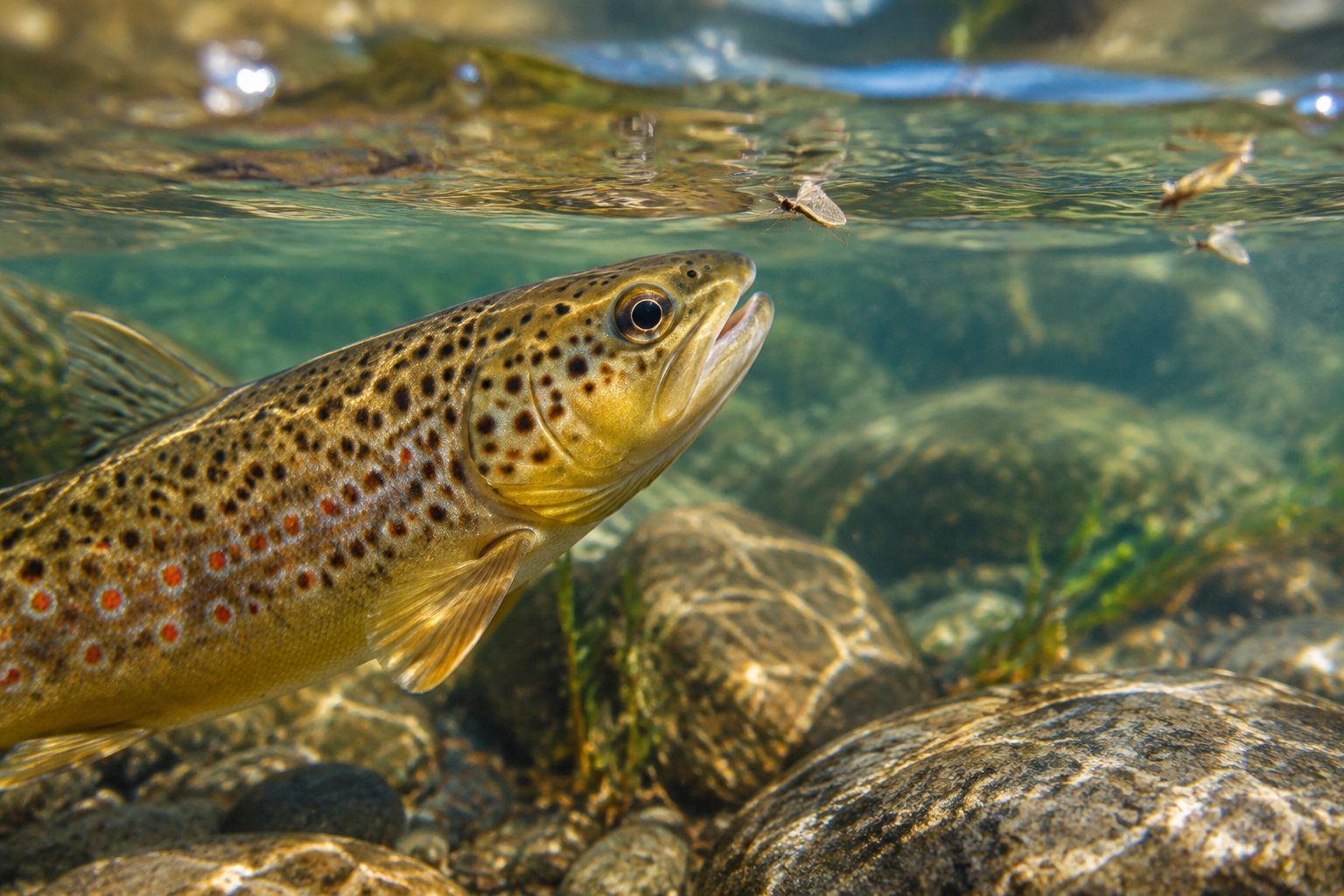
Start with a pheasant tail nymph, a Zebra midge, or a small Woolly Bugger when you have not identified the current food source. Those patterns cover common parts of the brown trout diet, including nymphs, midges, mayflies, caddis, leeches, and small baitfish.
Reliable Nymphs for Most Conditions
Nymphs produce consistent opportunities because brown trout feed below the surface through much of the day. Start with a pheasant tail nymph for mayflies, a copper john for a heavier mayfly-style offering, or a zebra midge when tiny insects dominate.
A prince nymph gives you a visible attractor when you see mixed insect activity. Use a San Juan worm after rain or when worms are likely to enter the current. A hex nymph suits waters with large mayflies, while a small egg pattern can work where spawning activity from other trout provides food.
Fish a nymph near the bottom with a strike indicator, or use euro nymphing when you can maintain close contact at short range. Adjust depth before changing patterns if your fly is passing above the fish.
When Dry Flies Are the Better Choice
Choose dry flies when you see repeated rises, floating insects, or trout sipping in a steady rhythm. Match the hatch by observing size, color, and behavior before selecting a pattern.
A parachute Adams covers many mayflies. An elk hair caddis works when caddis flutter across the surface, while a Griffith’s gnat imitates small clusters of midges. An F-Fly offers a delicate option for selective fish.
During warm months, watch the banks for grasshoppers and ants. A hopper, chernobyl ant, chubby chernobyl, or smaller ant pattern can draw a brown trout from shallow cover.
When to Use Streamers and Bigger Food Imitations
Use streamers when the water is stained, light is low, or you want to target an aggressive brown trout. A Woolly Bugger imitates a leech, while a muddler minnow, bunny muddler, or zonker suggests sculpin and baitfish.
Larger browns also eat minnows, crayfish, worms, leeches, and mouse patterns. Choose a streamer that matches the food available in that water, then vary the retrieve until the fish show interest. A slow swing suits deep current, while short strips imitate an injured baitfish.
Make a Natural Presentation Without Spooking Fish
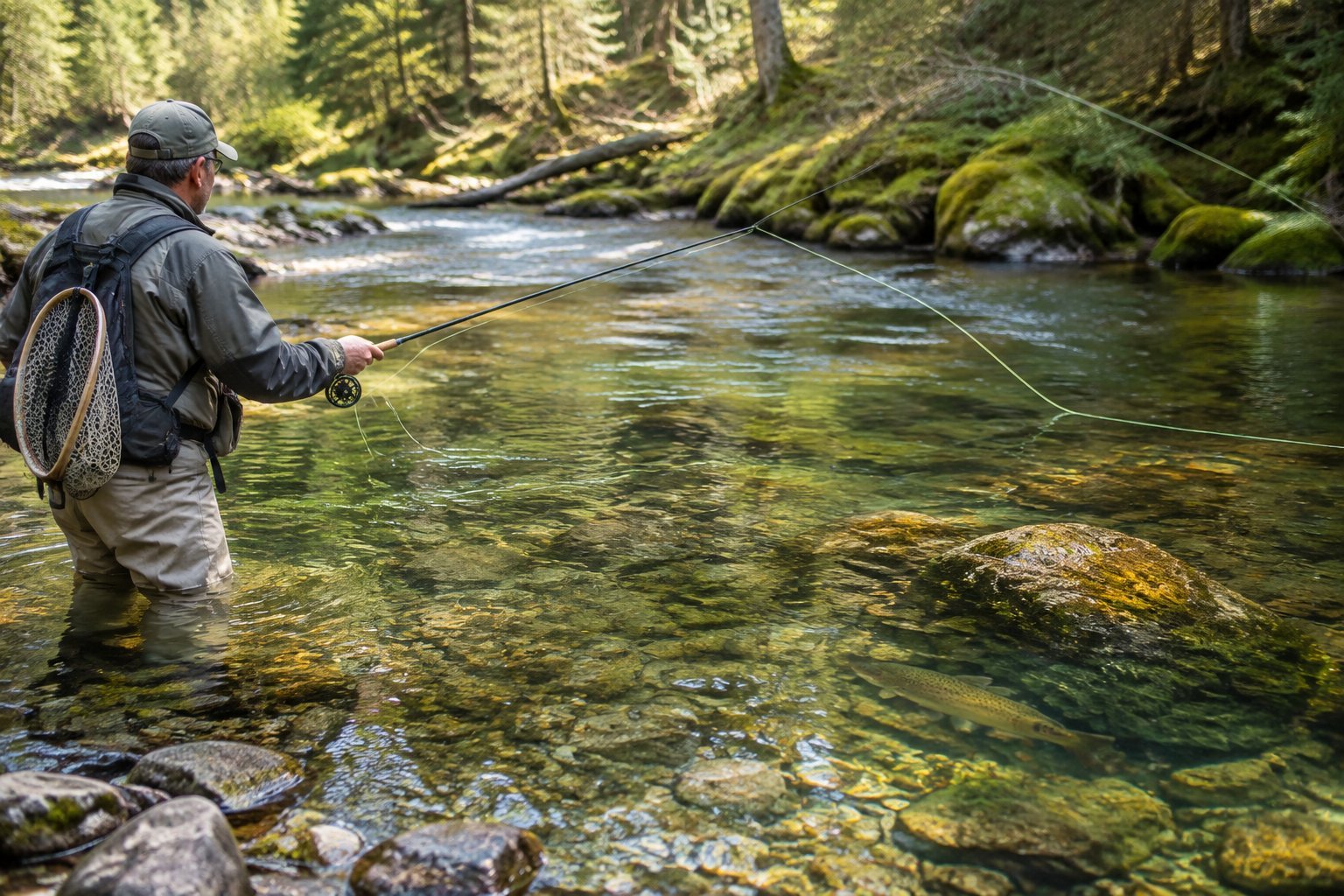
A quiet approach and a drag-free natural drift catch more brown trout than a long cast with an unnatural fly. Keep your profile low, stay out of the fish’s direct view, and place the fly where current carries it through likely holding water.
Why Stealth Matters More Than a Perfect Cast
Brown trout in clear water notice sudden movement, bright clothing, heavy footsteps, and a fly line landing across their lane. Walk slowly, use bankside cover, and cast from downstream when the current allows.
Make the shortest effective cast first. A short, accurate presentation lands softly and keeps less line on the water. Polarized sunglasses help you spot fish, seams, and submerged structure before you move.
How to Get a Drag-Free Drift
A drag-free drift lets your fly travel at the same speed as the surrounding current. Cast slightly upstream, then mend the line by lifting the rod and repositioning loose line upstream of the fly.
Keep the leader and tippet away from conflicting currents. If the fly skates unnaturally, shorten the cast, mend earlier, or change your position. Watch the indicator, dry fly, or leader connection for pauses and sharp movements that signal a take.
Simple Nymphing, Dry-Fly, and Streamer Retrieves
For nymphing, keep the fly near the bottom and follow its path with the rod tip. A dropper beneath a buoyant dry fly gives you a surface option and a subsurface option in one presentation.
For dry fly fishing, let the fly drift without pulling it across the current. Apply floatant when the pattern begins to sink and replace it when the hackle or body becomes waterlogged.
For wet fly fishing, allow the fly to swing across current with small lifts of the rod tip. For streamer fishing, cast across or slightly downstream, let the fly sink, then retrieve it with short strips. Use a sinking line or sink tip line when the fly fails to reach the depth where fish are holding.
Plan a Productive After-Work Brown Trout Session
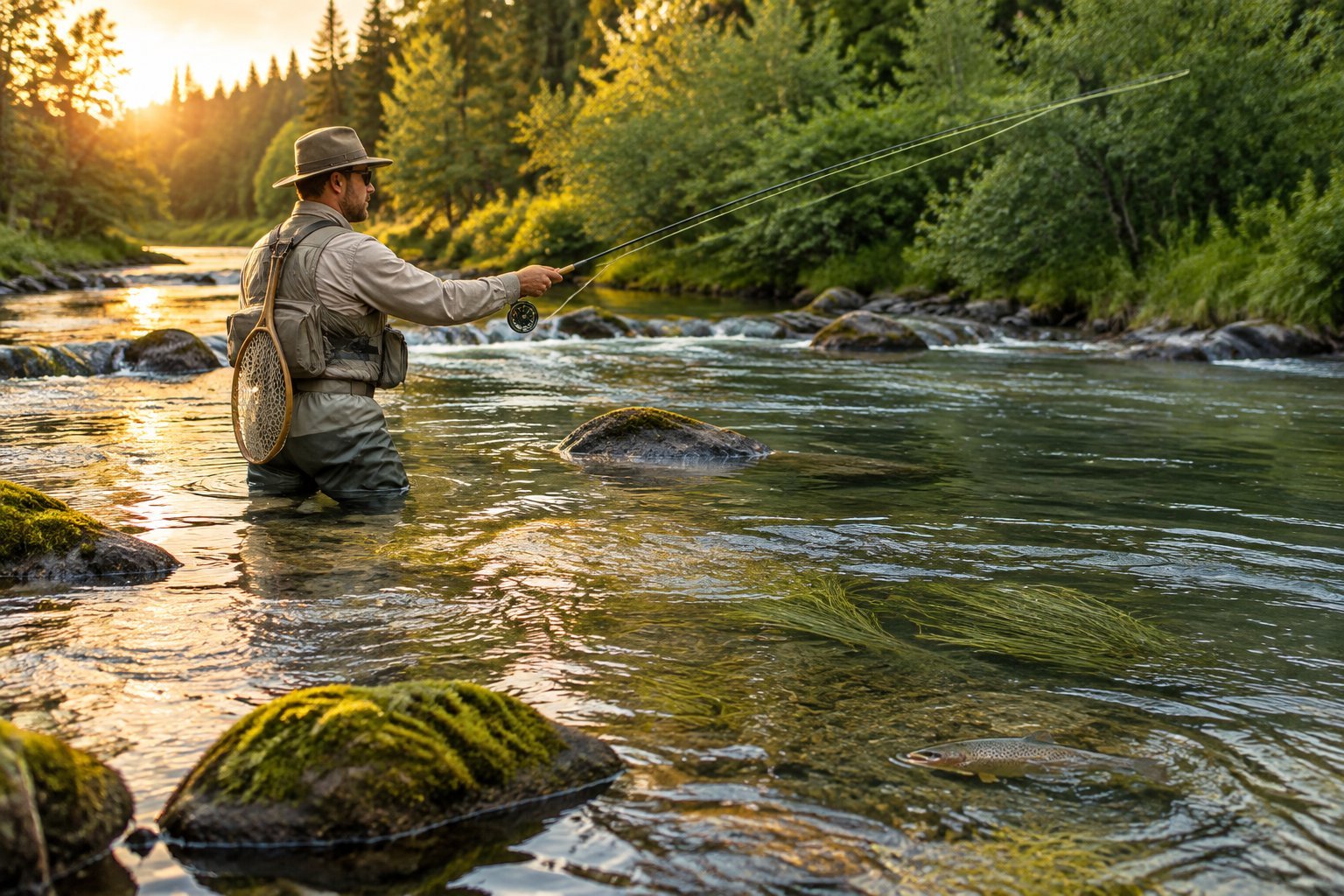
A 60-minute session works when you prepare your gear before leaving and fish one compact stretch of water. Choose a legal access point, check regulations, and keep your first fly selection ready before you reach the bank.
A 60-Minute Plan From Parking Spot to Last Cast
Minutes 0-10: Observe and position. Walk quietly to the bank, watch for rises, inspect the current, and choose the easiest approach. Begin with the nearest likely holding water.
Minutes 10-25: Fish the closest water. Use a pheasant tail nymph or zebra midge. Make short upstream casts and adjust depth before changing flies.
Minutes 25-40: Cover the next holding areas. Move slowly through runs, pocket water, and pool edges. Switch to a dry fly when you see rises or visible insect activity.
Minutes 40-55: Try a streamer. Tie on a Woolly Bugger or muddler minnow if light is fading, the water is slightly colored, or you want to reach larger fish near cover.
Minutes 55-60: Make the final casts and leave cleanly. Fish one last productive lie, check your tippet, pack your gear, and carry out any waste.
When to Fish Through the Seasons and at Low Light
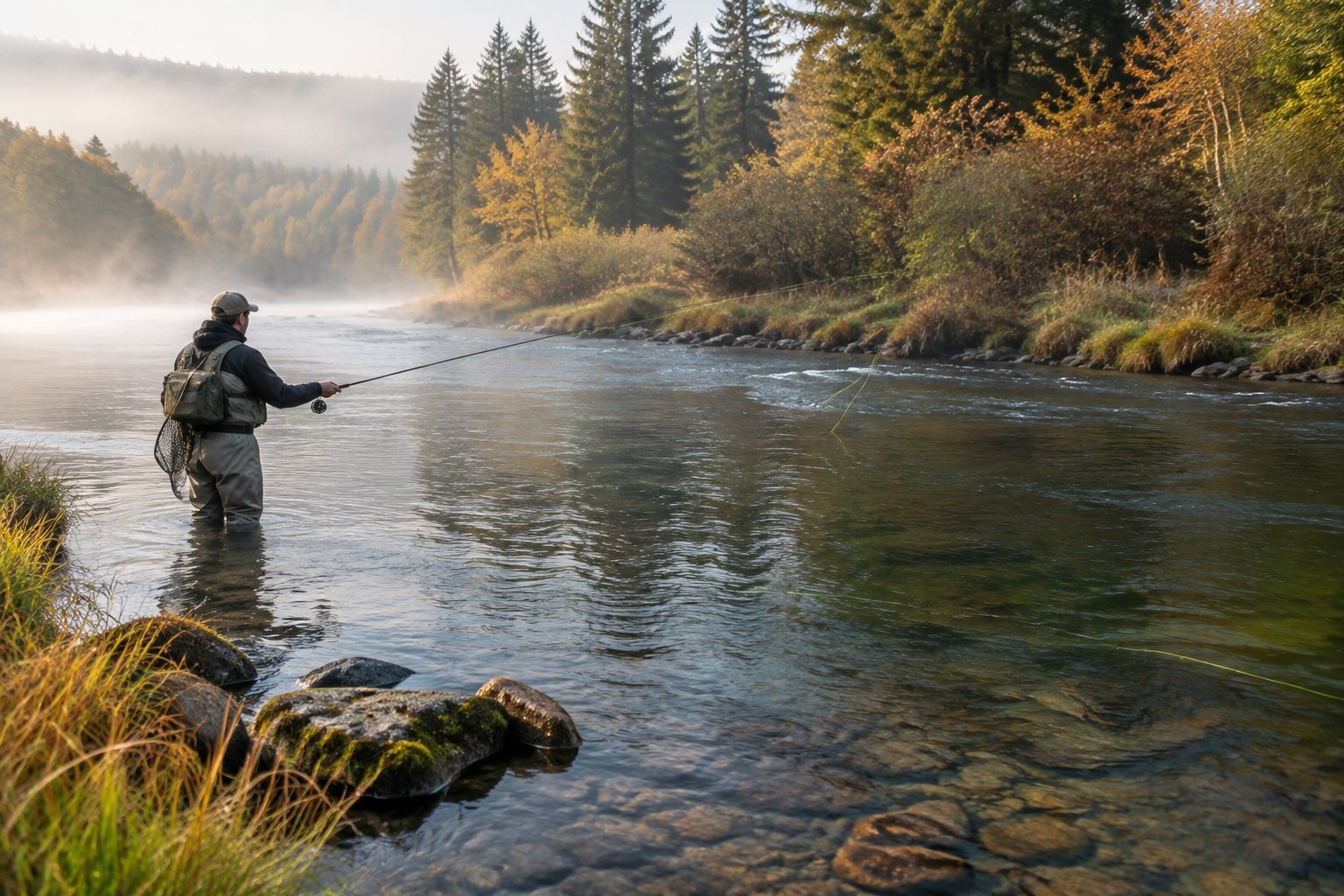
Spring brings increasing insect activity as water warms, while summer offers good early and late opportunities when daylight and water temperatures shift. Fall brings aggressive feeding before brown trout spawning, especially during low light.
Avoid stepping on redds, the gravel nests brown trout use for spawning. Give spawning fish and visible redds plenty of space. Winter sessions can reward you during the warmest part of the day, when insects and trout activity increase.
Rain, cloud cover, and evening shade reduce glare and help you approach fish. Check water temperature and local closures before fishing, especially during warm weather.
Handle, Release, and Protect Trout Responsibly
Wet your hands before touching a trout, keep the fish close to the water, and support its body with both hands. Remove the hook with forceps, limit air exposure, and release the fish facing into gentle current.
Use barbless hooks when regulations allow, and avoid dragging fish across gravel or grass. Protect every trout species you encounter, including brown trout, rainbow trout, brook trout, and grayling, because local rules and conservation needs differ.
Frequently Asked Questions
What is the best fly to use for catching brown trout?
The pheasant tail nymph is the best first fly for many beginners because it imitates common mayfly nymphs and works below the surface. Carry a parachute Adams for visible rises and a Woolly Bugger for low light, deeper water, or predatory fish.
What is the best time to fly fish for brown trout?
Early morning, evening, and periods of low light are strong times for brown trout fly fishing. Spring and fall often provide active feeding, while summer fishing improves during cooler hours.
How do you catch brown trout in rivers with a fly rod?
Start with a nymph or small dry fly and present it through runs, pools, riffles, pocket water, and current seams. Approach from downstream, keep your drift drag-free, and adjust depth before replacing a fly that reaches the right water.
Can beginners catch brown trout on dry flies?
Beginners can catch brown trout on dry flies when trout are rising and the fly matches the size and color of visible insects. A parachute Adams or elk hair caddis is easy to see and gives you a practical starting pattern.
How do you catch brown trout in lakes with a fly rod?
Search lake edges, creek mouths, drop-offs, weed lines, and windblown shorelines. Use a floating line for shallow fish, then try a streamer with a sinking line or sink tip line when browns feed deeper.
How old is a 20-inch brown trout?
A 20-inch brown trout may be around 4 to 6 years old in productive water, while growth varies with food, temperature, habitat, and genetics. Larger trophy fish can be substantially older, so length provides only an estimate.