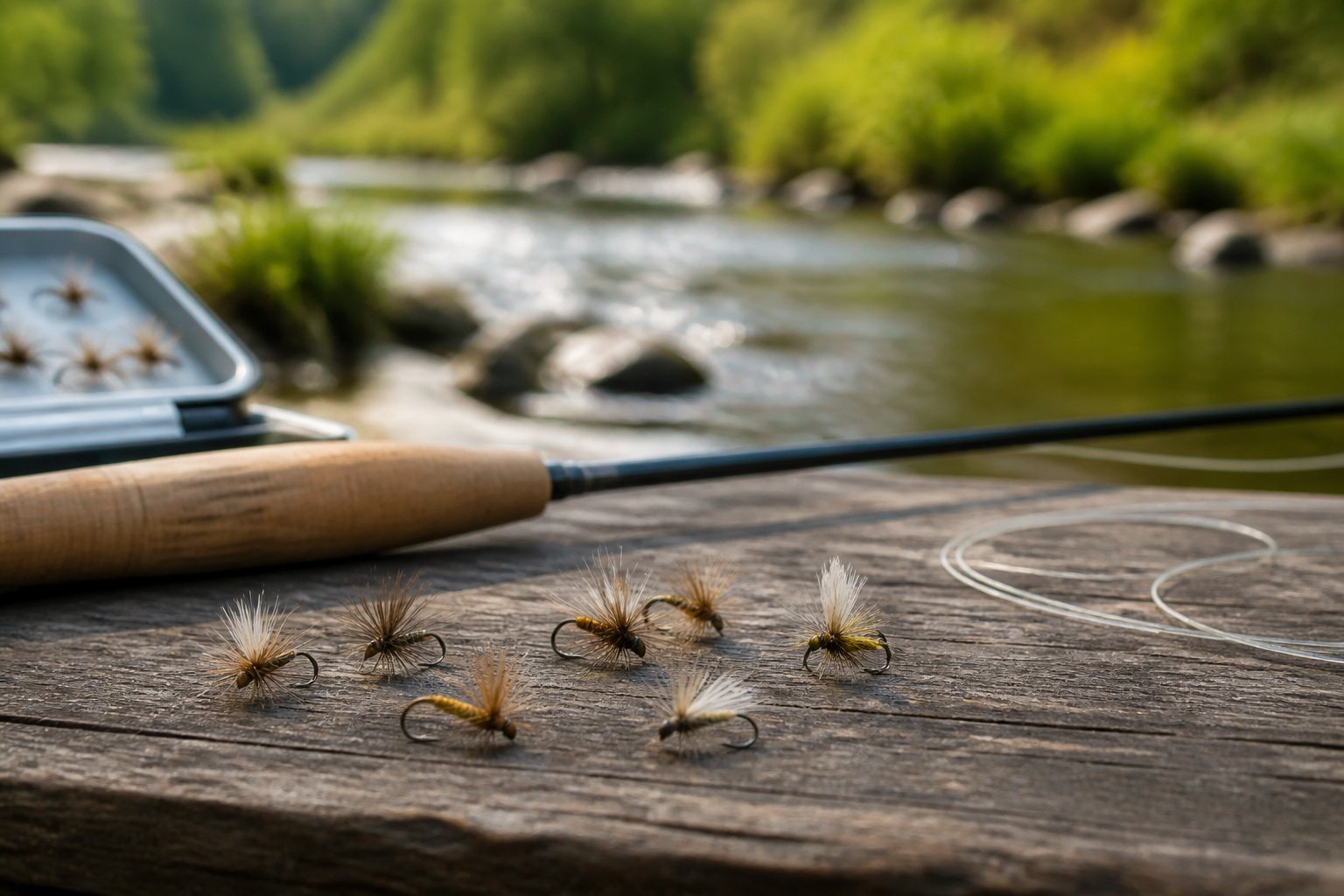
Dry fly fishing flies give trout anglers a direct way to present food on the water’s surface. A small, well-chosen box can cover mayflies, caddis, terrestrials, midges, and attractor situations without adding much weight to a quick trip.
The Parachute Adams is the best all-purpose starting point because its gray profile matches many mayflies and its white post remains visible in broken current. Pack a few sizes, then add patterns that fit the stream’s insects, water speed, and light conditions.
Quick picks:
- Best all-purpose: Parachute Adams
- Best caddis imitation: Elk Hair Caddis
- Best attractor: Chubby Chernobyl
- Best small-insect pattern: Griffith’s Gnat
1. Parachute Adams
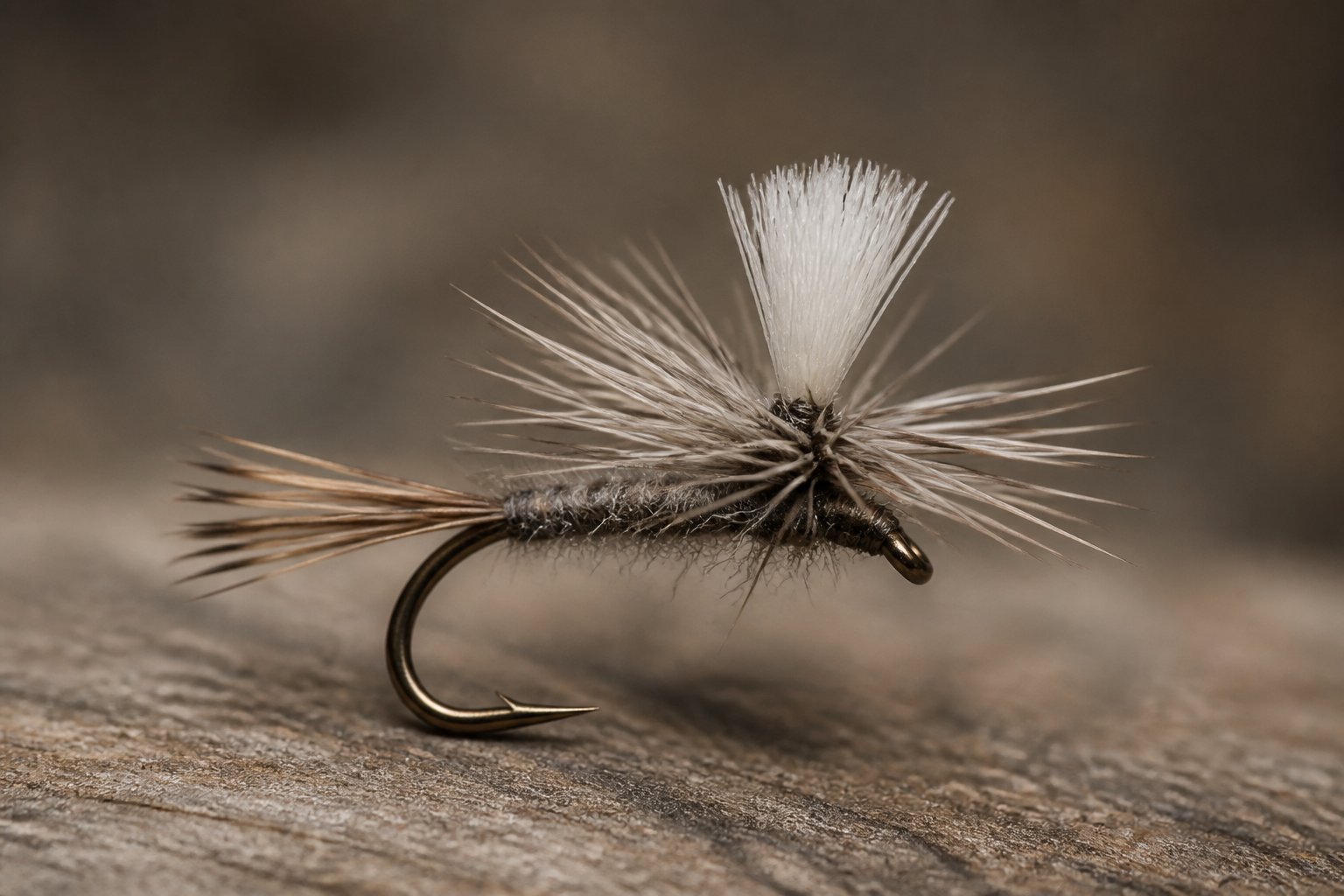
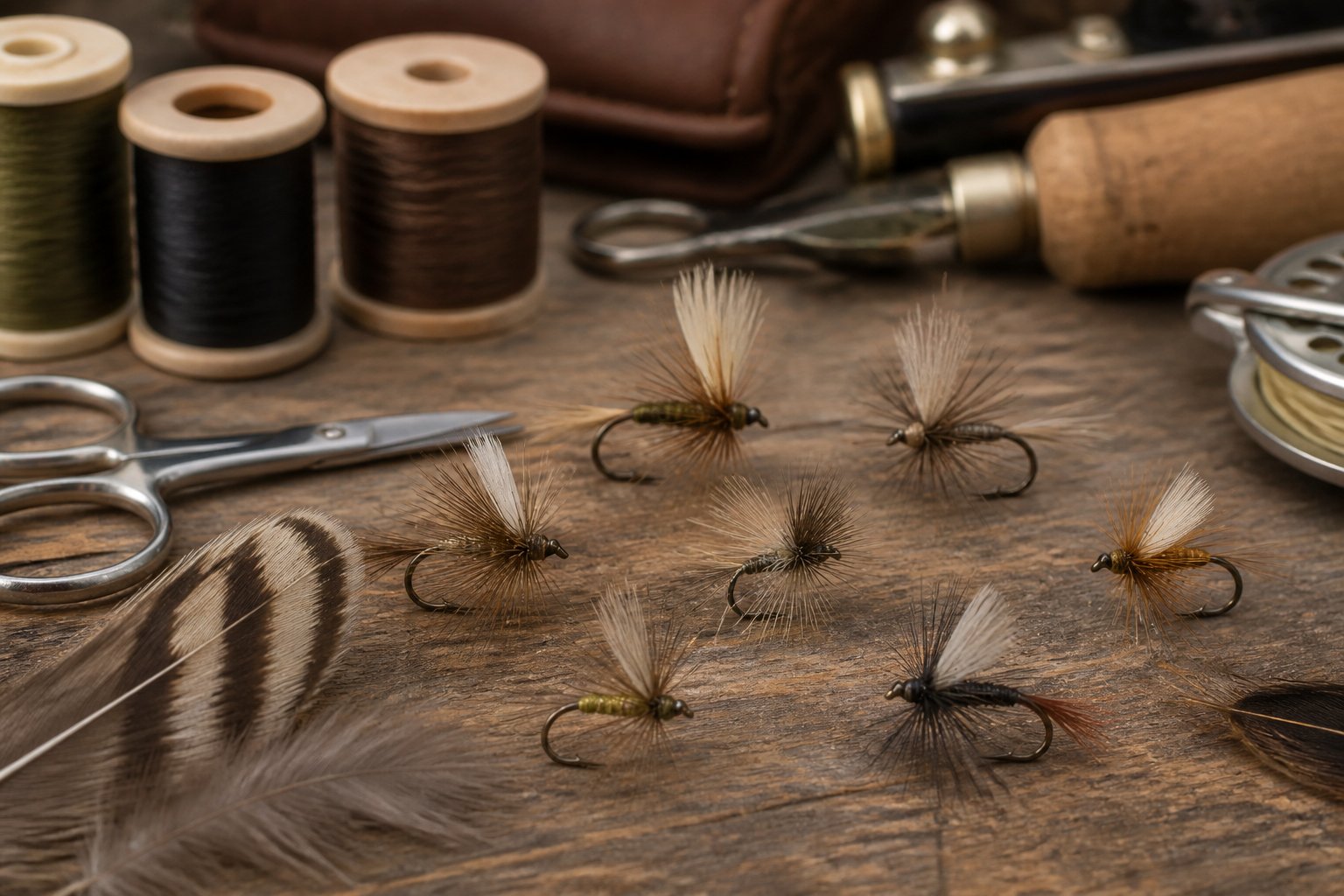
The Parachute Adams is the simplest all-purpose dry fly choice for trout. Its gray body, hackle, and upright white post suggest several mayfly species while giving the angler a visible target in riffles and seams.
Sizes 12 through 18 cover many fishing situations, with size 16 serving as a practical starting point. It fishes well during scattered mayfly activity, light hatch periods, or any time trout are rising without a clear insect identification.
A dab of floatant on the hackle and body helps keep the fly riding high. The post remains useful in glare and broken water, especially during a short after-work session when quick fly changes save time.
2. Elk Hair Caddis
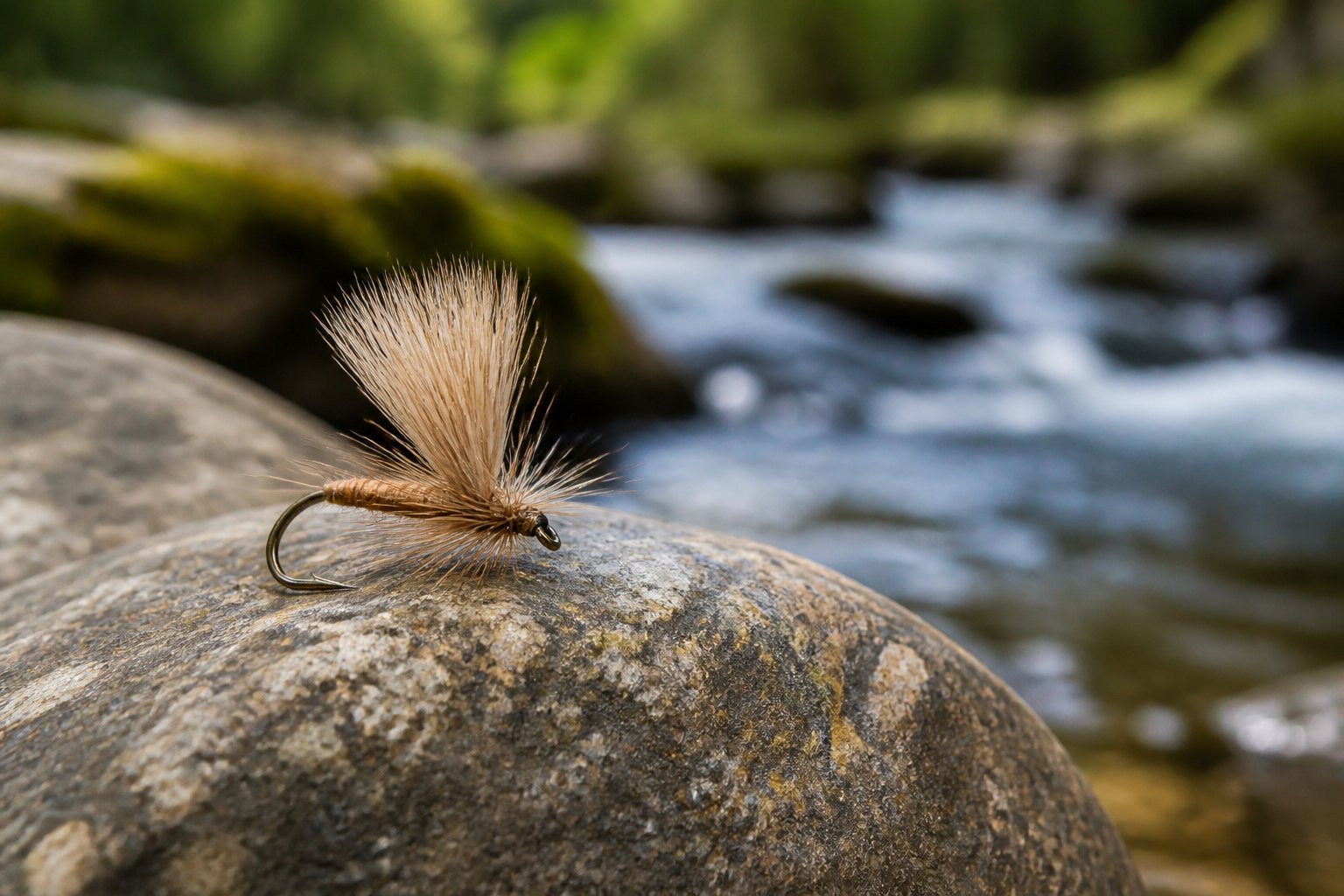
The Elk Hair Caddis is the dependable choice when caddis adults are fluttering near the surface or skating across current. Its elk-hair wing sheds water, its hackle supports the fly, and its curved body creates a recognizable caddis profile.
Tan, olive, and brown cover the most useful color choices. Sizes 12 to 16 fit many adult caddis, while a larger size works as an attractor during faster water.
This pattern performs well around pocket water, bankside cover, and evening caddis activity. A short twitch can suggest a struggling adult, though a drag-free drift should come first.
3. Chubby Chernobyl
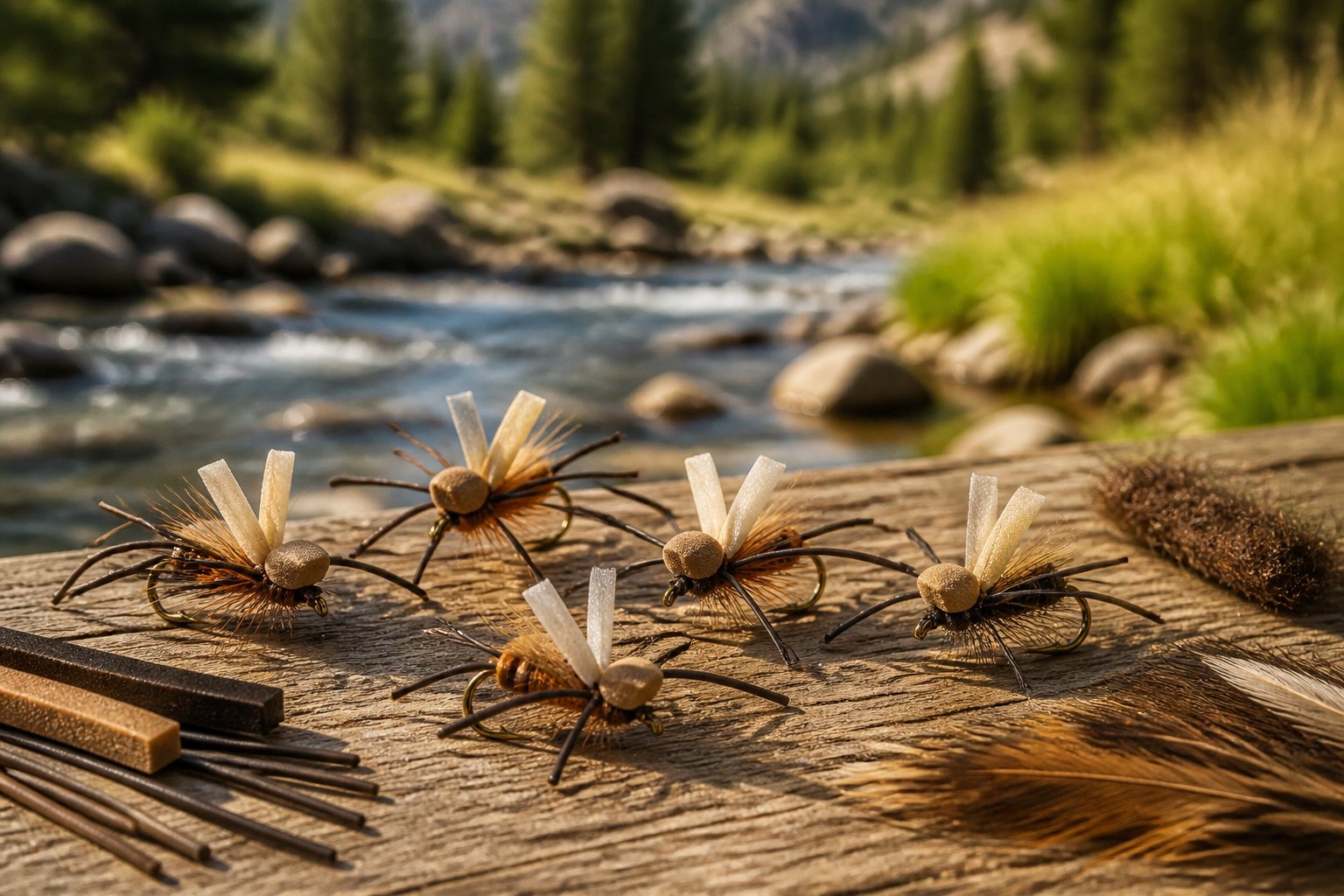
The Chubby Chernobyl is a high-floating foam attractor that excels in fast, turbulent water. Its foam body supports the fly, while the bright indicator helps anglers track it through riffles and pocket water.
Size 8 or 10 works for stonefly activity, hopper season, and prospecting unfamiliar water. Smaller versions in size 12 can fit calmer stretches where trout respond to a more moderate silhouette.
This fly also works well as the top fly in a dry-dropper setup, with a nymph attached below. It suits beginners because the visible wing post helps them follow the drift and detect a submerged fly’s take.
4. Stimulator
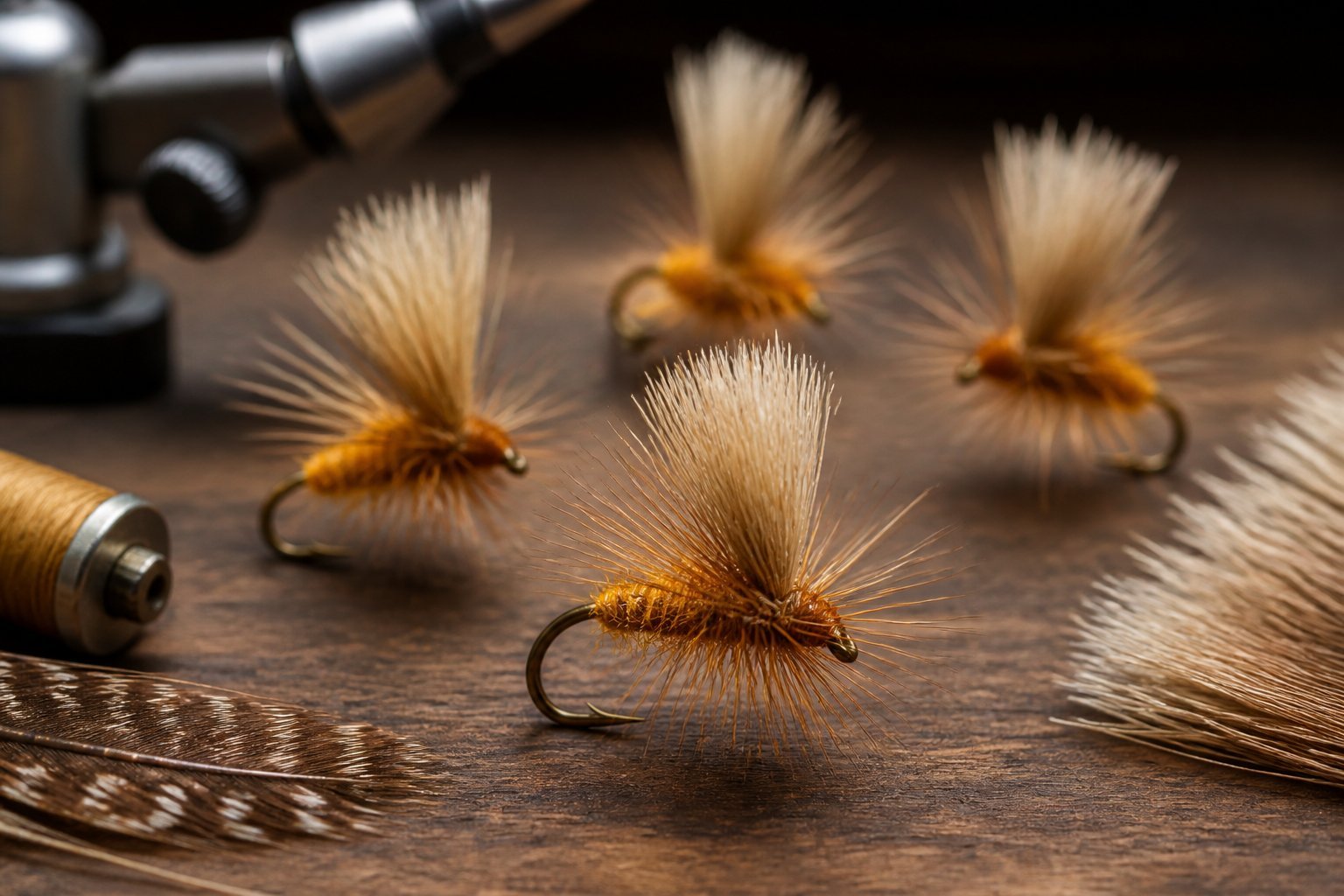
The Stimulator covers stoneflies, caddis, grasshoppers, and other large drifting insects. Its tapered body, colorful hackle, and elk-hair wing create a broad attractor profile that remains buoyant in rough water.
Orange, yellow, tan, and olive are useful color options. Sizes 8 through 14 handle most trout-stream applications, with larger sizes suited to stonefly periods and smaller sizes useful for caddis-like presentations.
The pattern shines along pocket-water edges and undercut banks. A few false casts help dry the materials before the next drift, keeping the fly riding above the surface film.
5. Hendrickson
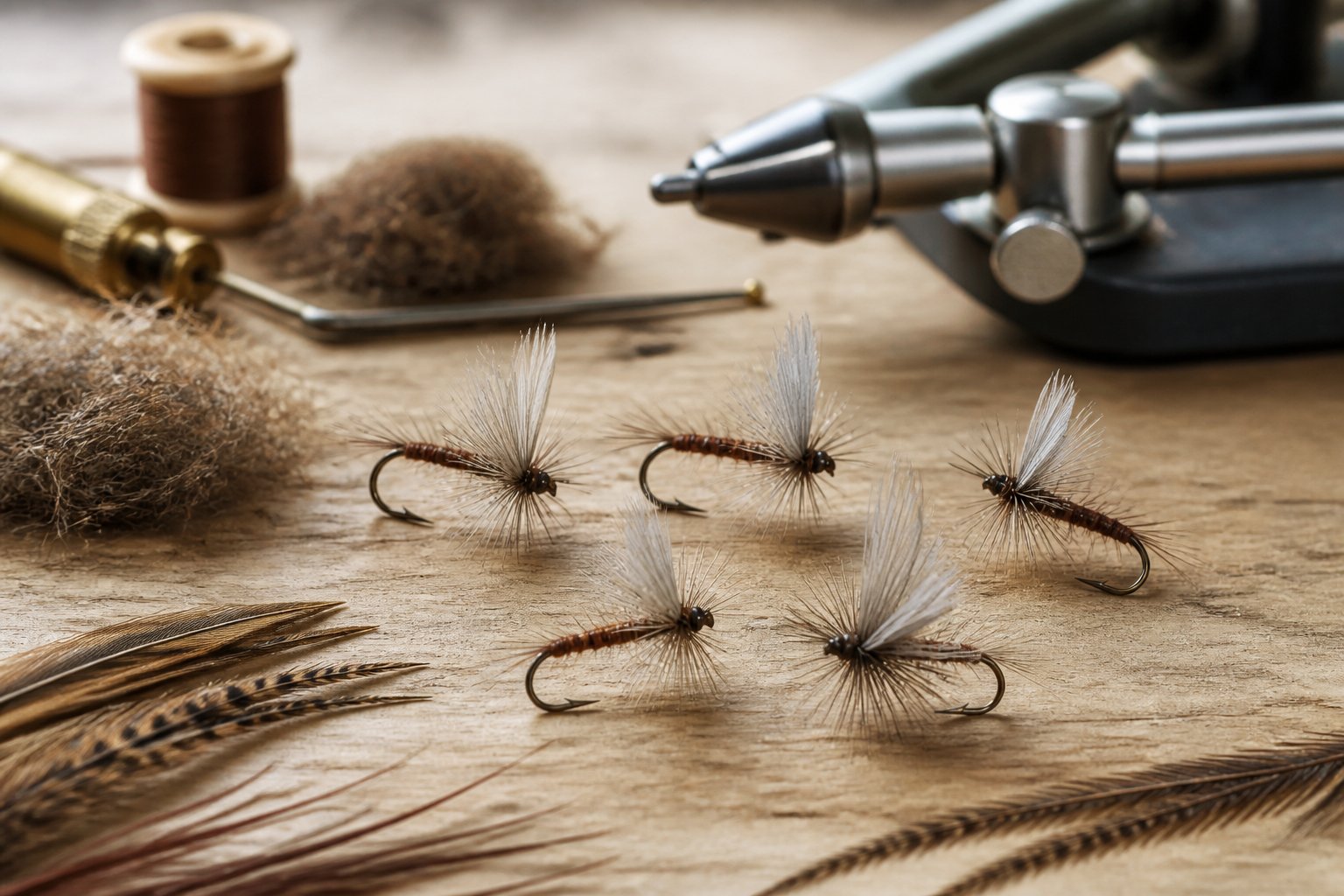
The Hendrickson is a focused spring mayfly pattern for rivers where reddish-brown-bodied mayflies hatch. It matches the dun stage trout commonly take on the surface during cool spring afternoons.
Sizes 12 and 14 are common starting points, with the correct size determined by the naturals on the water. A gray or smoky wing helps the fly sit like a mayfly dun, while the darker body separates it from lighter summer patterns.
This fly rewards a careful presentation. Trout feeding on Hendricksons can become selective, so a long leader, light tippet, and drag-free drift improve the chance of a clean take.
6. Pale Morning Dun
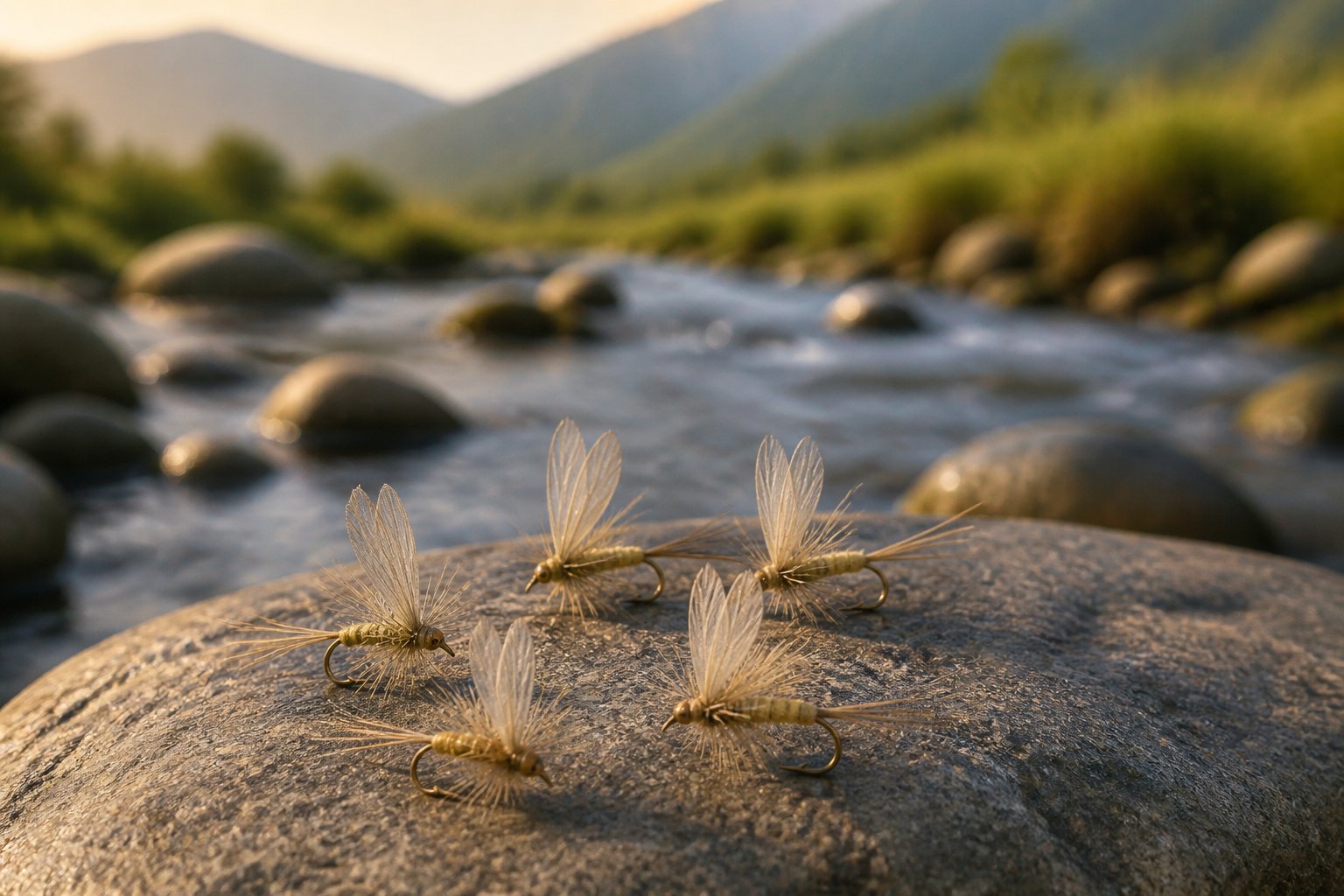
The Pale Morning Dun is the key choice for pale yellow mayfly hatches in summer and early fall. Its light body and delicate profile match PMDs that often bring trout to slower seams and eddies.
Sizes 14 through 18 cover many PMD situations. Size 16 is a useful middle ground, while smaller versions help when trout inspect every detail in clear, low water.
A parachute design makes the fly easier to see without creating a heavy silhouette. The angler should watch for naturals in the surface film and match their size before changing several other variables.
7. Blue-Winged Olive Parachute
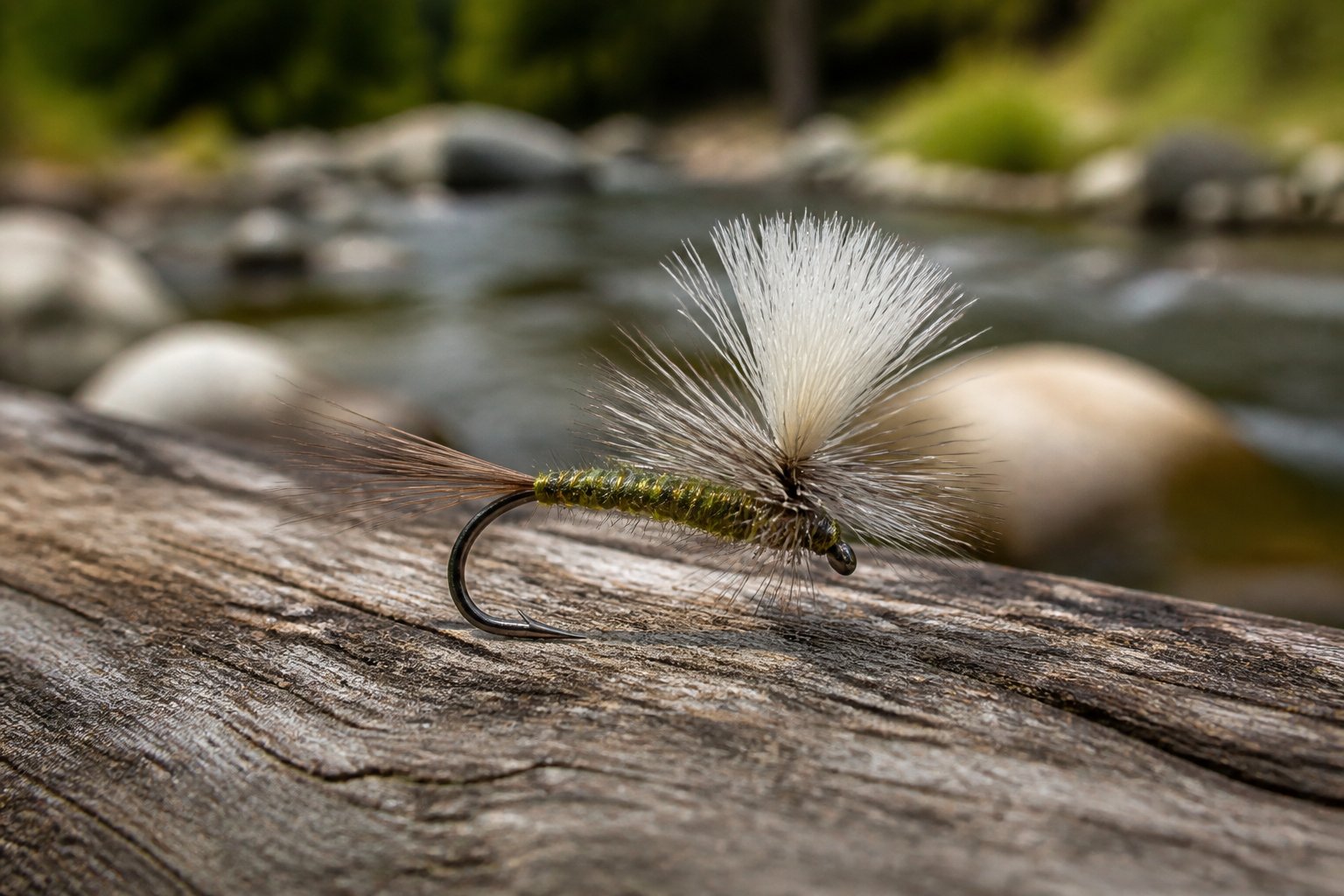
The Blue-Winged Olive Parachute is the go-to pattern for small olive mayflies during cloudy weather, fall days, and intermittent spring hatches. Its dark thorax and olive body imitate a common trout food source in many rivers.
Sizes 16 through 20 cover the most frequent BWO situations. The white post provides visibility when low clouds reduce contrast, although smaller flies require careful line control and close observation.
A size 18 is a practical choice for a first BWO box. Trout often feed in gentle water during these hatches, so a long, quiet drift and fine tippet help the fly look natural.
8. Griffith’s Gnat
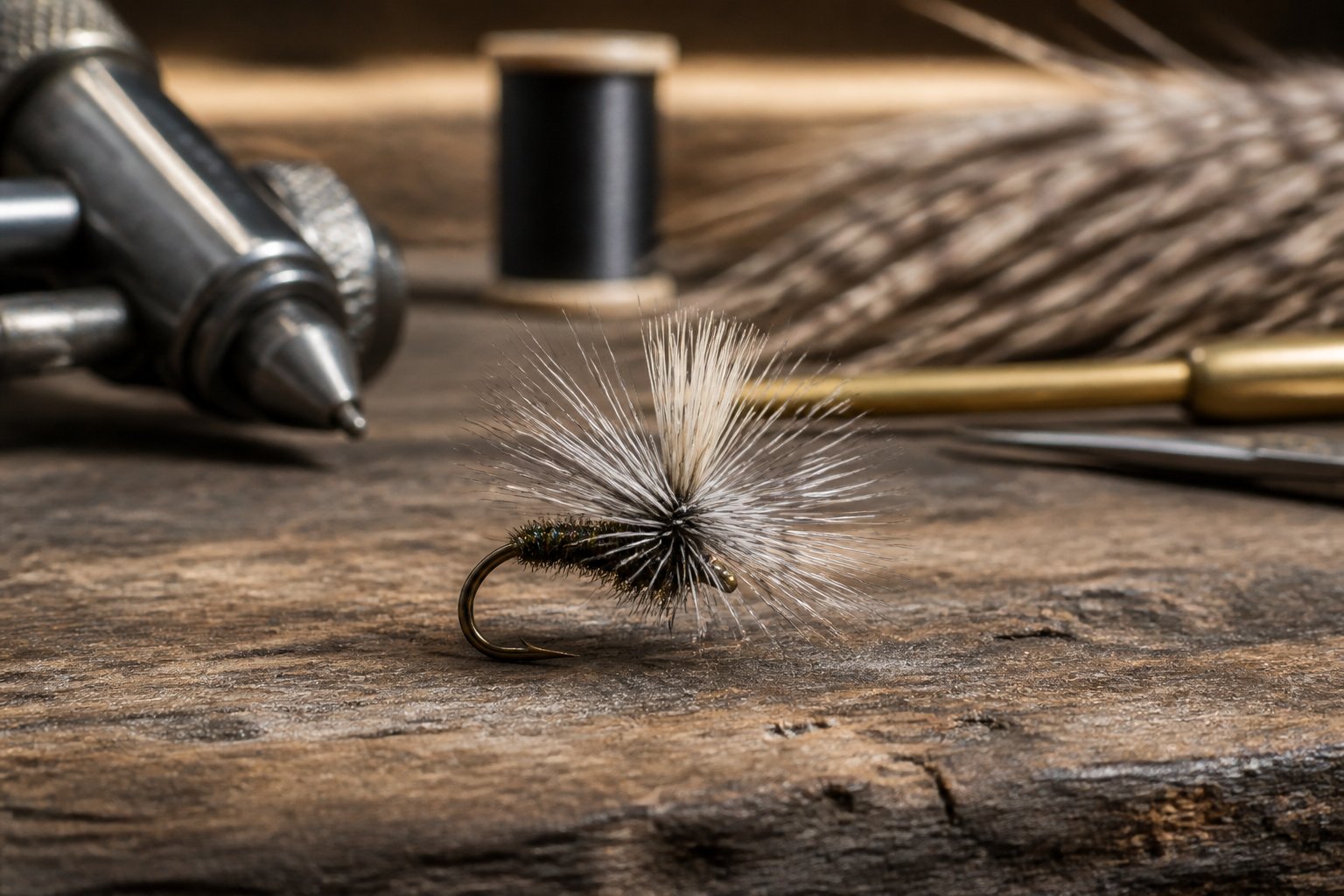
Griffith’s Gnat is a compact midge and cluster-fly pattern for trout sipping tiny insects. Its peacock herl body and palmered grizzly hackle suggest a group of midges gathered at the surface.
Sizes 18 through 22 are useful, with size 20 serving as a practical starting point when trout rise to barely visible insects. The pattern is especially valuable in calm pools, tailwaters, and late-season water.
Its dark, textured profile can be easier for trout to find than a sparse single-midge imitation. The angler should apply a small amount of floatant to the hackle and keep the tippet fine and unobtrusive.
9. Foam Ant
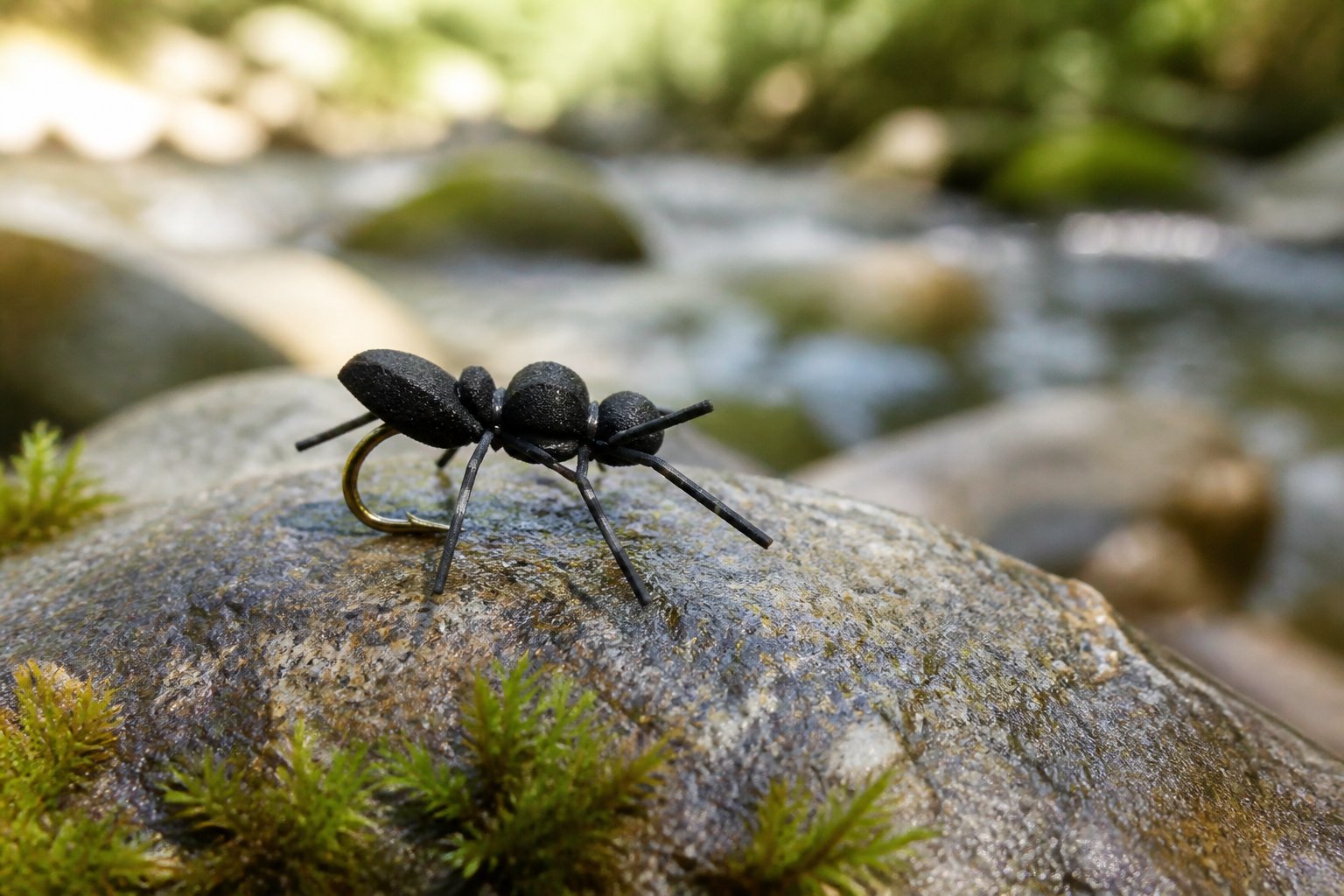
The Foam Ant is a strong terrestrial pattern for summer banks, windy days, and trout looking upward without a visible hatch. Its foam body floats well and imitates ants that fall from streamside vegetation.
Black, cinnamon, and brown cover the most useful terrestrial colors. Sizes 12 through 18 let the angler match anything from a large flying ant to a smaller land-based insect.
A Foam Ant works best near grassy edges, overhanging branches, and undercut banks. A short twitch after the fly settles can attract attention, though the first presentation should remain quiet and natural.
10. Rusty Spinner
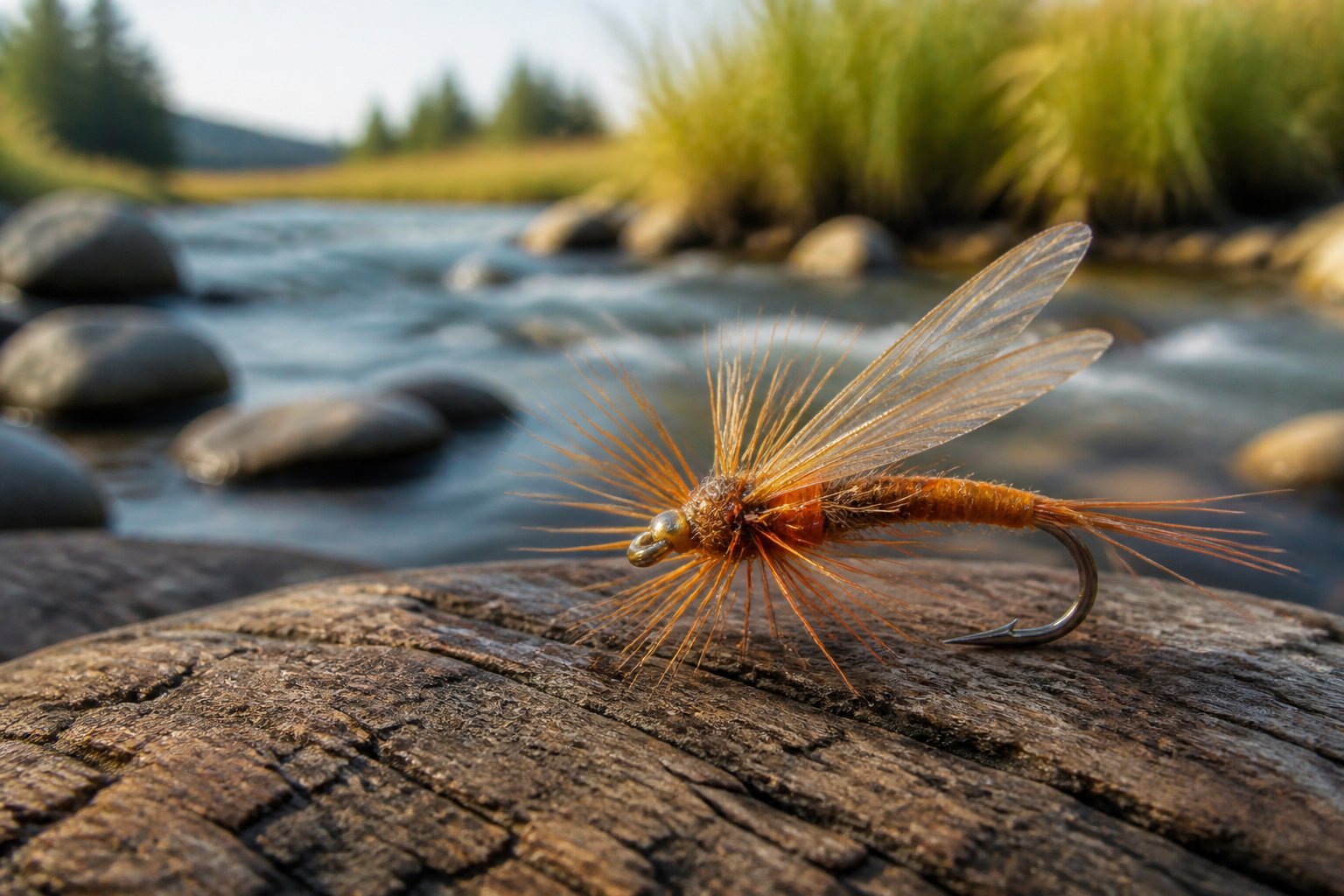
The Rusty Spinner is designed for the final stage of a mayfly’s life cycle, when spent adults lie flat on the water with outstretched wings. It becomes especially useful during an evening spinner fall after a daytime hatch.
Sizes 14 through 18 cover many common mayfly spinner situations. Its rusty or mahogany body creates a visible silhouette from below, while the flat wing presentation matches spent insects.
This pattern calls for a delicate landing and a drag-free drift. Trout may hold in slow water beneath a spinner fall, so the angler should target foam lines, eddies, and the soft edges of current.
How to Choose Dry Flies for the Conditions
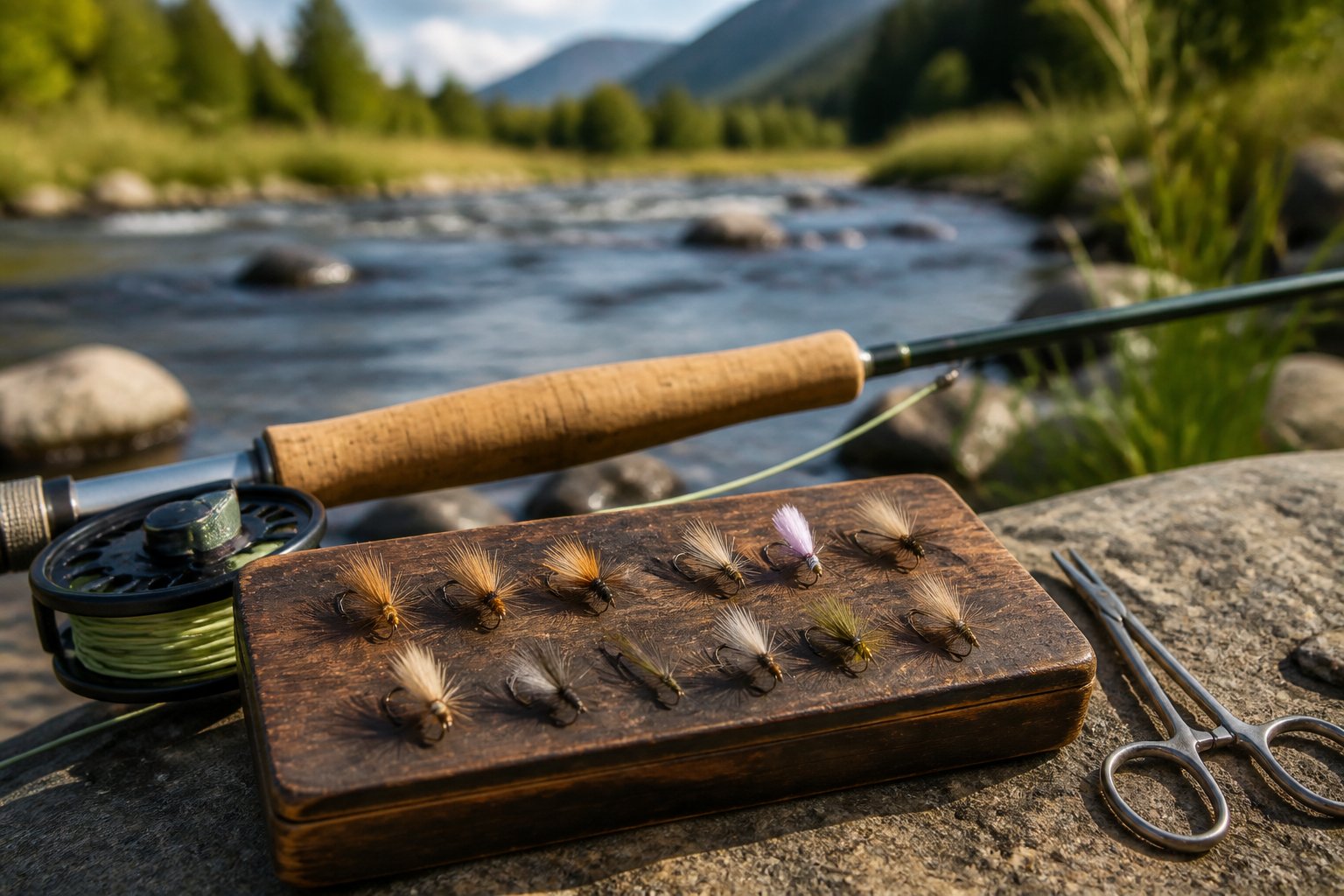
The best dry fly depends on the insects present, the water’s speed, and how clearly the angler can track the pattern. A practical box combines one all-purpose mayfly, one caddis imitation, one attractor, and smaller patterns for selective trout.
| Pattern | Main use | Useful sizes | Visibility |
|---|---|---|---|
| Parachute Adams | General mayflies | 12-18 | High |
| Elk Hair Caddis | Caddis activity | 12-16 | Medium-high |
| Chubby Chernobyl | Attractor, stoneflies | 8-12 | Very high |
| Stimulator | Large attractor | 8-14 | High |
| Hendrickson | Spring mayflies | 12-14 | Medium |
| Pale Morning Dun | Pale summer mayflies | 14-18 | Medium |
| Blue-Winged Olive Parachute | Small olive mayflies | 16-20 | Medium |
| Griffith’s Gnat | Midges and clusters | 18-22 | Low-medium |
| Foam Ant | Terrestrials | 12-18 | Medium-high |
| Rusty Spinner | Evening spinner fall | 14-18 | Medium |
Which dry fly works when you do not see insects?
A Parachute Adams in size 14 or 16 is the most practical first choice when no clear hatch is visible. A Chubby Chernobyl or Stimulator helps prospect faster, rougher water where trout may rise to opportunistic food.
The angler should fish likely holding water first, including riffle edges, seams, undercut banks, and shaded structure. If several good drifts produce no response, changing location or depth may help more than switching among similar dry flies.
Which patterns are easiest to see in moving water?
Chubby Chernobyl, Stimulator, and larger Parachute Adams patterns are easiest to track in broken current. Bright foam, white posts, and oversized hackle improve visibility during glare, low light, or fast pocket water.
A larger visible dry fly also works well when a beginner is learning drift control. The angler should keep the fly within a comfortable casting distance so the leader and tippet remain easy to monitor.
When should you match the insect size and color more closely?
A closer match becomes important when trout rise repeatedly and refuse a pattern. The angler should compare the naturals’ body length, color, wing shape, and behavior before selecting a replacement.
Small BWOs, PMDs, and midges often require the closest size match. In clear water, a size 18 pattern can outperform a larger fly even when the larger option is easier to see.
What should you use during an evening spinner fall?
A Rusty Spinner is the first choice for a rusty or mahogany mayfly spinner fall. A Parachute Adams can cover a mixed fall when the exact species is unclear, while a Griffith’s Gnat fits tiny clusters of spent insects.
Spinners often collect in slow seams and eddies. A long leader, fine tippet, and quiet landing help the fly sit flush on the surface.
Beginner Dry Fly Buying Checklist
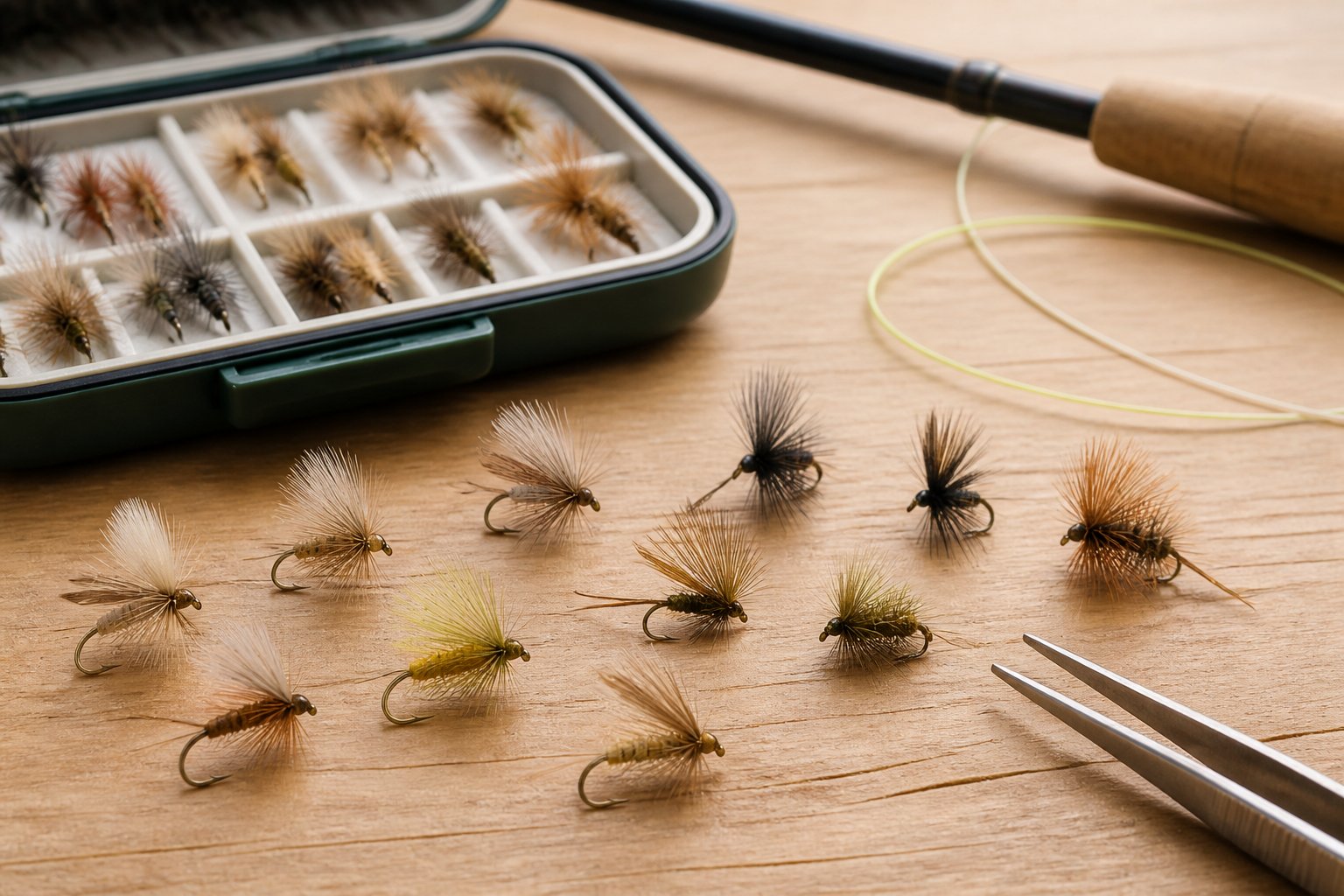
A beginner should build a small, balanced box around proven sizes and broad food categories. The first purchase should favor patterns that remain visible, float reliably, and cover several common trout situations.
Which sizes should a beginner buy first?
Sizes 14, 16, and 18 provide the most useful starting range for many trout streams. A beginner can add size 12 for large attractors and size 20 for small BWO or midge situations after gaining confidence.
A practical first purchase might include:
- Parachute Adams in sizes 14 and 16
- Elk Hair Caddis in sizes 14 and 16
- Chubby Chernobyl in sizes 10 and 12
- Griffith’s Gnat in sizes 18 and 20
- Foam Ant in sizes 14 and 16
How many of each pattern should you carry?
Three or four flies per pattern and size give a beginner enough replacements for missed fish, tree snags, and worn-out hackle. A compact box with 20 to 30 flies covers a short trip without creating unnecessary choices.
More copies should go to the patterns used most frequently, especially Parachute Adams, Elk Hair Caddis, and one visible attractor.
Which colors are useful for a first dry-fly box?
Gray, tan, olive, brown, black, and pale yellow cover a broad range of mayflies, caddis, midges, and terrestrials. White or brightly marked posts improve tracking when the water is fast or the light is low.
The angler should add rusty brown for spinner falls and orange or yellow for attractors when local conditions support them.
What else do you need to fish dry flies effectively?
A floating fly line, tapered leader, fine tippet, floatant, nippers, forceps, and a small fly box complete a basic setup. A 9-foot 5-weight rod with a 4X to 6X leader handles many general trout-stream situations, while lighter outfits suit small water and delicate presentations.
A landing net with rubber mesh helps protect released trout. Polarized sunglasses reduce surface glare and make it easier to follow the fly and inspect the water.
Frequently Asked Questions
What are the best dry fly fishing flies for trout?
The Parachute Adams, Elk Hair Caddis, Chubby Chernobyl, Stimulator, Griffith’s Gnat, and Foam Ant form a dependable starting group. Their roles cover mayflies, caddis, attractor situations, midges, and terrestrial insects.
What does dry fly mean in fly fishing?
A dry fly floats on the water’s surface and imitates adult insects, terrestrials, or other surface food. The angler watches the fly for a rise or uses it as a visible indicator in a dry-dropper setup.
What size dry fly should beginners use for trout?
Sizes 14 and 16 are the most useful starting points for many trout streams. Size 12 fits larger attractors, while size 18 handles smaller mayflies, midges, and selective trout.
When should I use a Parachute Adams?
A Parachute Adams works when mayflies are present or when trout are rising without a clear insect match. Sizes 14 through 18 cover many general situations, and its white post helps with visibility.
How do I choose between an Elk Hair Caddis and a Stimulator?
An Elk Hair Caddis fits caddis activity and smaller surface insects, while a Stimulator suits larger attractor presentations and rougher water. Size, body color, and the insect activity near the stream should guide the choice.
What is the 60/20/20 rule in fly fishing?
The 60/20/20 rule is a practical fly-box guideline that allocates about 60% of patterns to common food imitations, 20% to attractors, and 20% to specialty or local patterns. It gives beginners a balanced starting point while leaving room for hatch-specific flies.