
A kids fishing rain jacket needs to do more than shed light drizzle. It should pack easily into a tackle bag, keep sleeves and layers dry during a sudden shower, and let a child cast, hike, and handle gear without feeling restricted. Lightweight shells work well for warm-weather trips because they add rain protection without replacing insulating layers.
Parents should check the shell fabric, seam construction, hood design, cuffs, pocket placement, and sizing. A poncho or rain suit can provide broad coverage, while a conventional jacket is easier for casting and everyday wear. For most fishing trips, a lightweight waterproof shell with room for a sweatshirt offers the best balance of packability, mobility, and protection.
Best for everyday fishing and easy layering: Columbia Youth Boys Glennaker Rain Jacket
Best for compact emergency coverage: FROGG TOGGS Ultra-lite2 Waterproof, Breathable Youth Rain Poncho
Best for sustained rain and snow: Columbia Kids Watertight II Jacket
Best for breathable school-to-trail wear: SaphiRose Kids Waterproof Rain Jacket
Best for full-body mud and rain protection: SWISSWELL Kids Rain Gear Rain Suit
Columbia Youth Glennaker Rain Jacket

Parents should buy this jacket for a versatile fishing shell that packs lightly, blocks rain, and layers comfortably over a sweatshirt.
Pros
- Waterproof nylon shell with a lightweight feel
- Hood, elastic cuffs, reflective detail, and two pockets
- Regular fit leaves room for layering
Cons
- Unlined shell provides little warmth
- No stretch in the fabric
- Some buyers report shorter sleeves or body length
The Glennaker is a practical choice for boat rides, shoreline casting, and rainy walks to a fishing spot. Its nylon shell acts as a barrier against showers without the bulk of an insulated coat, so children can stay mobile while casting or carrying a small tackle box.
The simple design also makes it easy to keep in a vehicle or gear bag. Parents should add a fleece or sweatshirt underneath in cool weather, since the shell is intended for weather protection rather than insulation. Fit feedback is generally favorable, though checking the size chart is worthwhile for children with long arms or a preference for heavier layers.
FROGG TOGGS Ultra-Lite2 Youth Rain Poncho

This poncho is a strong emergency option for parents who want broad waterproof coverage that compresses into a small included stuff sack.
Pros
- Seam-taped waterproof construction
- Packs down small and weighs very little
- Hood and side snaps cover clothing and some gear
Cons
- Poncho shape can feel awkward while casting
- Youth sizing may run small
- Thin material needs care around sharp hooks and branches
The Ultra-Lite2 is especially useful in a tackle bag, daypack, or emergency vehicle kit. Its generous shape can cover a child and some equipment, and the side snaps allow ventilation and easier movement than a closed plastic poncho.
The design is less convenient for active fishing than a jacket because loose fabric can catch on equipment or flap in wind. It also does not provide warmth. Parents should verify measurements carefully, since some users found the youth version smaller than expected.
Columbia Kids Watertight II Jacket
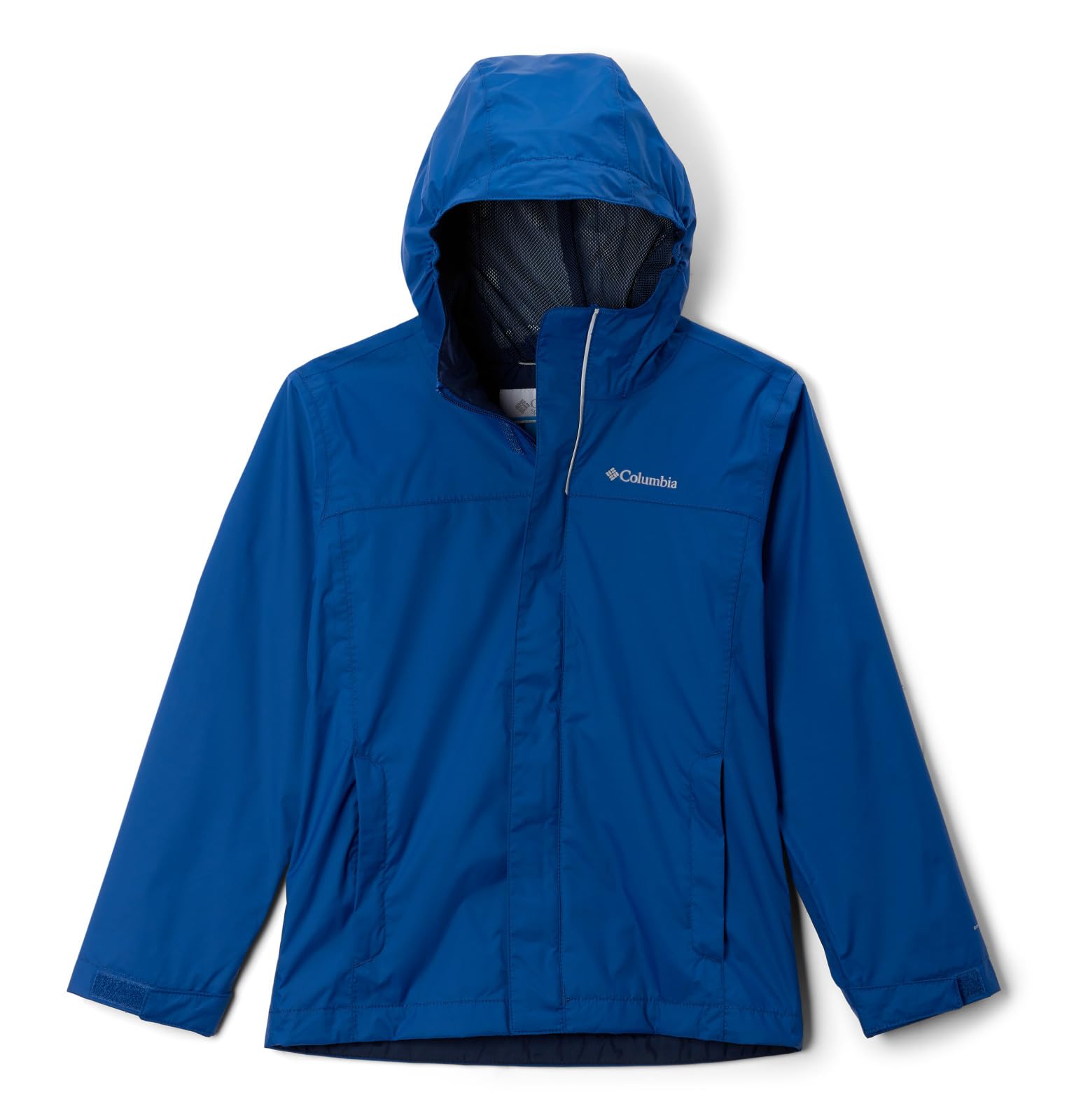
Parents should choose this jacket for dependable waterproof-breathable protection when fishing trips may involve prolonged rain or cooler conditions.
Pros
- Waterproof-breathable, fully seam-sealed shell
- Mesh lining helps reduce clamminess
- Adjustable hood and cuffs, zippered pockets, and reflective accents
Cons
- Less compact than an ultralight shell
- Lightweight construction offers minimal warmth
- No fabric stretch
The Watertight II adds a mesh lining and more complete weather protection than a basic rain shell. The breathable construction is useful when children are walking between fishing spots or wearing the jacket for several hours.
Adjustable cuffs and a hood help keep water away from wrists and the face, while zippered pockets are more secure for small items. It remains light enough for layering, though parents prioritizing the smallest possible tackle-bag package may prefer a simpler shell or poncho.
SaphiRose Kids Waterproof Rain Jacket
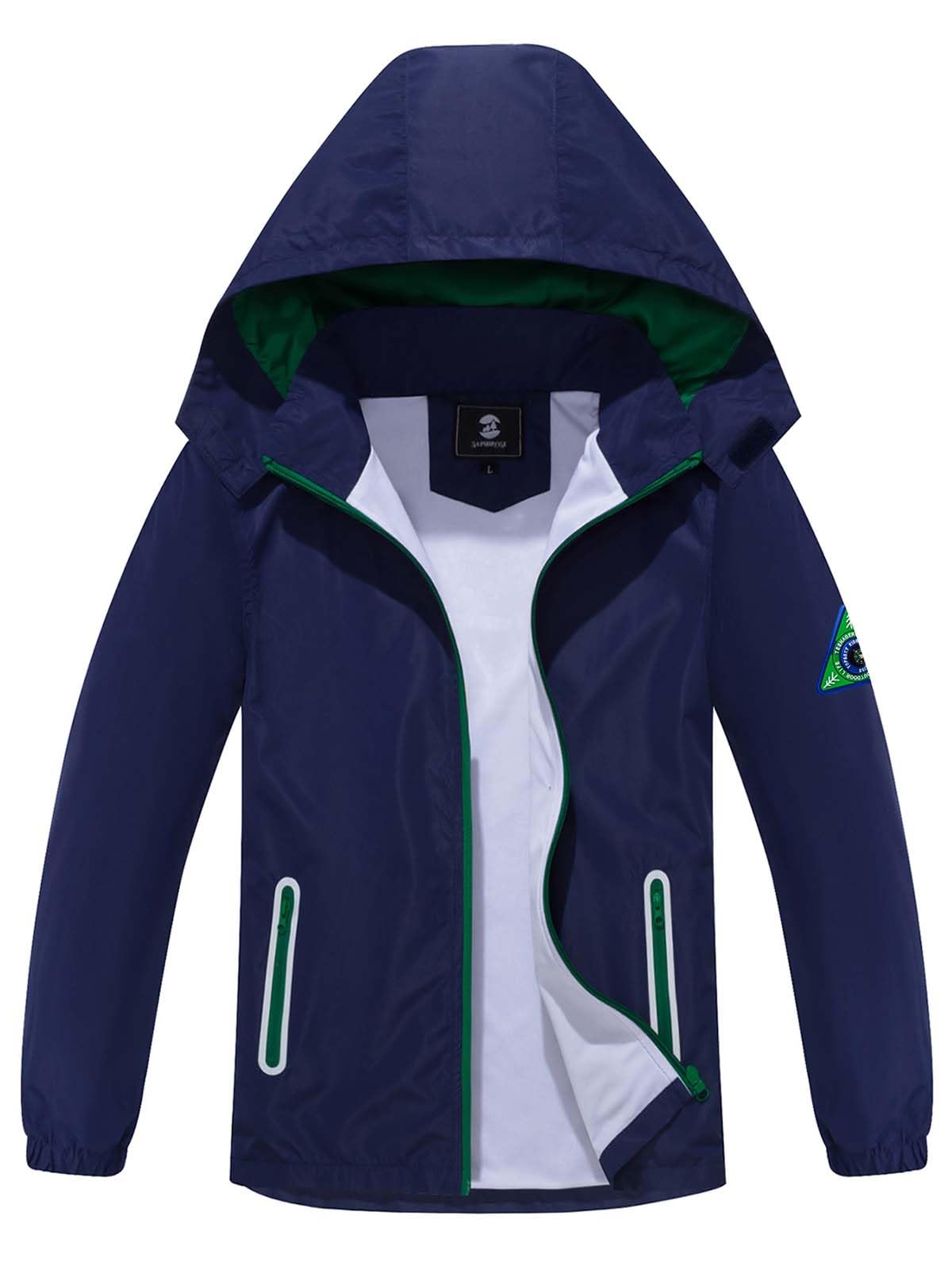
This jacket suits families seeking a breathable, everyday rain layer with a removable hood and details that work well for school, travel, and fishing.
Pros
- Waterproof polyester shell with mesh lining
- Removable hood, elastic cuffs, and two zippered pockets
- Reflective strips improve visibility
Cons
- Not as compact as an unlined shell
- Mesh lining adds some bulk
- Sizing feedback suggests checking measurements carefully
The mesh lining makes this a comfortable choice for children who dislike the sticky feel of a bare rain shell. It can go over a hoodie for a cool morning at the lake, then continue to work as a windbreaker after the rain stops.
The removable hood is convenient when a child moves between wet and dry conditions. Reflective details are helpful around parking areas and low-light walks, though the added lining and hardware mean it may take more room in a tackle bag than a minimalist jacket.
SWISSWELL Kids Waterproof Rain Suit
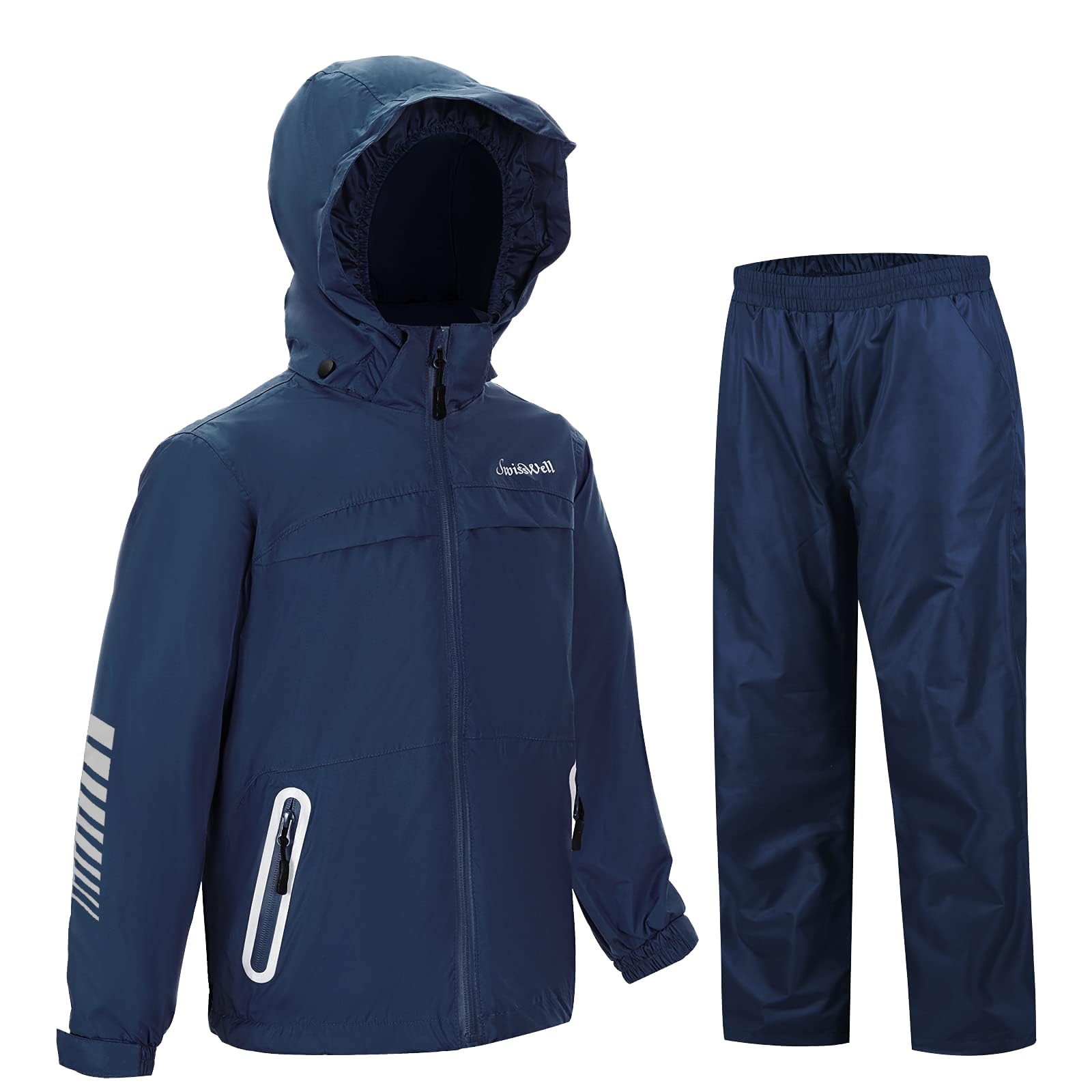
Parents should choose this two-piece suit when keeping a child’s clothing dry during muddy shore fishing matters more than having the most compact jacket.
Pros
- Includes a waterproof jacket and matching pants
- Seam sealing, adjustable closures, and reflective coverage
- Roomy fit accommodates layers
Cons
- Bulkier to pack than a jacket
- Too warm or cumbersome for some warm-weather trips
- Reports of inconsistent sizing and hardware durability
The rain suit provides protection that a jacket alone cannot, especially when children sit on wet rocks, kneel in mud, or move through damp grass. Elastic waist and ankle closures help limit water entry, while reflective panels improve visibility around campsites and roads.
Its 5000-millimeter waterproof rating and seam-taped construction are suited to light and moderate rain. Parents should treat it as cool-to-mild-weather rain gear rather than winter clothing, and they should follow the care guidance by washing gently and avoiding high dryer heat that can damage the waterproof coating.
Buying Guide
Choose the Right Coverage
A jacket is usually the easiest option for casting, climbing around a dock, and wearing after the rain stops. A poncho provides wide coverage and packs efficiently, while a rain suit protects pants and is better for muddy banks or sitting on wet surfaces.
| Style | Best use | Main consideration |
|---|---|---|
| Rain jacket | General fishing and daily wear | Pants remain exposed |
| Poncho | Emergency storage in a tackle bag | Loose fabric can interfere with gear |
| Rain suit | Muddy shorelines and extended wet play | More bulk and slower to put on |
Prioritize Genuine Waterproofing
Waterproof fabric alone is not enough. Seam sealing or seam taping helps prevent water from entering through stitched areas, especially at the shoulders, hood, and pockets. A water-resistant jacket may handle brief drizzle, while a waterproof shell is better for a sudden downpour.
Parents should look for secure zippers, storm flaps where available, and cuffs that close around the wrists. A hood with adjustment keeps water away from the face without blocking peripheral vision.
Balance Packability and Durability
A jacket that stays in the tackle bag is more useful than one left at home. Lightweight nylon, polyester, or polypropylene shells can pack small, though very thin materials may be more vulnerable to fishhooks, brambles, and rough dock surfaces.
A stuff sack is helpful for ponchos and emergency layers. For jackets, folding the garment loosely and storing it in an outside compartment can make it easy to reach before a shower arrives.
Allow Room for Layers
Fishing often starts in cool morning air and ends in warmer conditions. A rain shell should fit over a shirt or sweatshirt without restricting arm movement. Parents should check sleeve length, shoulder width, and hem coverage rather than relying only on the child’s age range.
A loose fit is useful for layering, but excessive fabric can snag on rods, hooks, and boat hardware. Adjustable cuffs and hems help fine-tune the fit.
Check Comfort and Visibility
Breathable mesh or waterproof-breathable fabric can reduce the clammy feeling that makes children remove rain gear. Reflective strips or bright colors improve visibility near roads, parking lots, and low-light campsites.
Machine-washable construction is practical after muddy trips. Parents should follow the care label, avoid high heat when advised, and inspect seams, elastic, zippers, and snaps regularly.