
Crappie fishing gets easier when you find cover, set your bait at the fish’s depth, and keep your presentation small and slow. For your first trip, use an ultralight rod with a small jig or live minnow under a bobber, and fish around brush or docks where crappie can hold.
You can fish from shore or a boat, so you don’t need a complicated setup to get started. A short outing can still give you time to learn the basics and share the experience with your kids.
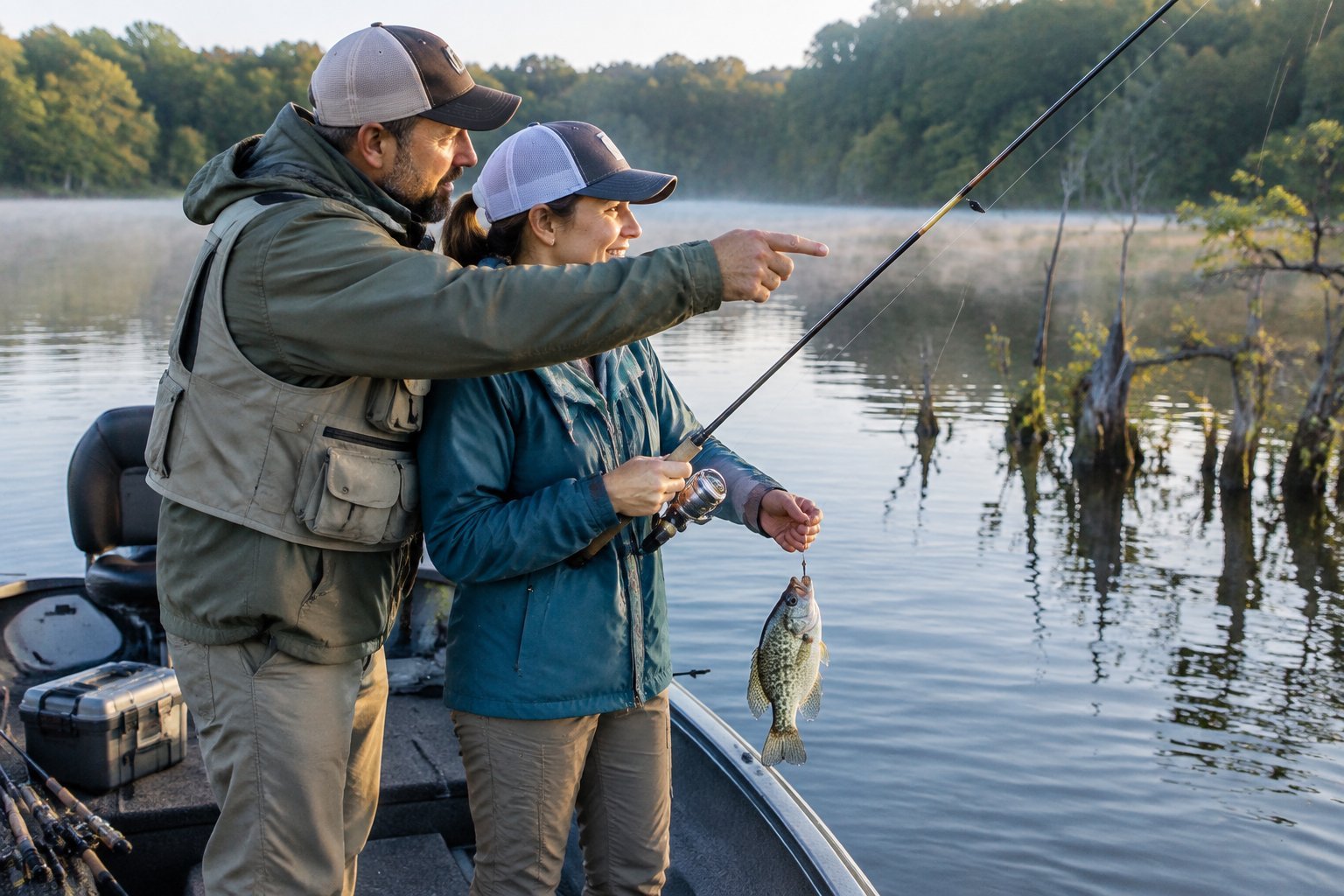
How to Catch Crappie on Your First Trip
To learn how to catch crappie, start by locating cover and checking a few depths with a small bait. Crappie behavior changes with season and conditions, so keep your approach simple and adjust one thing at a time.
Find the Fish, Then Match Their Depth
Start near visible cover, such as dock posts, overhanging branches, or shoreline brush. Crappie gather around structure and may suspend above it, so a bait resting on the bottom can pass below the fish.
If you have a depth finder, look for fish marks near cover or baitfish schools. Without electronics, work the same area at several depths by changing your bobber setting or counting down a jig before retrieving it.
Try a Simple Jig or Slip-Bobber Presentation
A small jig under a bobber gives you a clear visual signal when a fish takes the bait. Start with a light jig and set it a few feet below the float, then adjust the depth if you get no bites.
Micro-jigs work well when fish want a small offering. Use a slip bobber when you need to reach deeper water, since the stop lets the float cast easily while keeping the bait at a chosen depth. If you prefer live bait, a minnow beneath a bobber is another straightforward choice.
When to Use Vertical Jigging or Other Methods
When crappie hold close to a boat or beneath a dock, vertical jigging lets you lower a lure beside the cover and keep it near the fish. Hold the rod steady and make small lifts, watching the line for a faint twitch or sudden slack.
Other crappie fishing techniques suit particular settings. Dock shooting skips a small lure beneath low docks; long-line trolling and spider rigging cover more water from a boat. Livescope can show fish and help you position a lure, though a basic rod-and-bobber setup is enough to begin.
Where Should You Look for Crappie?
Look for crappie around cover and changes in depth, then check whether baitfish are nearby. Brush piles, creek channels, and submerged timber are useful starting points across many lakes and reservoirs.
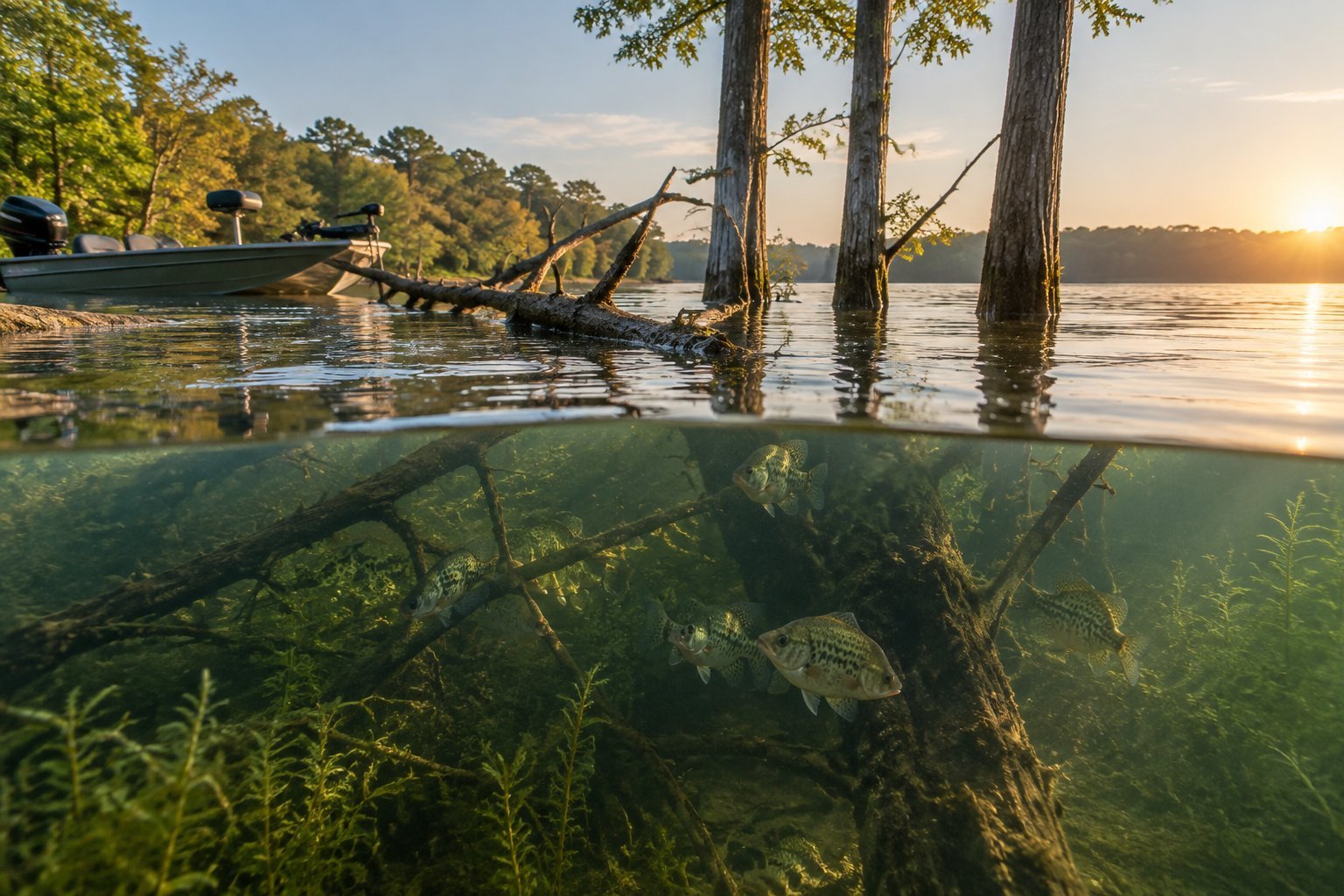
Start with Brush Piles, Timber, and Creek Channels
Brush piles and submerged timber provide cover where crappie can feed and rest. Fish the outside edges first, then lower a jig closer to the branches if you can do so without snagging.
Creek channels create depth changes that fish use as they move between shallow and deep water. Check channel bends and nearby structure, especially when the season or weather shifts. A map can help you identify likely underwater structure before you start fishing.
Look for Baitfish and Suspended Schools
Crappie feed on small fish, so watch for baitfish schools near cover or along a drop-off. From shore, birds feeding or small fish dimpling the surface can point you toward active water.
Crappie often suspend above the bottom. If you mark fish or get bites at a certain depth, keep your bait in that zone and make small adjustments as the school moves.
Recognize Black Crappie and White Crappie Habitats
Black crappie have irregular dark markings and are associated with clearer water and cover such as vegetation or timber. White crappie show vertical bars and are more tolerant of stained water, with creek channels and standing timber among useful places to check.
These habitat preferences overlap, and both species take similar small jigs and minnows. Use markings to identify your catch, then follow local regulations for size and harvest limits.
What Gear, Bait, and Simple Rigs Do You Need?
A basic crappie setup calls for light tackle, an ultralight rod, and small bait or lures. Keep the tackle easy to manage so you can focus on casting near cover and presenting bait at the right depth.
Choose Light Tackle and an Ultralight Rod
Light tackle helps you cast small offerings and feel gentle bites. An ultralight rod with a spinning reel is a practical choice for beginners; pair it with light line suited to the rod and the cover you plan to fish.
Pack a small tackle box with a few hooks or jig heads, bobbers, split shot, and pliers. Bring a landing net if you have one, especially when you’re fishing around branches where a fish could come loose.
Pick Live Bait or Small Lures
Live minnows are a familiar choice for crappie, and worms can also catch fish. For live bait for crappie, check local rules and bait restrictions before your trip, then keep bait in a container that stays cool and secure.
Tube jigs, marabou jigs, and other crappie lures offer a compact artificial option. Choose a small size and begin with a color that stands out against the water; if bites stop, try a natural-looking color or slow your movement. For more options, see this guide to crappie lures or tips on minnows for crappie fishing.
Rig a Minnow or Jig Under a Bobber
Tie a small hook or jig to your line, add bait if you’re using a minnow, and attach a bobber above it. Set the bait a few feet down to begin, then move the bobber to test a different depth.
Keep the hook point exposed on a jig so it can catch when a crappie takes the lure. With a minnow, hook it lightly through the lips or just behind the back, taking care to avoid the spine. Cast beside cover and watch the float for a dip, a sideways glide, or a pause.
How Do Crappie Move Through the Seasons?
Crappie shift location and depth as water conditions change, so adjust your search through the year. Spring can bring fish shallow, while summer and winter often reward careful depth control around deeper cover or suspended schools.
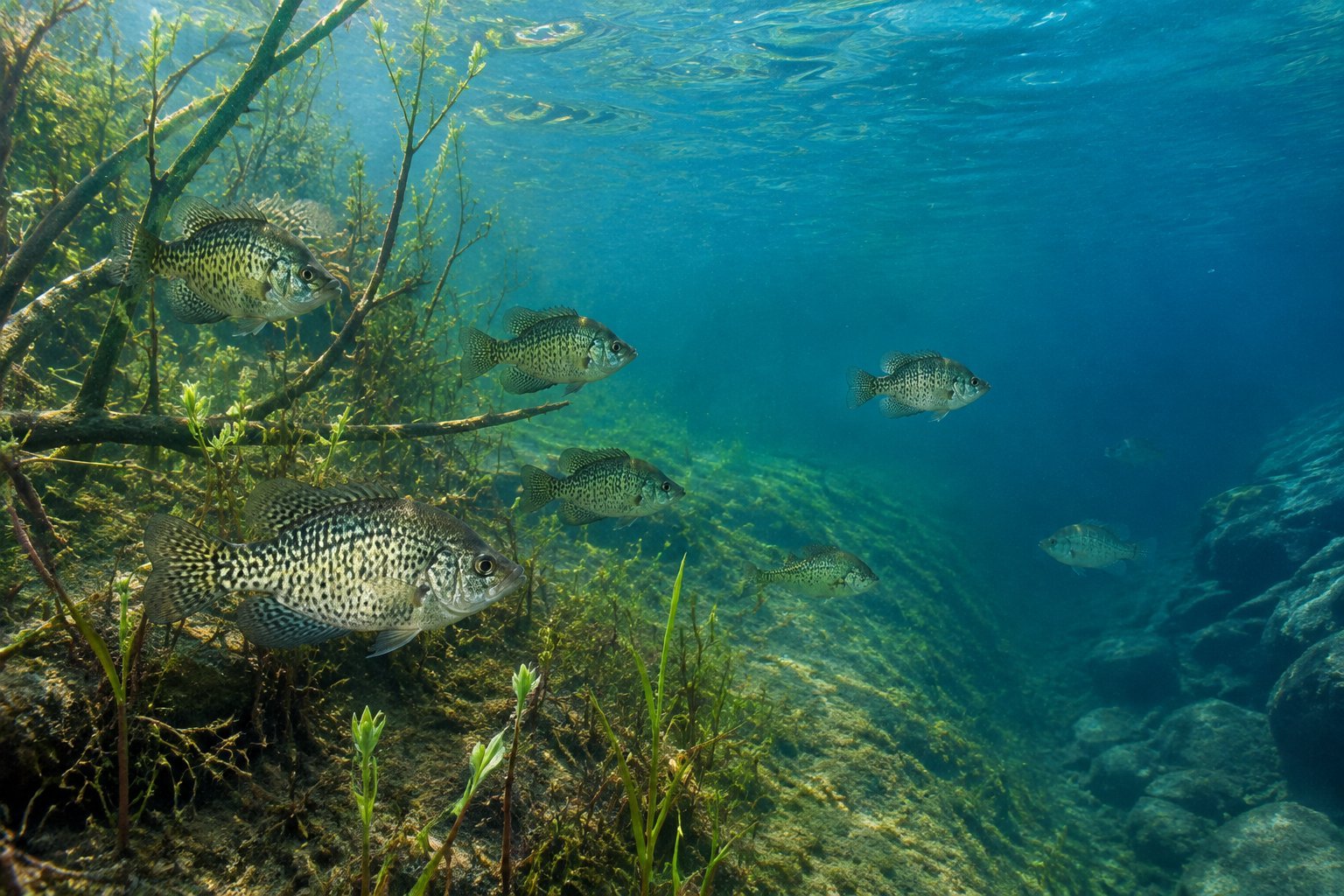
Spring: Follow Fish Toward Shallow Water
Spring crappie fishing improves as warming water draws fish toward shallow spawning areas. Protected coves, brush, and shoreline cover are useful places to check, especially when water temperatures rise through the 50s and into the 60s.
Use a jig or minnow beneath a bobber and work slowly along likely cover. If shallow spots are quiet, search the nearby drop-off or creek channel where fish may stage before moving in.
Summer: Check Deeper Cover and Suspended Fish
Summer crappie fishing calls for checking deeper structure and suspended schools. Look around creek channels, brush piles, and drop-offs, then use a depth finder or test different bobber settings to find the level where fish are holding.
Early and late parts of the day can be comfortable times to fish, especially during hot weather. Keep the bait near the fish’s depth and pause between small movements.
Fall: Track Changing Depths and Forage
Fall crappie fishing involves following fish as cooling water and moving forage shift their position. Check both shallow cover and nearby deeper water, and pay attention to baitfish activity.
If a spot goes quiet, make a small move along the same channel or structure line. A jig lets you cover water with short casts, while a bobber can hold bait in place when you locate fish.
Winter: Slow Down, Including When Ice Fishing
Winter crappie fishing rewards a slower presentation near schools holding in deeper water. Lower a small jig gradually and pause often, since cold conditions can reduce how far fish move to take a bait.
For ice fishing for crappie, use a small jig or live bait at a controlled depth and follow local ice safety guidance. Check ice conditions before going out, fish with a partner, and carry appropriate safety equipment.
How Can You Make a Short Trip Work for the Whole Family?
A short family fishing trip works best when you prepare a simple kit, choose an accessible spot, and keep the outing comfortable for kids. Bank fishing for crappie can be a practical option when you have a safe shoreline with nearby cover.
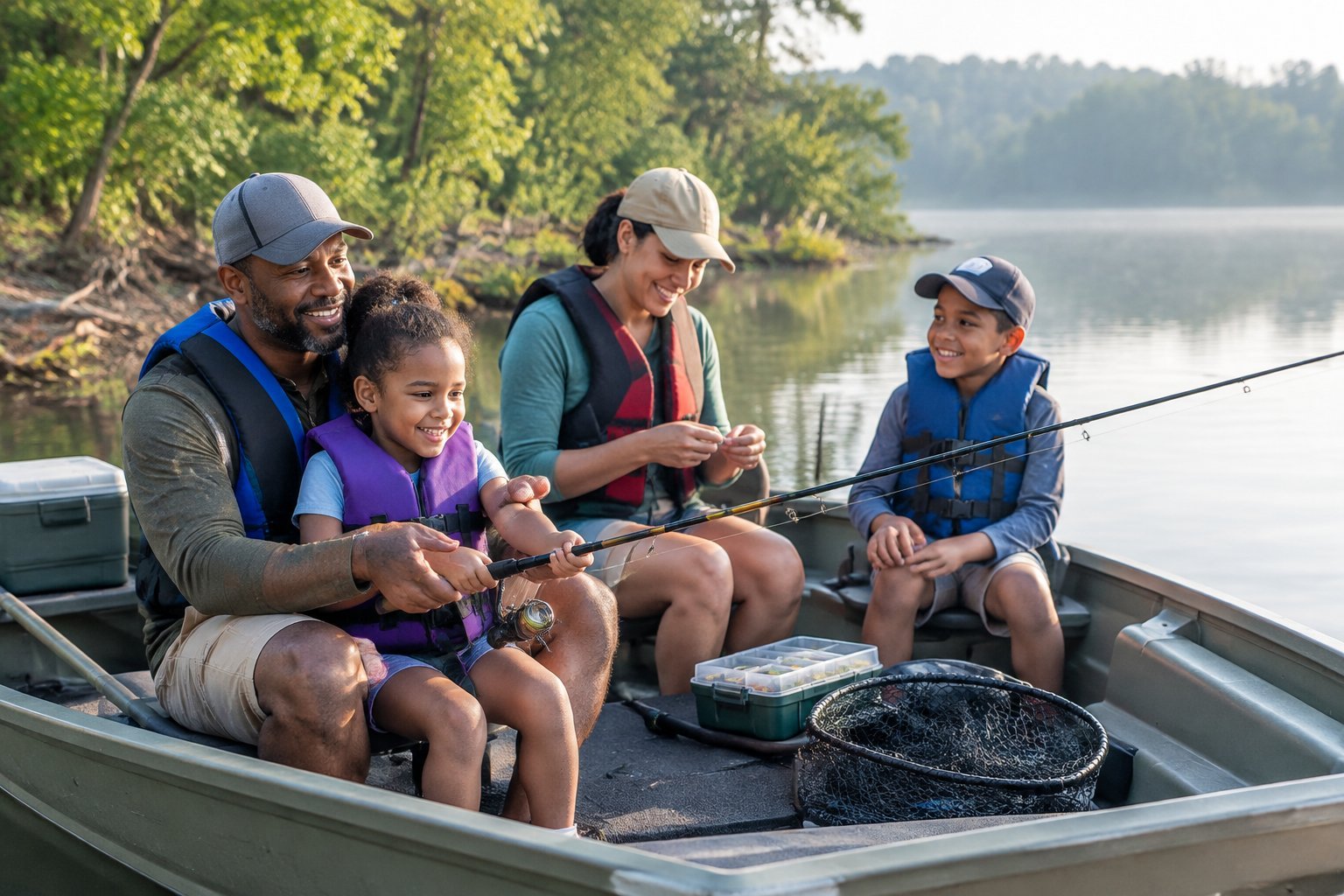
Keep a Ready-to-Go Kit for Bank Fishing
Pack one or two light rods, a small box of jigs and hooks, bobbers, pliers, and a container for bait. Keeping these basics together makes it easier to head out after work or fit in a short weekend outing.
Choose a public shoreline, pond, or dock where you can cast without crowding other anglers. Check access rules and keep hooks secured when moving between spots.
Make the First Outing Easy for Kids
Give kids a simple job, such as watching the bobber or helping choose a jig color. Use a short rod they can handle, bring snacks and water, and plan a brief outing that leaves room for breaks.
For family fishing, set expectations around the experience as well as the catch. A quiet, safe spot and a chance to practice casting help keep the trip enjoyable. These fishing with kids tips can help you prepare.
Handle Fish Carefully and Follow Local Limits
Crappie conservation starts with knowing your state’s rules for seasons, size limits, and daily creel limits. Check current regulations before keeping fish, since requirements vary by location.
Wet your hands before handling a fish you plan to release, support its body, and remove the hook gently. Keep fish you intend to harvest cool, and take only what you will use.
Frequently Asked Questions
These quick answers cover common first-trip questions about crappie gear, timing, bait, and shore access.
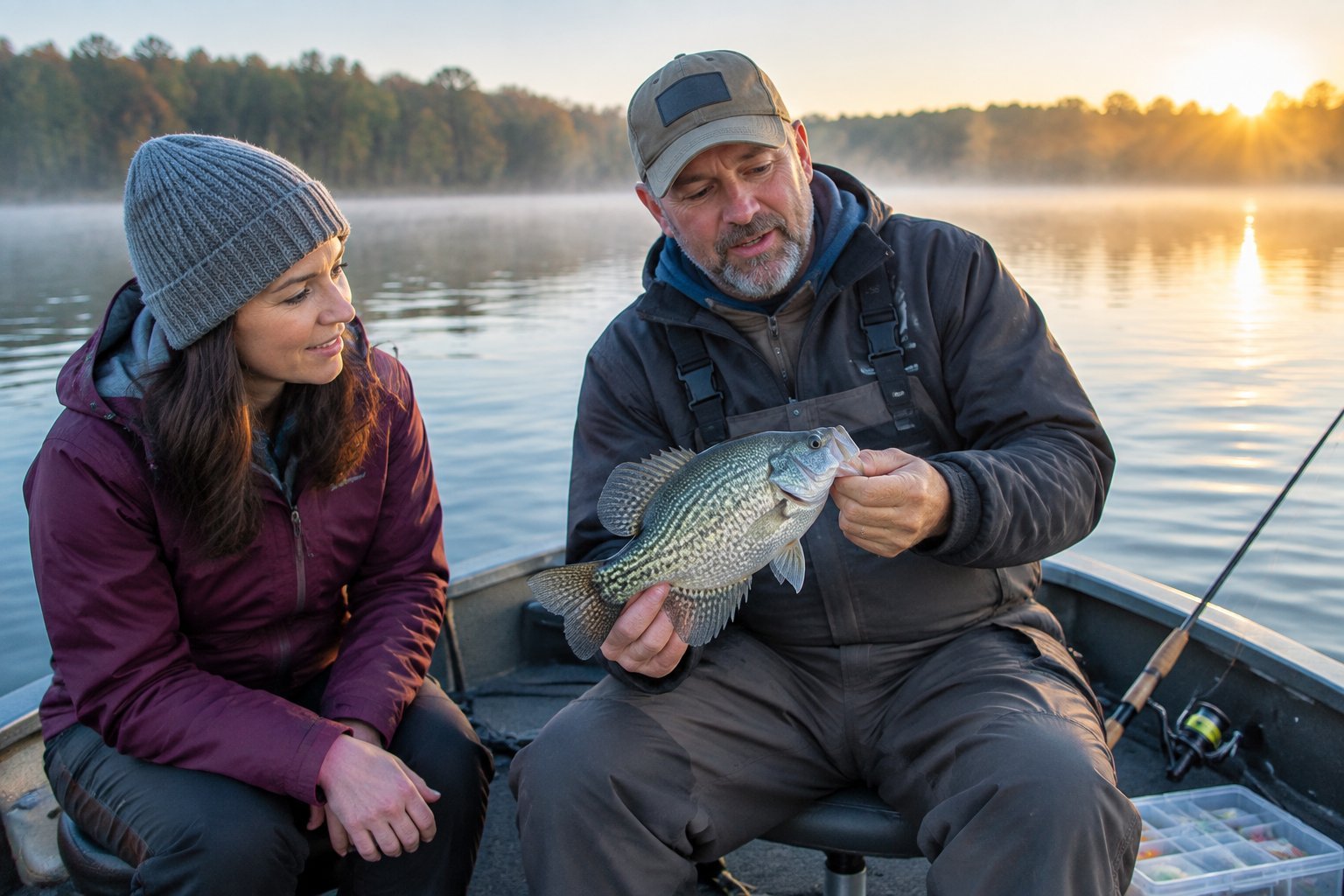
What is the best setup for crappie fishing?
An ultralight spinning rod with light line and a small jig or minnow beneath a bobber is a strong beginner setup. It casts easily and lets you adjust the bait’s depth without complicated equipment.
What’s the best month to fish for crappie?
The best month varies by region, since spring warming and spawning occur at different times across the United States. Target the local spring period when fish move toward shallow cover, and check a local fishing report for current conditions.
What’s the secret to catching crappie?
Find cover or baitfish, then keep your offering at the depth where crappie are holding. If you get no bites, change the depth first and then adjust bait size or movement.
Can you catch crappie from the bank?
Yes, you can catch crappie from shore near docks, brush, vegetation, or a creek channel. A bobber rig lets you fish close to cover while keeping the bait at a set depth.
Can beginners catch crappie with live bait?
Yes, beginners can catch crappie with live minnows beneath a bobber. Use a small hook, set the bait near cover, and check local rules for bait restrictions before fishing.
Get your gear ready and explore the related beginner-friendly guides before your next trip.

