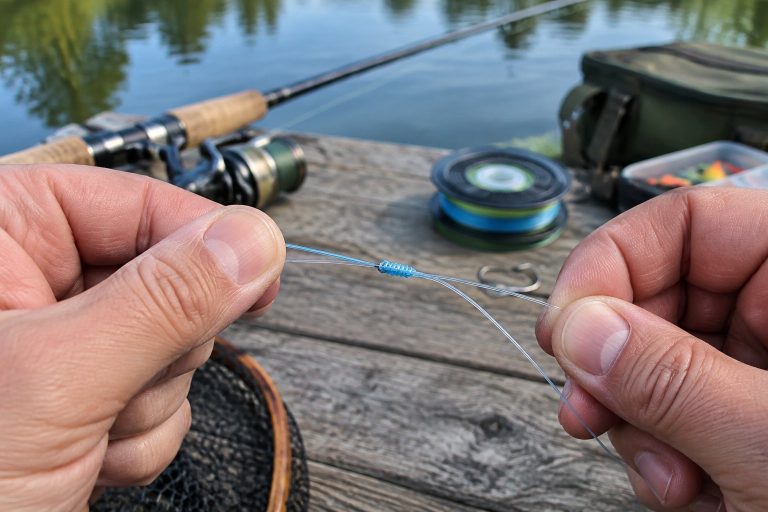
For a first try, use a light spinning setup with a small float, fine fluorocarbon leader, and a small piece of bread or soft dough. This hook-and-line method is easy to manage from shore, gives you a clear signal when a fish takes the bait, and lets you adjust the bait’s depth to match the mullet.
Mullet often cruise in visible schools, yet their gentle feeding makes them a test of patience. Keep your tackle simple, approach quietly, and make a short session count by fishing where you can see fish moving or feeding.
What’s the Simplest Setup for a First Try?
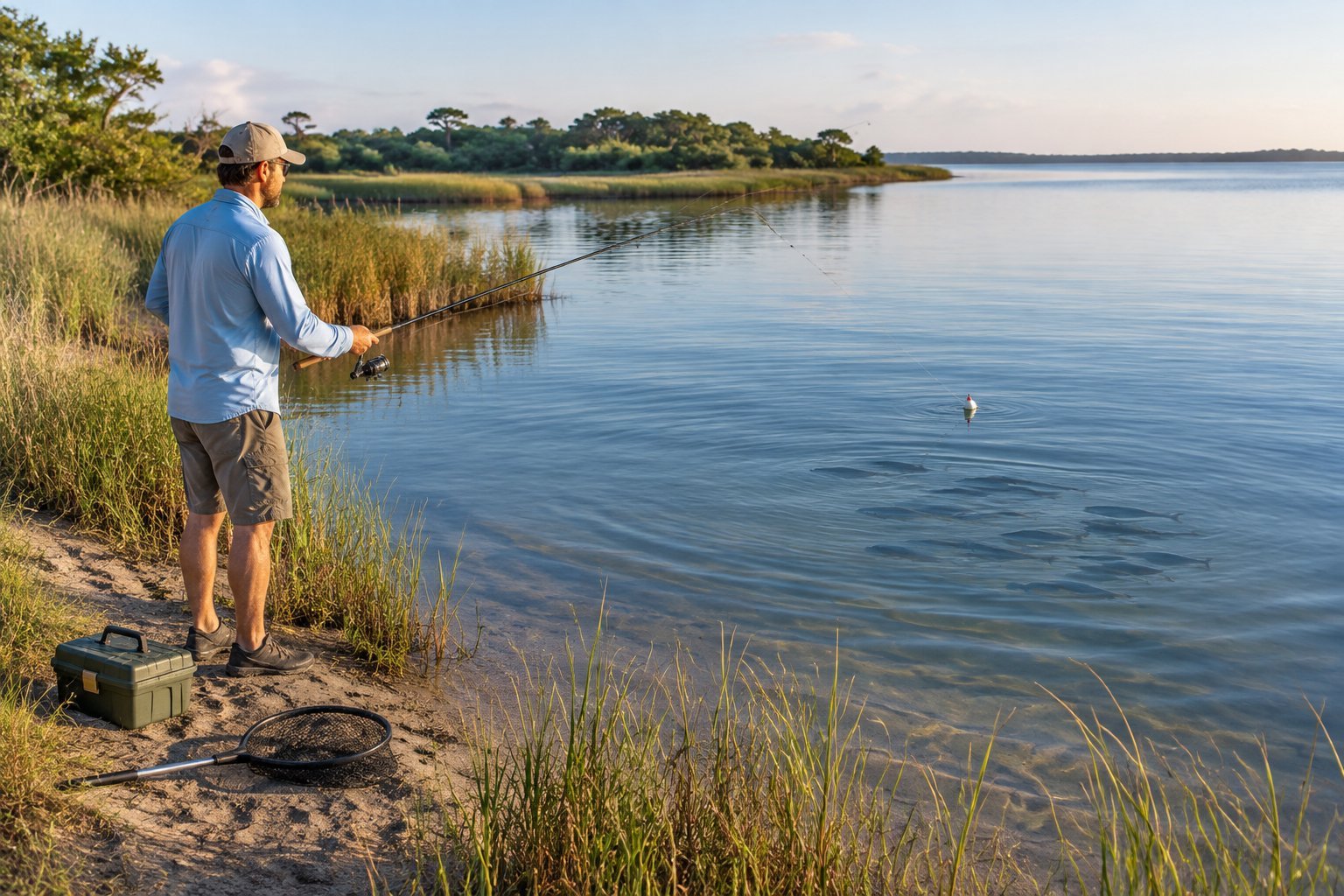
A light float rig is a practical starting point because it suspends a small bait and makes subtle bites easier to notice. A compact rod-and-reel setup, a small hook, and minimal weight are enough for a calm shoreline or dock.

What Basic Gear Do You Need?
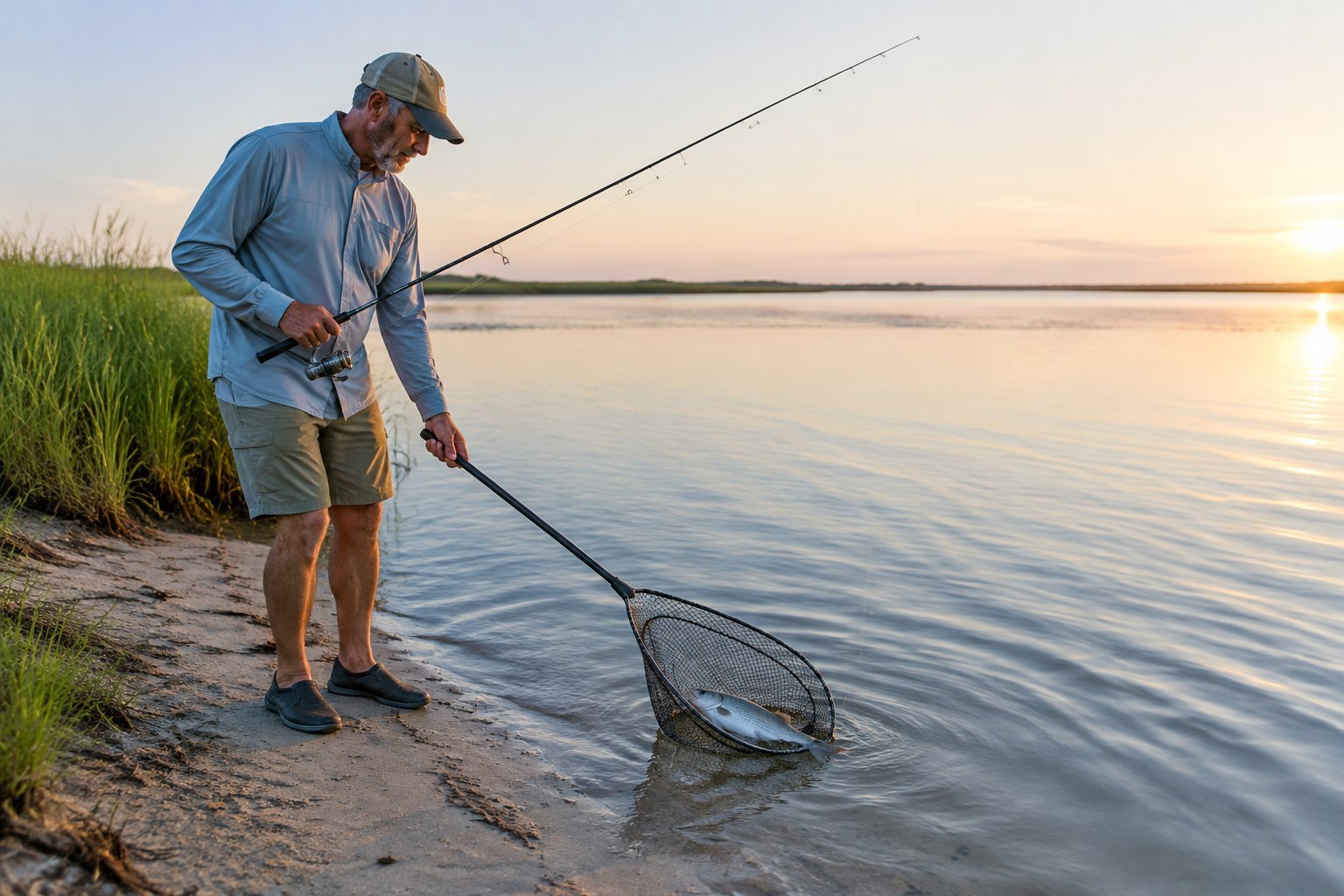
Choose a light spinning rod and reel with a smooth drag, spooled with light monofilament. Add a small float, a few split-shot weights, a short fluorocarbon leader, and a sharp hook sized to hold a small piece of bait. Pack a landing net if you have one, especially when fishing from a high dock or slippery bank.
Mullet fishing gear should stay unobtrusive. A bulky float or heavy fishing tackle can make a delicate presentation harder to cast and control. For help with a basic spinning outfit, see this guide to setting up a spinning reel.
Circle hooks are an option when you want to reduce deep hooking, but use a small size suited to your bait and local rules. Check the hook style and size permitted where you plan to fish.
How Do You Set Up a Float Rig?
Tie the main line to a small float, then add a fluorocarbon leader of about 18 to 24 inches. Pin one or two small split shots above the hook so the bait sinks gently and the float sits upright.
Start with the hook bait suspended around a foot below the surface. If the fish are feeding deeper, slide the float or adjust the line so the bait drifts at their level. Keep the rig simple enough that you can change depth quickly.
How Do You Fish the Rig?
Watch the school before casting. Cast beyond the fish and let the bait drift toward them; dropping the float directly into the middle of a school can scatter wary mullet.
Keep the line lightly tensioned and watch the float for a pause, dip, or sideways glide. Lift the rod smoothly when it moves, then let the drag handle the fish’s first run. This gentle mullet fishing technique gives a small bait time to be taken without a hard, premature hookset.
Where and When Should You Look for Mullet?
Look for mullet in sheltered coastal water with visible schools or signs of feeding, especially around estuaries, canals, harbours, tidal creeks, and shallow flats. A rising or moving tide can bring fish onto feeding areas, though local conditions determine the best window.
Which Habitats Hold Mullet?
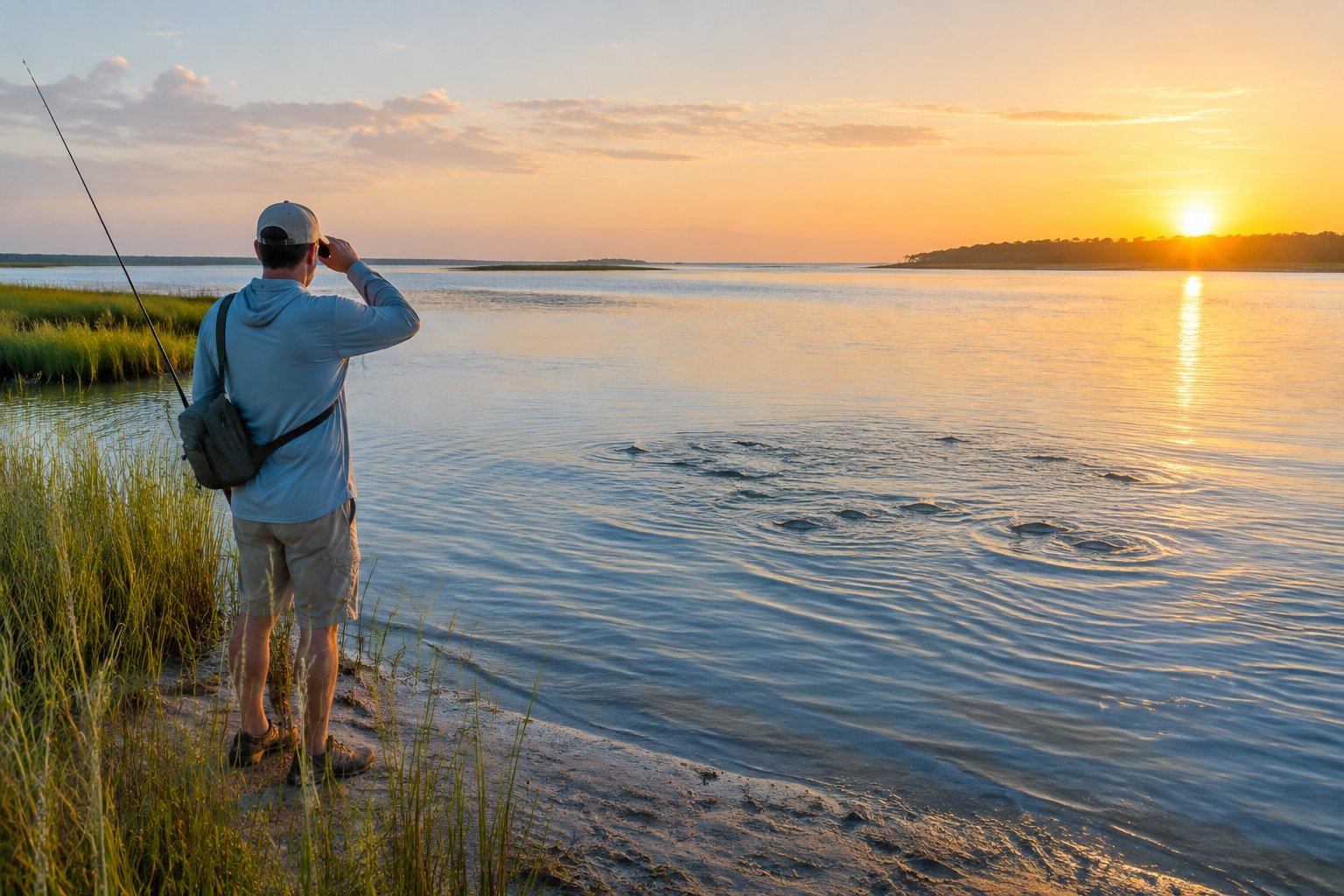
Mullet habitat includes brackish water where rivers and salt water meet, along with sheltered channels and shallow coastal edges. Look near seawalls, dock pilings, creek mouths, and muddy or sandy flats where fish can graze on algae and organic material.
In clear, calm water, scan for silver flashes, V-shaped wakes, or fish cruising just below the surface. Feeding mullet may disturb the bottom and leave cloudy patches. A quiet approach helps you keep fish in view, so step softly and avoid casting a shadow over the school.
What Signs and Tides Should You Watch?
Surface flicks and repeated jumps can reveal fish nearby, while a line of ripples moving steadily across a flat may show a traveling school. Watch whether the fish are cruising, feeding, or turning repeatedly; fish that pause and graze are better prospects for a bait presentation.
Track the tide at your chosen spot. An incoming tide can push mullet toward shallow feeding ground, while an outgoing flow may concentrate fish near channels. For a short coastal fishing trip, arrive early enough to watch the water before choosing where to cast.
Which Bait and Presentation Should You Try?
Start with fresh bread flake or soft bread paste on a small hook, then present it at the depth where the fish are feeding. Mullet bait needs to be small and easy to take, since mullet often graze instead of striking like predatory fish.
What Bait Works Best?
Bread is an accessible first choice: pinch off a small piece, mold it lightly around the hook, and leave the point exposed. Soft dough works in the same way. Small pieces of shrimp or other locally available natural bait are worth trying if mullet ignore bread.
Live bait is less predictable for a fish that commonly feeds on algae and organic matter. Artificial lures also tend to be a harder starting option because mullet are not usually chasing prey. Keep a few bait choices on hand and change one detail at a time so you can see what gets attention.
How Should You Adjust the Presentation?
For float fishing, let the bait drift naturally with the current and keep it close to the school’s feeding depth. If fish are grazing near the bottom, try a small weight and a bottom-fishing presentation that holds the bait just above the substrate.
Use only a small amount of loose bread to draw fish toward the area. Too much free food can satisfy them before they take your hook bait. Among practical mullet fishing tips, quiet casting and careful depth adjustment are especially useful when the fish are visible but ignoring the bait.
How Do Species Identification and Local Rules Affect Your Trip?
Identify the fish as closely as you can, then check the current rules for the exact water you are fishing before keeping or transporting a catch. Common names vary by region, and limits or permitted gear can differ between state and local waters.
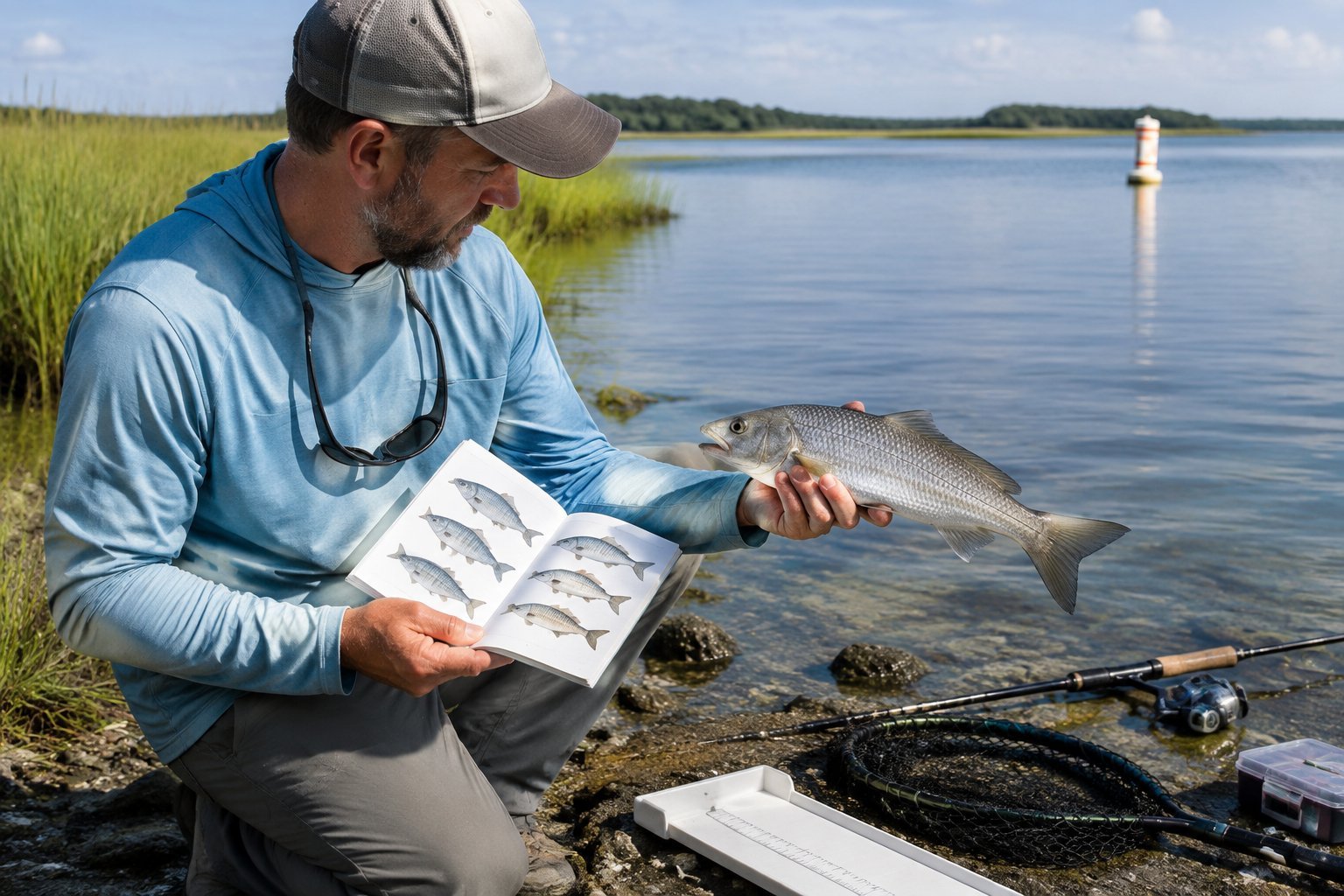
How Can You Recognize Common Mullet Species?
Striped mullet, Mugil cephalus, is a familiar species in US coastal and estuarine waters. Mullet have elongated, silvery bodies and often travel in schools near the surface; the exact markings and body shape vary by species and size.
Chelon labrosus, the thick-lipped grey mullet, is associated mainly with the eastern Atlantic and nearby waters, so it is not the expected catch in most US locations. If identification is uncertain, use a regional fish-identification guide or ask a local fisheries office before keeping the fish.
What Regulations and Handling Practices Should You Check?
Before fishing, check your state wildlife agency’s current rules for seasons, size and bag limits, license requirements, and approved methods. Rules for cast nets and bait collection can also vary by location, so verify them before using either.
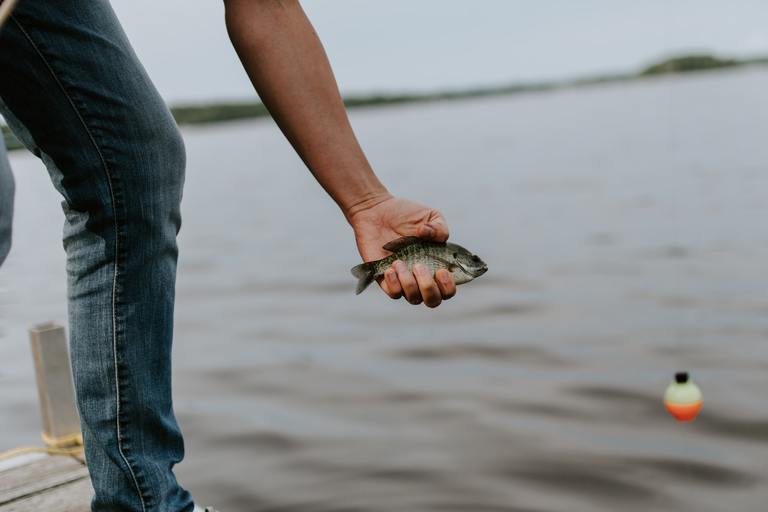
For sustainable fishing, keep only fish you can legally use and release the rest promptly. Wet your hands before handling a fish, support its body, and minimize time out of the water. Use a measuring board when the rules set a minimum or maximum size, and carry a small dehooking tool to speed up release.
Frequently Asked Questions
What is the best bait for mullet?
Fresh bread flake or soft bread paste is a useful first bait for hook-and-line mullet fishing. Keep the piece small and fish it under a light float at the depth where the school is feeding.
How do you catch mullet on hook and line?
Use light tackle, a small hook, a fine leader, and a float to present a small natural bait gently. Cast past the fish, let the rig drift into their path, and respond to a subtle float movement with a smooth lift.
How do you catch mullet with bread?
Pinch a small piece of bread around a small hook, leaving the point exposed, then suspend it under a float or let it drift freely. A few loose crumbs can attract attention, but feed sparingly so the fish keep taking the hooked bait.
How do you catch mullet in Florida?
Look for schools in Florida’s estuaries, canals, harbours, tidal creeks, and shallow coastal water, then try a light float rig with bread. Check Florida’s current fishing regulations before your trip, especially rules for seasons, harvest limits, and nets.
Why is it hard to catch mullet?
Mullet often feed by grazing on algae and organic matter, so a bait can pass by without drawing a decisive strike. Their sensitivity to movement and splash also makes quiet positioning, small bait, and patient depth adjustments important.